


Men’s down jackets are a popular choice when you want lightweight warmth without a bulky feel. They suit everything from casual cold-weather wear to outdoor layering, but the right choice depends on how warm you need it to be, how much weather protection you want and how you plan to use it.
This guide helps you compare down jackets in practical terms so you can narrow down the options quickly. It focuses on the features that usually matter most to shoppers, rather than on brand names or model-specific claims.
Because down jackets vary a lot in construction and intended use, it helps to think about warmth, weight, fit and weather resistance together rather than in isolation.
Compare Men's Down Jackets


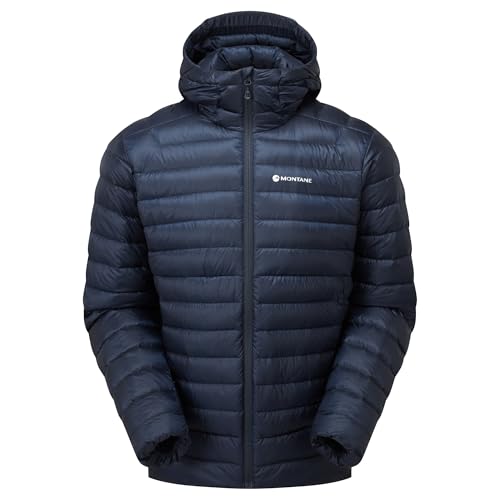


As an Amazon Associate we earn from qualifying purchases.
What should you look for in a men’s down jacket?
The best starting point is the conditions you expect to wear it in. A lighter, more packable jacket can be ideal for travel or layering, while a warmer, more substantial jacket may suit colder days and longer periods outdoors. The main trade-off is usually warmth versus bulk, with weather protection and breathability also affecting comfort.
Specifications vary by model, so always check the individual product page before buying.
| Feature | What it means | Why it matters | What to check |
|---|---|---|---|
| Warmth | How much insulation the jacket is intended to provide | Helps match the jacket to cold weather, layering or everyday use | Jacket description, insulation details and intended season |
| Weight and bulk | How light and compressible the jacket feels | Affects comfort, packing and ease of carrying | Whether the jacket is described as lightweight, packable or substantial |
| Weather resistance | How well the outer fabric handles damp, drizzle or wind | Important if the jacket will be worn beyond dry, settled conditions | Outer fabric description, water-resistant treatment and hood details |
| Fit and layering room | How the jacket sits over base layers or mid-layers | Impacts comfort and how versatile the jacket is in changing temperatures | Fit notes, size guide and whether you plan to layer underneath |
| Packability | How easily the jacket can be folded or stowed away | Useful for travel, commuting and variable weather | Whether it packs down well or includes a storage bag |
| Construction details | Features such as baffles, hood, cuffs and hem adjusters | These affect heat retention, comfort and everyday practicality | Hood style, cuff design, hem adjustment and pocket layout |
Key decision criteria explained
Warmth level
Down jackets are chosen primarily for insulation, but not every jacket is designed for the same level of cold. Some are aimed at milder conditions and layering, while others are made to feel warmer and more protective on their own. Think about how often you will wear it, how long you will be outside and whether you tend to feel the cold easily.
Weight, bulk and packability
A lighter jacket is usually easier to carry and more comfortable for everyday use, travel or commuting. More substantial jackets can feel cosier, but they often take up more space and may be less convenient to pack. If you plan to keep the jacket in a bag or backpack, this trade-off matters more than it does for short local use.
Weather protection
Down itself is valued for warmth, but the outer fabric and design determine how well the jacket copes with wind and light moisture. If you expect damp conditions, look beyond the insulation and check the outer material, hood and water-repellent treatment where provided. A down jacket is often best seen as a warmth layer rather than a substitute for a fully waterproof shell.
Fit and layering
The right fit should leave enough room for a base layer or mid-layer without feeling loose or restrictive. A closer fit can trap warmth efficiently, but it may limit comfort if you want to wear thicker layers underneath. If you use jackets for walking, commuting or everyday wear, consider arm movement and hem length as well as chest fit.
Hood and collar design
A hood can make a noticeable difference to comfort in cold or windy conditions, while a higher collar may help if you prefer simpler styling. Some buyers prefer a hoodless jacket for easier layering under a shell, while others value the extra coverage. Your choice depends on whether the jacket is mainly for dry cold, changeable weather or mixed outdoor use.
Common types and variants
Within men’s down jackets, the main differences are usually about coverage and intended use rather than entirely different product families.
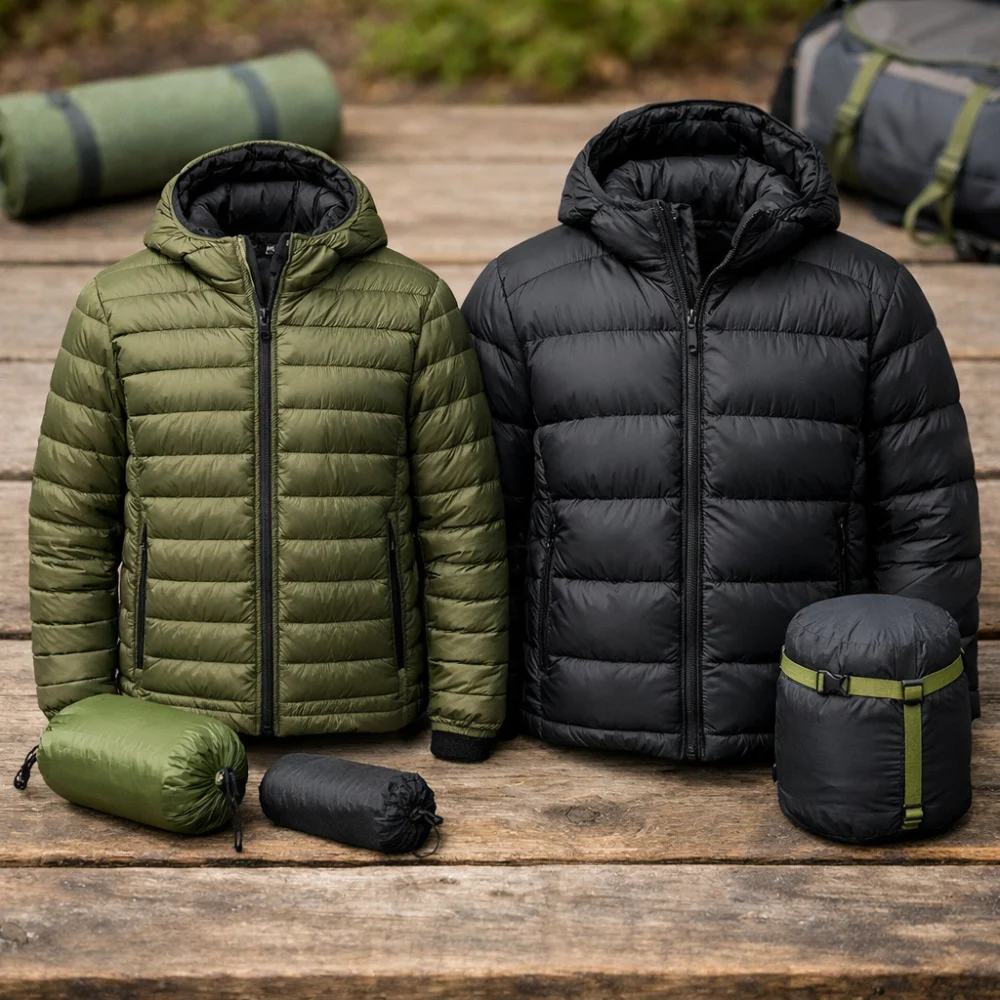
- Lightweight down jackets: Often chosen for easy layering, travel and milder cold. Their main limitation is that they may not feel warm enough for longer exposure in very cold conditions.
- Hooded down jackets: Useful if you want extra coverage around the head and neck. They can feel a little bulkier and may be less convenient under another outer layer.
- More insulated or longer-cut styles: Suited to buyers who prioritise warmth and comfort. The trade-off is typically more bulk and less packability.
- Packable styles: Handy when space matters and the jacket may spend time in a bag. The limitation is that very compact designs may focus more on convenience than maximum warmth.
Which style suits different buyers?
| Buyer need | What to prioritise | Why |
|---|---|---|
| Everyday casual wear | Comfort, fit and simple weather resistance | You are likely to value versatility more than specialised performance features |
| Travel or commuting | Packability, weight and easy layering | The jacket may need to move between indoors, transport and outdoor use |
| Cold-weather walking | Warmth, hood design and wind protection | Comfort matters when you are outside for longer periods |
| Layering under a shell | Slimmer fit and low bulk | Less volume makes it easier to combine with another outer layer |
| Choosing a gift | Flexible fit and broadly versatile styling | It is safer to choose a jacket that can work in several settings |
Common mistakes to avoid
- Focusing only on warmth: A very warm jacket is not always the most useful if it is too bulky for daily wear.
- Ignoring weather conditions: A down jacket can be a poor match if you need full wet-weather protection rather than insulation.
- Overlooking fit: A jacket that is too tight can reduce comfort and layering options, while one that is too loose may feel draughty.
- Assuming all down jackets are the same: Construction, hood style and outer fabric all affect how the jacket feels in real use.
- Not checking the product page carefully: Details such as pocket layout, hood type and care guidance can vary significantly.
Safety and suitability caveats
Choose a jacket that suits the conditions you expect to face, rather than assuming one style will do everything. If you need a jacket for wet weather, check whether it is designed for that purpose or whether it is better paired with a waterproof outer layer. For cold-weather outdoor use, pay attention to fit, coverage and layering needs so the jacket remains comfortable as well as warm.
Care, storage and long-term use
Down jackets often last better when they are stored uncompressed for long periods and cared for according to the product guidance. If a jacket will be packed away regularly, look for construction that suits that habit and check whether any special cleaning care is mentioned. A simple care routine can help preserve loft and comfort over time, but the exact requirements vary by model.
How to compare options efficiently
- Decide whether you need the jacket mainly for everyday wear, travel, layering or colder outdoor use.
- Choose the level of warmth and bulk that fits that purpose.
- Check the fit, hood and weather resistance details on each product page.
- Compare packability and practicality if you expect to carry the jacket often.
- Confirm the care advice and any model-specific details before you decide.
Summary buyer checklist
- Will you wear it mainly in dry cold, changeable weather or as a layering piece?
- Do you want a lighter, packable jacket or a warmer, more substantial one?
- Is a hood important for your use?
- Will you need room for extra layers underneath?
- Does the outer fabric offer enough weather resistance for your plans?
- Have you checked the fit, care guidance and other model-specific details?
Frequently asked questions
Are down jackets good for everyday wear?
Yes, many people choose them for everyday use because they are warm without feeling overly heavy. The key is to pick a style that suits your usual temperature range and how formal or casual you want it to look.
What is the main difference between a lightweight and a warmer down jacket?
A lightweight jacket is usually easier to pack and carry, while a warmer version often offers more insulation and coverage. The right choice depends on whether you value convenience or warmth more highly.
Do I need a hood on a down jacket?
Not always. A hood is useful if you often face wind or colder conditions, but a hoodless jacket can be easier to layer and may suit buyers who prefer a simpler shape.
Can a down jacket replace a waterproof jacket?
Usually not. A down jacket is mainly for insulation, while a waterproof jacket is designed to keep out rain. If wet weather is likely, many buyers prefer to use a down jacket with a separate waterproof outer layer.
How should a down jacket fit?
It should feel comfortable with enough room for the layers you plan to wear underneath. A close fit can help keep warmth in, but it should not restrict movement or make layering difficult.
What should I check before choosing one online?
Look at the warmth level, fit, hood, outer fabric and any care guidance. It is also sensible to read the product description closely because specifications vary by model, so always check the individual product page before buying.
More Men's Down Jackets
See all 77 Men's Down Jackets →


As an Amazon Associate we earn from qualifying purchases.