


Women’s anoraks and smocks are useful when you want a lighter outer layer that helps with wind, showers and changeable weather without feeling as bulky as a heavier coat. They are often chosen for walking, travel, weekends outdoors and everyday wear where easy layering matters.
This guide helps you compare the main features that make one style more suitable than another, from length and hood design to pockets, ventilation and packability. It also explains where an anorak or smock sits alongside other women’s outdoor jackets and coats, so you can narrow the choice without overbuying.
Compare Women's Anoraks & Smocks


As an Amazon Associate we earn from qualifying purchases.
What should you look for in a women’s anorak or smock?
The best starting point is the weather you actually need to manage and how you plan to wear the layer. A good anorak or smock usually balances protection, ease of movement and breathability, but the right mix depends on whether you want something for everyday errands, hill walks, commuting or travel. The main trade-off is usually between coverage and convenience: more coverage can feel more protective, while a lighter, simpler design is often easier to pack and wear all day.
Specifications vary by model, so always check the individual product page before buying.
| Feature | What it means | Why it matters | What to check |
|---|---|---|---|
| Weather protection | How much help the garment gives against wind and light rain | Determines whether it suits changeable days or needs to be paired with a fuller waterproof layer | Look for the level of protection described on the product page and whether the design is intended for showers, wind or more general outdoor use |
| Length and coverage | How much of the torso and hips the garment covers | Affects comfort, draught protection and how well it layers over other clothing | Check the stated cut, hem length and whether the fit is relaxed enough for layering |
| Fit and adjustability | How the garment sits on the body and whether it can be tightened or loosened | A good fit helps reduce bulk and improve comfort during movement | Look for details such as adjustable cuffs, hems, waist toggles or a hood that can be adapted |
| Breathability | How well heat and moisture can escape during activity | Useful if you walk, cycle or wear the layer for longer periods | Check the product wording for breathability or ventilation features, especially if you expect to be active |
| Packability | How easy the item is to fold, carry or stow away | Important for travel, day trips and unpredictable weather | See whether it is described as packable or lightweight, and consider whether that suits your bag space |
| Pockets and storage | Where everyday items can be carried | Affects practicality for keys, phone and small essentials | Check pocket placement, closure type and whether pockets are easy to use with a backpack or belt |
| Closure and hood design | How the front opens and how the hood is shaped or adjusted | Influences comfort in wind and how easy the garment is to put on and remove | Look for zip length, storm flap details and whether the hood is fixed or adjustable |
Key decision criteria explained
Weather resistance
An anorak or smock is often chosen as a practical outer layer for breezy or damp conditions, but not every version is meant for the same level of weather. Some are better for wind and light showers, while others are designed to cope more broadly with outdoor use. If you expect repeated heavy rain, it is worth checking whether the garment is intended as a rain layer or as a lighter casual shell.
Layering room
Smocks can be especially useful when you want to pull a layer over a fleece or jumper without feeling restricted. That extra room can improve comfort, but it may also make the garment feel less streamlined. If you prefer a neater everyday shape, check whether the cut is relaxed, regular or intended for a closer fit.
Ventilation and comfort
Breathability matters if you are active or move between indoors and outdoors often. A layer that feels protective when standing still may feel warmer than expected once you start walking. Features that help with airflow, or a less enclosed cut, can make a noticeable difference to comfort on mixed days.
Practical details
Pockets, hood adjusters and cuff closures sound minor, but they strongly affect day-to-day usefulness. A good hood can improve comfort in wind, while secure pockets can make the garment easier to live with. If you plan to use the anorak often, these details may matter more than a slight difference in style.
Product types and variants
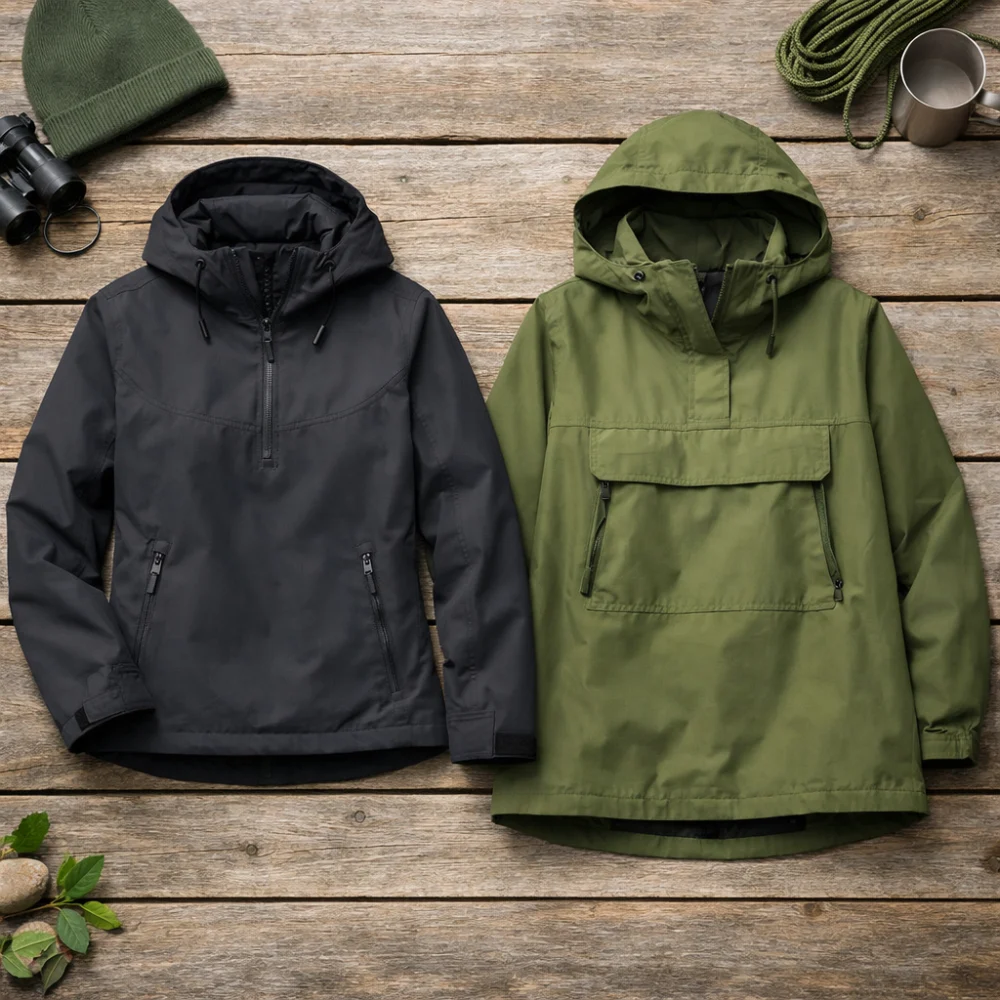
Within this category, the most useful distinction is usually between lighter casual styles and more outdoor-focused smocks. Anorak-style pieces often feel easier to pull on and off, while smocks may give a looser, more covered shape that works well over other layers. Some designs are short and easy to wear in town, while others offer longer coverage for extra draught protection.
The main limitation is that a style that feels ideal for one use may be less convenient for another. A lighter design may pack well but offer less coverage, while a roomier smock may feel more comfortable over layers but less streamlined for everyday wear.
Which type suits different buyers?
| Buyer need | Features that often help | Trade-off to keep in mind |
|---|---|---|
| Everyday wear | Simple closures, comfortable fit, useful pockets, moderate coverage | Casual styles may be less specialised for harsher weather |
| Walking and light outdoor activity | Breathability, room for layers, adjustable hood, easy movement | A more active-friendly cut may feel less tailored |
| Travel and packing light | Lightweight construction and packable design | Very packable layers may offer less warmth or structure |
| Windy, changeable days | Secure hood, closeable cuffs, coverage through the body | Extra coverage can feel warmer or bulkier indoors |
| Layering over knitwear or fleece | Relaxed fit and enough room through the shoulders and chest | Roomier garments may look looser when worn on their own |
Common mistakes and misunderstandings
- Assuming every anorak is waterproof. Some are designed mainly for wind or light showers, so check the product description rather than relying on the style name alone.
- Choosing a fit that is too neat for layering. If you plan to wear jumpers or fleece underneath, a closer cut may feel restrictive.
- Overlooking hood shape and adjustability. A hood that is present but not well designed may be less useful in real weather.
- Focusing only on looks. Style matters, but everyday usefulness often depends more on pockets, closure type and comfort in movement.
- Ignoring care and storage needs. Lightweight outer layers can be easy to keep ready for use, but they still need enough space and sensible cleaning care.
Safety and suitability caveats
Anoraks and smocks are clothing choices, not guaranteed protection against all weather. Check what each product is intended to handle and make sure it matches your planned use, especially if you need something for sustained rain, cold or exposed conditions. If you are buying for outdoor exercise or travel, think about visibility, comfort and layering needs as part of suitability rather than expecting one garment to cover every situation.
Maintenance, storage and lifespan considerations
General care can affect how well an anorak or smock stays useful over time. Lightweight outerwear is often easier to store than heavier coats, but it still benefits from being hung or folded carefully and kept clean according to the care guidance on the product page. If a garment relies on a water-resistant finish or technical fabric, that finish may need more care than a simple casual layer.
Because different models use different fabrics and finishes, it is sensible to check how the item should be cleaned and whether it needs any special attention after washing or long storage. That helps you judge whether the upkeep suits how often you expect to wear it.
How to compare options efficiently
- Decide whether you need a light casual layer, a weather-ready outdoor layer or something for layering over warmer clothing.
- Check the fit and make sure there is enough room for the clothing you will wear underneath.
- Compare the level of weather protection, hood design and closure details.
- Look at comfort features such as breathability, pocket layout and ease of movement.
- Review care guidance and practicality so the garment suits how you will actually use it.
Summary buyer decision checklist
- Does it suit the weather you most often face?
- Is the fit right for wearing alone and over layers?
- Is the hood, closure and pocket setup practical for your use?
- Is it intended for everyday wear, walking or lighter outdoor use?
- Will the fabric, care and storage needs suit your routine?
- Have you checked the individual product page for the details that matter most?
Frequently asked questions
What is the difference between an anorak and a smock?
In shopping terms, the distinction is often about shape and how the garment is worn. An anorak is commonly associated with a practical outer layer, while a smock often suggests a looser, pull-on style with more room over other clothing. The exact meaning can vary, so always check the product description and fit notes.
Are women’s anoraks and smocks suitable for layering?
Often, yes. Many buyers choose them because they can be worn over a top, jumper or fleece when the weather is mixed. If layering matters to you, check the cut through the shoulders, chest and hem so the garment does not feel tight when worn over another layer.
Should I choose a packable design?
Packable styles are useful if you want a layer that can live in a bag or be brought out when the weather changes. The trade-off is that very packable garments may feel lighter or less structured than less compact options. Choose based on how often you will carry it rather than on storage convenience alone.
Do I need a longer style?
A longer cut can offer extra coverage and may feel more comfortable in wind or when you want a bit more protection over the hips. Shorter styles can feel lighter and more versatile for everyday wear. Think about whether coverage, mobility or a slimmer silhouette matters most to you.
What features matter most for active use?
For walking or other light activity, breathability, movement and an adjustable hood are often more useful than a purely decorative design. It is also worth checking whether pockets and closures will stay comfortable when you move. Specifications vary by model, so always check the individual product page before buying.
How can I tell if a smock will suit my needs?
Start with the conditions you expect, then check whether the item offers the level of protection, room and practicality you want. If you plan to layer underneath or prefer a looser feel, a smock may work well. If you want a neater shape or a simpler everyday layer, an anorak-style option may be a better fit.
What should I check before buying online?
Look at the fit description, the intended weather use, the hood and pocket layout, and any care guidance. It also helps to check the product page for wording about breathability, packability and whether the garment is designed for casual wear or more active use.
More Women's Anoraks & Smocks
See all 118 Women's Anoraks & Smocks →


As an Amazon Associate we earn from qualifying purchases.