

Men’s climbing trousers are chosen for freedom of movement, comfort on the wall and practical durability in places that take a lot of wear. The right pair should feel easy to move in without getting in the way when you step high, kneel, crouch or wear a harness.
This guide focuses on the buying decisions that matter most: fit, stretch, fabric weight, abrasion resistance and useful features. It also helps you separate climbing-specific needs from more general outdoor trouser choices.
Because product details vary widely, it is worth looking closely at the individual product page rather than relying on the category name alone.
What should you look for in men’s climbing trousers?
The best starting point is fit and movement, then check whether the fabric and construction suit the kind of climbing you do. A trouser that is comfortable but too loose may catch or feel awkward under a harness, while a very slim pair may restrict movement. The main trade-off is usually between maximum mobility, extra toughness and everyday comfort.
Specifications vary by model, so always check the individual product page before buying.
| Feature | What it means | Why it matters | What to check |
|---|---|---|---|
| Fit | How the trousers sit on the body and how much room they allow to move | Affects freedom of movement, comfort and how well they work with a harness | Waist shape, leg room, taper and whether the fit is described as slim, regular or relaxed |
| Stretch | How much the fabric moves with you | Useful for high steps, squats and reaching | Look for stretch in the fabric description and compare it with how flexible you need the trousers to feel |
| Durability | How well the fabric and seams stand up to wear | Important if you expect frequent contact with rock, gear or rough surfaces | Check for reinforced areas, stronger fabric zones and the overall feel of the construction |
| Weather comfort | How warm, breathable or protective the trousers feel | Matters in changing conditions or on longer days outdoors | Look at fabric weight, lining, breathability and whether they are intended more for warm or cool conditions |
| Features | Pockets, waist adjustments and other practical details | Can improve convenience, but may add bulk or weight | Check pocket placement, belt compatibility and whether extra features interfere with a harness |
Key decision criteria explained
Movement and patterning
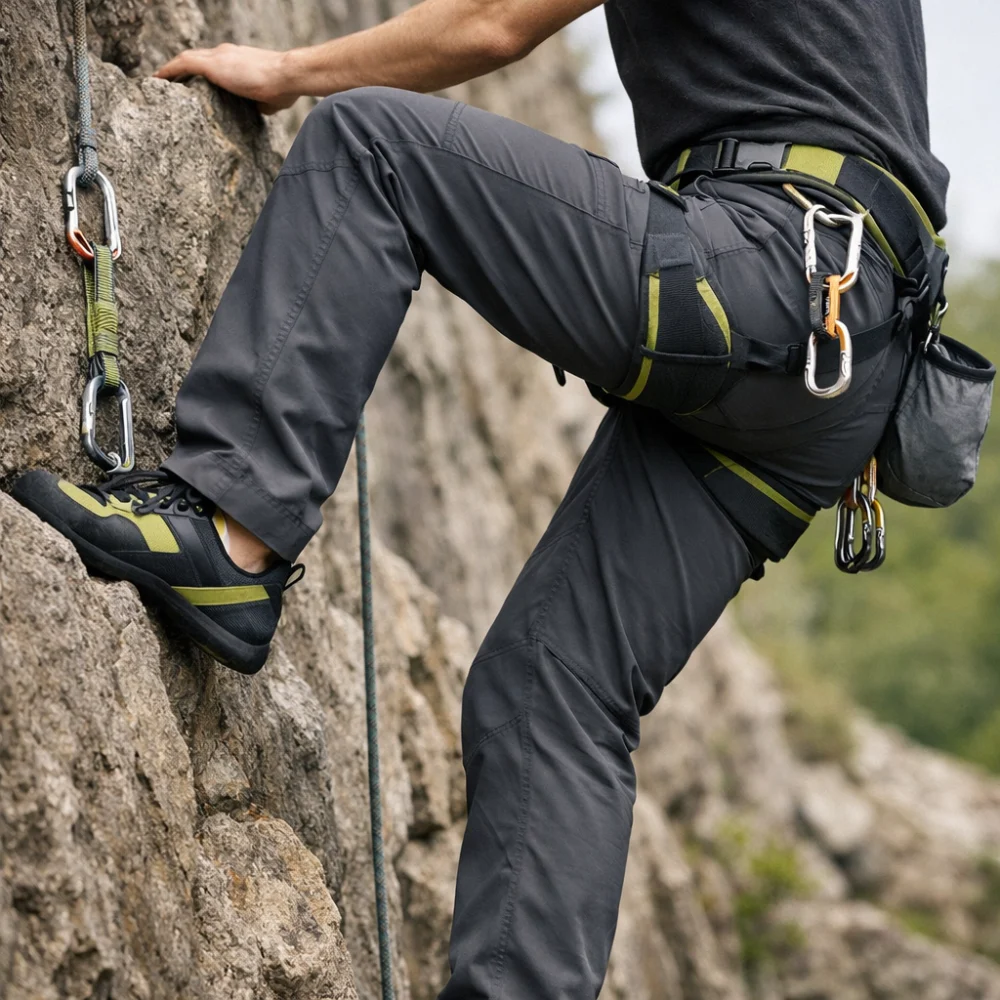
Climbing trousers need to bend and lift comfortably. A good shape usually matters more than simply buying a larger size, because the wrong cut can still feel restrictive at the knees, hips or seat. If you often step high or spend time on technical moves, prioritise trousers that are described as flexible or cut for active movement.
Fabric and durability
Climbing can be hard on clothing, so buyers often compare comfort against toughness. Lighter fabrics may feel easier to wear for long periods, while tougher fabrics can better cope with repeated friction. The right choice depends on whether you want a more agile feel or a harder-wearing pair for frequent use.
Waist comfort and harness compatibility
Waist design matters because climbing trousers are often worn under a harness. A waistband that is too bulky, too loose or awkwardly shaped can become annoying quickly. Look for a secure fit that stays comfortable when sitting, moving and bending, and think about whether you prefer belt loops, an integrated adjustment or a cleaner waistline.
Pockets and practical details
Useful pockets are welcome, but placement matters. Deep pockets that stay out of the way are often more practical than large pockets that add bulk near the harness area. Small features can be helpful, but they should support movement rather than distract from it.
Types and variants within the category
Men’s climbing trousers often differ more by construction than by a dramatic change in purpose. Some are lighter and more movement-focused, while others are made to feel tougher and more protective.
- Lightweight stretch trousers: Suited to buyers who want maximum freedom of movement and a less bulky feel.
- Hardwearing trousers: Better for frequent use where abrasion resistance matters more than a very light feel.
- More casual outdoor styles: Can suit mixed use, but may not offer the same climbing-focused movement or harness comfort.
If you are choosing between climbing trousers and general outdoor trousers, think about where the trousers will be used most. A more specialised pair may feel better in climbing settings, while a general outdoor style may suit broader day-to-day use.
Which type suits different buyers?
| Buyer need | What matters most | Why that choice helps |
|---|---|---|
| Indoor or outdoor climbing with a harness | Comfort around the waist, flexible movement and low bulk | Makes it easier to move without distraction |
| Frequent outdoor use on rough ground | Durability and abrasion resistance | Helps the trousers cope with repeated wear |
| All-day comfort and mixed use | Balanced fit, moderate stretch and practical pockets | Works well beyond climbing sessions |
| Buyer who dislikes restrictive clothing | Roomy but secure fit with good stretch | Reduces the chance of the trousers feeling tight during movement |
Common mistakes to avoid
- Choosing by looks alone: style matters, but climbing trousers should first be judged on movement and comfort.
- Ignoring the waist area: a comfortable leg fit does not always mean the trousers will work well with a harness.
- Assuming all outdoor trousers are the same: climbing use can place different demands on stretch, cut and pocket placement.
- Overlooking fabric trade-offs: a tougher pair may feel less airy, while a lighter pair may not suit rougher use.
Safety and suitability notes
Climbing trousers are a clothing choice, not a safety system, so it is sensible to keep expectations realistic. Check that the fit suits the activity, does not restrict movement and does not create unnecessary bulk where you need it most. For outdoor use, think about the conditions you expect rather than assuming one pair will suit every season or route.
Care, storage and lifespan considerations
General clothing care affects how long trousers stay comfortable and presentable. Look at the fabric care guidance on the individual product page and think about whether you want something easy to wash and dry after frequent use. If you plan to use them regularly, a design that keeps its shape and comfort after repeated wear may be more important than a style that looks good only when new.
How to compare options efficiently
- Decide where you will wear them most: climbing sessions, mixed outdoor use or casual wear.
- Shortlist the fit and cut that match your movement needs.
- Compare fabric feel, stretch and any reinforcement details.
- Check waist design, pocket placement and harness comfort.
- Read the individual product page carefully before making a final choice.
Summary buyer decision checklist
- Does the fit allow easy movement without feeling loose or awkward?
- Is the waistband likely to work well with your harness or preferred layers?
- Does the fabric seem suitable for your balance of comfort and durability?
- Are the pockets and features practical, not bulky?
- Will the trousers suit the conditions and level of use you expect?
Frequently asked questions
Are climbing trousers different from walking trousers?
They can be. Climbing trousers are usually chosen with movement, harness comfort and abrasion resistance in mind, while walking trousers may focus more on general outdoor comfort. There is overlap, so the best choice depends on how climbing-focused you need the trousers to be.
Do I need stretchy trousers for climbing?
Stretch is often helpful because climbing involves bending, stepping high and moving in awkward positions. That said, the amount of stretch you need depends on your own comfort preferences and the style of climbing you do. Some buyers will value toughness or fit more than maximum flexibility.
Should climbing trousers be tight or loose?
Neither extreme is ideal for most buyers. Very tight trousers can limit movement, while very loose ones may feel bulky or awkward under a harness. A secure fit with enough room to move is usually the most practical middle ground.
Are more pockets always better?
Not necessarily. Extra pockets can be useful, but they can also add bulk or sit where they are inconvenient under a harness. It is often better to have well-placed, usable pockets than many pockets that do not suit the activity.
Can I use climbing trousers for everyday wear?
Often yes, especially if you choose a pair with a balanced fit and a less technical look. The main question is whether they feel comfortable outside climbing and whether the design suits your day-to-day routine. If you want one pair for multiple uses, mixed-purpose features may be the best compromise.
What should I check before buying online?
Focus on fit description, fabric type, stretch, waist design and pocket layout. It is also wise to compare any stated intended use with how you plan to wear them. Specifications vary by model, so always check the individual product page before buying.