

Children’s insulated trousers are for keeping young wearers warmer when ordinary trousers feel too thin for cold weather. They are often chosen for winter walks, school trips, outdoor play and family days where comfort matters more than a technical, full-shell approach.
The main buying challenge is balancing warmth, weather resistance and ease of movement. Some options are built for damp, muddy play, while others are better for colder, drier conditions or layered wear.
Because children’s needs vary by age, activity and weather, it helps to compare the construction rather than rely on the name alone. Specifications vary by model, so always check the individual product page before buying.
What should you look for first?
Start with the conditions the trousers will actually face. If the main need is warmth on cold but fairly dry days, a simpler insulated pair may be enough; if the wearer is likely to sit on wet ground, play in slush or spend longer outdoors, weather resistance becomes more important. The best starting point is usually the balance between insulation, outer fabric and fit, because those three factors affect comfort more than most shoppers expect.
| Feature | What It Means | Why It Matters | What To Check |
|---|---|---|---|
| Insulation level | How much warmth the trouser is designed to retain | Affects comfort in cold weather and how easily the child can keep playing outdoors | Look for the construction described on the product page and match it to the intended season and activity |
| Water resistance | How well the outer fabric deals with damp, drizzle or splashes | Important for wet grass, muddy parks and winter play | Check whether the item is described as water-resistant, waterproof or just insulated |
| Breathability | How well moisture from inside the garment can escape | Helps reduce clamminess during active use | Look for fabric notes that suggest a more active, less sweaty wear |
| Fit and layering room | How much space there is for movement and base layers | Children need enough room to move, sit and crouch comfortably | Check sizing guidance, waistband style and whether the fit is slim or relaxed |
| Reinforcement and durability | How well the trousers cope with kneeling, sliding and rough play | Useful for active use and repeated washing | Look for reinforced panels, sturdy seams and fabric descriptions that suit outdoor wear |
| Ease of use | How simple they are to put on, take off and adjust | Matters for younger children and busy routines | Check waistband design, fastenings and whether the trouser is easy to layer over other clothing |
Key decision criteria explained
Warmth versus bulk
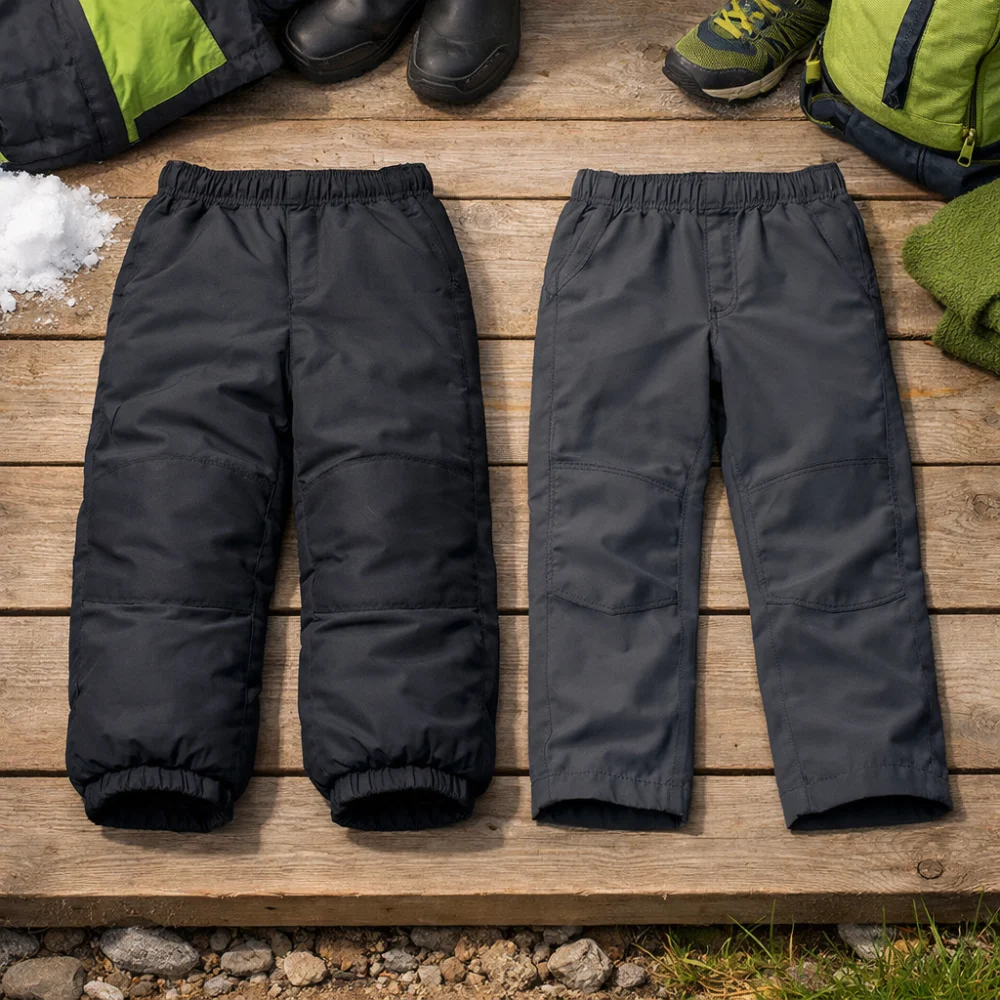
Insulated trousers can feel cosy without needing multiple layers, but extra warmth can also mean extra bulk. That may suit children who spend time standing around, travelling or sitting outdoors, while more active children may prefer something less padded so they can move more freely. Consider whether the main job is everyday winter comfort or longer exposure to cold.
Weather resistance
Some insulated trousers are mainly about warmth, while others also help shed light rain, wet grass or splashy conditions. This matters because cold and wet together feel very different from cold alone. If the trousers will be used for muddy play or damp school runs, check the outer material rather than assuming insulation automatically means waterproofing.
Fit, growth room and comfort
Children need enough room to squat, run and sit comfortably, but trousers that are too loose can be awkward and may let in more cold air. A good fit usually allows for a base layer underneath without looking over-stuffed. Waist adjustment, leg length and overall shape are often more useful than choosing the largest size possible.
Breathability and active use
For active children, too much insulation can trap heat and moisture. That does not matter as much for short, low-movement outings, but it can affect comfort during walking, play or travel. Think about whether the trousers need to work for energetic use or mainly for occasional warmth.
Durability where it counts
Knees, seat and cuffs often take the most wear. If a child is likely to kneel, slide or sit on rough ground, stronger fabric in those areas can be more useful than extra insulation elsewhere. Look for a trouser that suits the sort of play it will actually see.
Types and variants you may come across
Heavily insulated trousers
These are usually aimed at colder conditions and can feel more protective on winter days. They suit children who spend time outdoors in low temperatures, but they may be warmer than needed for milder weather or energetic play.
Insulated waterproof-style trousers
These combine warmth with stronger weather protection and are useful in wet, muddy or snowy conditions. The trade-off is that they can be less breathable or more structured than simpler warm trousers, so they are worth choosing only when the weather challenge justifies it.
Softshell or fleece-lined options
These can be a comfortable middle ground for dry, chilly days and everyday outdoor use. They are often more flexible and easier to wear, but they may not offer the same wet-weather protection as a fully waterproof style.
Which type suits which child or activity?
| Buyer need | Usually a better fit | Why |
|---|---|---|
| School run and everyday winter wear | Simple insulated trousers with an easy fit | Comfort and quick dressing often matter more than technical features |
| Wet playgrounds, slush or muddy parks | Insulated trousers with stronger water resistance | Cold and damp together can quickly reduce comfort |
| Active walking or family days out | Warmer trousers with better breathability and room to move | Helps avoid overheating while still giving cold-weather comfort |
| Layering over base clothing | Roomier fit with adjustable waist or easy-on construction | Makes it easier to dress for changing temperatures |
| Younger children who need independence | Simpler fastenings and a straightforward shape | Can make dressing less frustrating for child and adult alike |
Common mistakes and misunderstandings
Assuming all insulated trousers are waterproof. Warmth and water resistance are related, but they are not the same thing. Check the product description carefully if wet-weather use matters.
Choosing insulation without thinking about movement. A warmer trouser is not always a better one if the child will be running around. Fit and flexibility can matter just as much as warmth.
Buying too large for growth room. Some extra room is useful, but oversizing can make trousers awkward to wear and less effective at keeping warmth in.
Ignoring where the trousers will be used most. A pair for short car-to-class transfers has different needs from one for muddy outdoor play. Match the category to the real routine rather than a worst-case scenario.
Safety and suitability caveats
Check that the trouser is suitable for the child’s age, size and intended activity. If a child is likely to be around wet, slippery or very cold conditions, it is worth reviewing the product page carefully rather than relying on the category name alone.
For children, comfort and freedom of movement are part of suitability too. A trouser that is too restrictive, too bulky or difficult to manage may not be practical even if it sounds warm.
Maintenance, storage and lifespan considerations
General care matters because cold-weather trousers often see mud, damp and frequent use. Check whether the fabric is easy to clean and whether the construction is likely to tolerate regular washing. It is also sensible to think about drying time, especially if the trousers may be used on consecutive days.
Storage is usually straightforward, but keeping them dry before putting them away helps preserve comfort and reduce odours. If the item relies on a more technical outer fabric or lining, following the care instructions on the individual product page is especially important.
How to compare options efficiently
- Decide where the trousers will be used most often: school runs, play, walking or wetter outdoor use.
- Choose the level of warmth and weather resistance that matches that use.
- Check fit details, especially room for movement and whether layers will fit underneath.
- Compare the fabric, reinforcement and ease of dressing, not just the category name.
- Read the individual product page for the exact construction and care information.
Summary buyer decision checklist
- Will the trousers be used mainly for dry cold weather or for wetter conditions too?
- Is warmth, flexibility or weather resistance the top priority?
- Does the fit allow for movement and sensible layering?
- Are the knees, cuffs and seat likely to need extra durability?
- Is the design easy for the child and caregiver to manage day to day?
- Have you checked the individual product page for the exact construction?
Frequently asked questions
Are children’s insulated trousers the same as ski trousers?
Not always. Some insulated trousers are aimed at general cold-weather wear, while others are built more like ski or snow trousers with stronger weather protection. If that difference matters, check the product description carefully rather than relying on the category name.
Can insulated trousers be worn over leggings or base layers?
Often yes, but it depends on the fit. A slightly roomier cut is usually more practical if layering is part of the plan. The key is to check that the child can still move comfortably.
Do these trousers need to be waterproof?
Not necessarily. If the main need is warmth for dry, cold days, waterproofing may not be essential. For wet grass, muddy play or snow, stronger water resistance becomes much more useful.
What is the main difference between fleece-lined and heavily insulated styles?
Fleece-lined options often prioritise comfort and flexibility, while more heavily insulated styles usually focus more on warmth. The better choice depends on how cold it gets and how active the child will be.
How do I know if the fit is right?
The trousers should allow sitting, crouching and walking without feeling tight. It is also helpful if they leave room for a thin layer underneath when needed. Avoid sizing up so far that the fit becomes awkward or draughty.
What should I prioritise for very active children?
Comfort, mobility and breathability often matter most for active use. Too much bulk can feel restrictive, especially during play. Look for a balance that keeps the child warm without slowing them down.