


Convertible gloves are a practical middle ground for buyers who want warmth on demand and easier finger access when they need to handle a phone, map, tool, camera or dog lead. They are often chosen for walking, commuting, fishing, running and other outdoor use where conditions can change during the day.
The key buying decision is not simply whether the glove has a flip-top or fingerless design. It is about how much warmth, dexterity, grip and coverage you need in real use, and how often you expect to switch between them.
Because this category covers several styles under one idea, it helps to compare the opening mechanism, the amount of insulation and the intended activity before focusing on appearance or colour.
Compare Convertible Gloves


As an Amazon Associate we earn from qualifying purchases.
What should you look for in convertible gloves?
The most useful starting point is the balance between warmth and dexterity. A convertible glove should feel comfortable in both modes: closed when you want more coverage, and open when you need finer finger movement. If the flip section feels awkward or bulky, you may end up using only one mode and losing the main benefit.
For many buyers, the best option is the one that suits their usual conditions rather than the coldest day they might face. Specifications vary by model, so always check the individual product page before buying.
| Feature | What It Means | Why It Matters | What To Check |
|---|---|---|---|
| Convertible design | How the glove changes from covered fingers to fingerless use | Determines how convenient it is to switch between warmth and dexterity | Look at whether the flap covers the whole hand, individual fingers, or only part of the glove |
| Warmth level | How much insulation and coverage the glove provides | Affects comfort in cold, windy or still conditions | Check the material description and whether the design prioritises light use or winter wear |
| Fit and feel | How securely the glove sits on the hand | A poor fit can reduce comfort and make the flip section less practical | Review sizing information and any notes about stretch, cuffs or adjustability |
| Dexterity | How well you can grip, handle gear or use devices | Important if you will keep taking fingers in and out of the glove | Look for details on palm shape, seam placement and whether the open mode is easy to use |
| Intended activity | The setting the glove is designed around | Different activities need different balances of warmth, grip and breathability | Match the product to walking, commuting, sport, work or general outdoor use |
| Care and durability | How the glove may handle regular wear and cleaning | Useful if you expect frequent use or muddy conditions | Check the care instructions and any material notes before buying |
Key decision criteria explained
Warmth versus flexibility
Convertible gloves are useful because they let you choose between more coverage and more finger movement. That said, the warmer the glove, the more likely it is to feel bulkier when open. If you need both comfort and fine control, look for a design that keeps the open mode neat rather than overly loose.
How the flip section works
Some designs aim for quick access, while others focus on keeping the closed mode tidy. A well-designed flip section should stay out of the way when not in use and return to position without fuss. If you expect to switch often, ease of use matters more than a highly insulated feel.
Fit around the fingers and palm
Fit affects both comfort and function. If the glove is too tight, the flip part may pull awkwardly; if it is too loose, grip can suffer. Pay attention to how the glove is shaped around the palm and whether the finger openings are likely to suit the way you use your hands.
Grip and handling
If you will use poles, tools, reins, cameras or other handheld items, grip becomes a major factor. Some buyers will prefer a thinner feel for better handling, while others will accept more bulk in exchange for warmth. The right balance depends on how long you usually keep the glove on and how often you need your fingertips free.
Materials and layering
Material choice changes the overall experience. Thinner designs are often easier to wear for active use, while more substantial constructions may suit slower outdoor routines. If you plan to wear the gloves over liners or alongside other clothing layers, check that the fit still leaves enough room to move comfortably.
Types and variants you may see
Convertible gloves are usually described by how the finger coverage changes rather than by a completely separate product shape. In practical terms, the main variants are simple flip-top styles, fingerless versions with a cover, and more winter-focused designs that put warmth first.
- Flip-top gloves: useful when you want to move quickly between covered and uncovered fingers.
- Fingerless convertible styles: better when dexterity matters more than full coverage for most of the time.
- Warmer convertible designs: suited to colder conditions, but usually less streamlined when open.
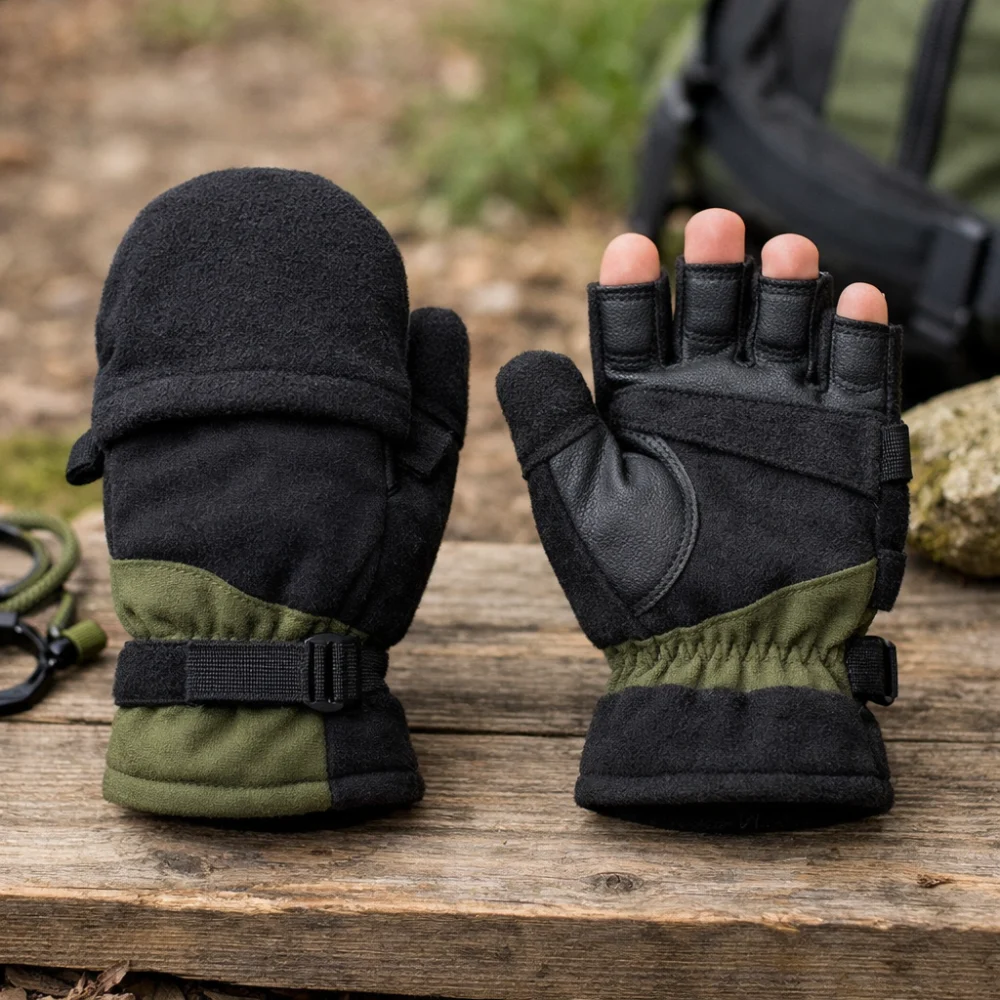
If you mainly want the warmest possible glove, a dedicated insulated glove may suit you better. If you want maximum finger freedom all the time, fingerless gloves may be simpler. Convertible gloves sit between those two choices.
Which buyer needs suit which features?
| Buyer need | More suitable characteristics | Why that helps |
|---|---|---|
| Walking or commuting | Comfortable fit, easy flip section, moderate warmth | Lets you adjust to changing weather and use your hands more easily when needed |
| Sport or active outdoor use | Lightweight feel, good grip, simple open-close action | Reduces bulk and makes frequent hand use less awkward |
| Fishing or similar hands-on hobbies | Stable fit, practical finger access, enough coverage for cooler pauses | Balances dexterity with protection during longer sessions |
| Cold-weather everyday wear | More coverage, sensible insulation, secure cuffs | Improves comfort when conditions are less forgiving |
| Gift buying | Flexible sizing information, broadly useful styling, clear activity fit | Makes it easier to choose without knowing every detail of the recipient’s routine |
Common mistakes and misunderstandings
- Assuming all convertible gloves feel the same: some are designed for quick access, others for more coverage. The construction can change how easy they are to wear in real use.
- Choosing warmth without checking dexterity: a glove that is too bulky may defeat the point of having open-finger access.
- Ignoring sizing: a poor fit can make the glove less comfortable and less useful, especially around the thumb and palm.
- Overlooking the intended activity: a glove that works for a stroll may not suit repeated hand use, faster movement or colder pauses.
Safety and suitability caveats
Convertible gloves are a comfort and practicality purchase, so the main caution is choosing a design that matches the conditions you expect. They are not a substitute for specialist protection, weatherproofing or task-specific handwear where those features are required. Check the individual product page for material details, fit information and any care notes before deciding.
Maintenance, storage and lifespan considerations
General care can make a difference to how long gloves stay comfortable. If a pair will be used outdoors often, look for material and cleaning guidance that suits your routine. It also helps to store them dry and away from crushing, especially if the flip section or seams need to keep their shape for comfortable use.
How to compare options efficiently
- Start with the activity: decide whether you need the gloves mainly for walking, commuting, sport, work or general outdoor use.
- Choose your priority: warmth, dexterity or a balanced middle ground.
- Check the fit details carefully, especially around the fingers, palm and cuff.
- Compare the flip style and how easy it is to move between modes.
- Review the material and care notes so the gloves suit how you will actually use them.
Summary buyer decision checklist
- Does the glove suit your main activity?
- Is the warmth level appropriate for your usual conditions?
- Will the open-finger mode be useful enough to justify the design?
- Does the fit look suitable for your hand size and comfort needs?
- Are the care instructions manageable for how often you will use them?
- Have you checked the individual product page for the exact details?
Frequently asked questions
Are convertible gloves a good choice for everyday use?
They can be, especially if your day involves moving between outdoors and indoors or switching between warmth and hand use. The main question is whether you will actually use both modes often enough to benefit from the design.
Do convertible gloves keep hands as warm as normal gloves?
Not always. They can offer similar coverage when closed, but the structure that makes them convertible may change how warm or snug they feel. If maximum warmth is the main goal, compare them carefully with dedicated insulated gloves.
What is the main advantage of a flip-top design?
The main advantage is flexibility. You can uncover your fingers without fully removing the glove, which is helpful when you need to handle small items or use your hands briefly.
How important is sizing for this category?
Very important, because fit affects both comfort and how well the glove switches between modes. A loose design may feel awkward, while a tight one may be harder to use comfortably.
Are convertible gloves suitable for sport?
They can be, if the design stays light, grippy and easy to manage. For active use, it is worth checking whether the glove seems designed to stay comfortable during repeated hand movement.
Should I choose a warmer or lighter pair?
Choose warmer if you expect colder, slower or more exposed conditions. Choose lighter if you need more finger control, plan to stay active, or expect to use the open mode often.
More Convertible Gloves
See all 252 Convertible Gloves →


As an Amazon Associate we earn from qualifying purchases.