

A men’s tweed gilet is a useful layering piece for country wear, shooting days, walks and everyday outdoor use when you want warmth at the core without the bulk of full sleeves. It sits between a shirt and a jacket, so the main buying decision is usually about balance: enough insulation and structure for the job, but still easy to move in.
If you are comparing options, it helps to think about fit, fabric feel, lining, fastenings and where you plan to wear it. Tweed gilets can look similar at a glance, but small differences often affect comfort, layering and how formal or practical they feel.
Specifications vary by model, so always check the individual product page before buying.
What matters most when choosing a men’s tweed gilet?
The best starting point is your main use. If you want something for layering under a jacket, a slimmer, neater cut is often easier to wear. If you want a gilet for mixed outdoor use, a slightly roomier fit and a practical lining may be more comfortable. The main trade-off is between traditional tweed appearance and everyday ease of movement.
| Feature | What it means | Why it matters | What to check |
|---|---|---|---|
| Fit | How closely the gilet sits to the body | Affects layering, comfort and how tidy it looks | Look for guidance on sizing and whether it is intended for wearing over shirts or under outerwear |
| Tweed style | The look, weight and feel of the outer fabric | Changes the balance between country style and practical wear | Check the description for the type of tweed appearance and whether it suits formal or casual use |
| Lining | The inner layer against your clothing | Can improve comfort and ease of movement | See whether the lining is designed for comfort, warmth or smoother layering |
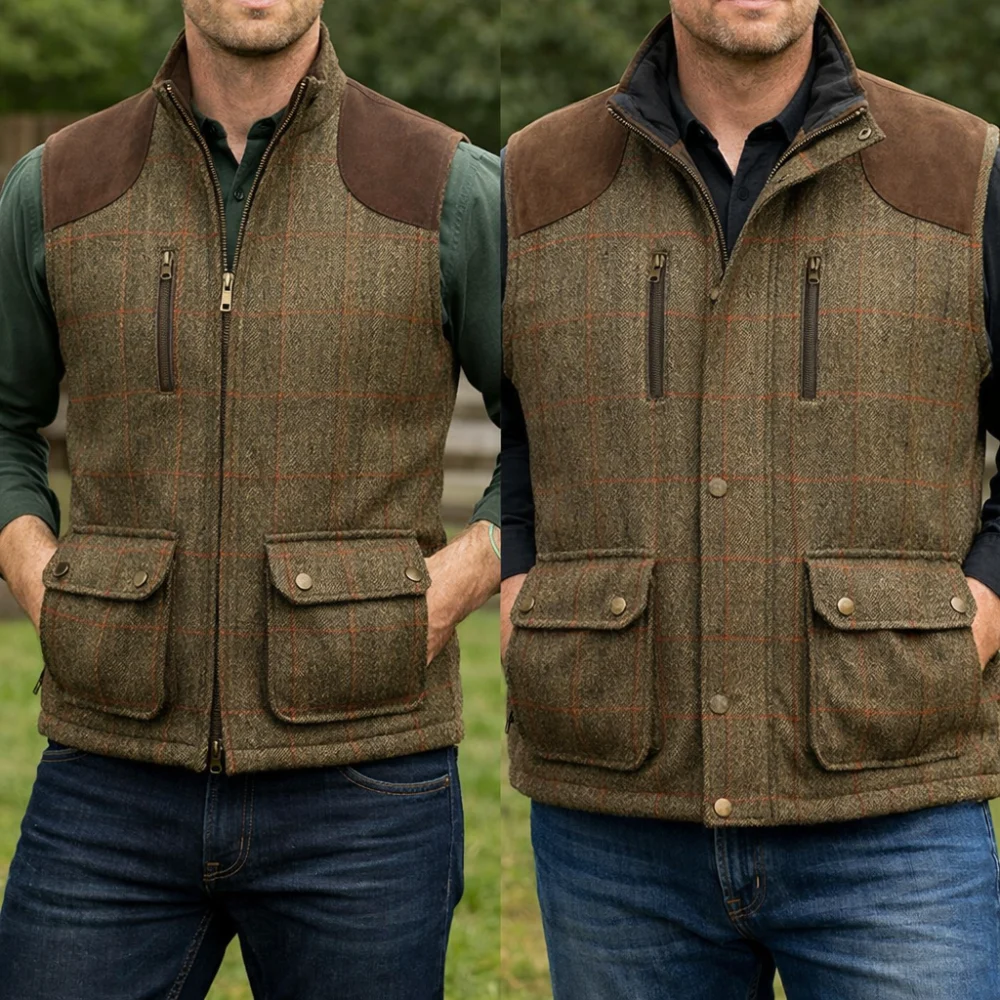
| Fastening | How the front closes | Influences convenience and how neatly it sits when worn open or closed | Check whether it uses buttons or a zip and whether that suits your preference |
| Pockets | Storage and hand-warming options | Useful for small essentials and everyday practicality | Look at pocket placement and whether they fit how you plan to use the gilet |
| Style details | Collar shape, trim and finish | These affect formality and how easy it is to pair with other country clothing | Compare the overall look with the shirts, knitwear and jackets you already wear |
Key decision criteria explained
Fit and layering
A gilet should give warmth without restricting the arms. If you plan to wear it over a shirt and knitwear, a little extra room can be helpful. If you want a smarter profile, a closer fit may work better, but check that it still allows comfortable movement at the shoulders and chest.
Fabric feel and appearance
Tweed gilets are often chosen as much for their look as for their practicality. Some buyers want a classic country finish, while others prefer a more understated layer that works with everyday wardrobe pieces. Think about where you will wear it most often, because a traditional look may be ideal for one setting and less versatile in another.
Warmth versus bulk
A gilet provides core warmth while leaving the arms free, but not every design gives the same level of insulation. A heavier-feeling layer may be better in cooler weather, while a lighter option may be easier for year-round wear indoors and out. The question is not simply how warm it is, but whether it is warm enough for your usual conditions without feeling cumbersome.
Fastening and ease of use
Buttons and zips can create a different feel in use. A button front often gives a traditional country look, while a zip can feel quicker and more secure for frequent wear. Neither is automatically better; it depends on whether you value appearance, convenience or a balance of both.
Pockets and everyday practicality
Pockets matter more than many buyers expect. For casual wear, they may simply be convenient; for country use, they can help keep small essentials close to hand. Check pocket placement and whether the design feels useful when you are standing, walking or layering over other clothing.
Types and styling variants
Within this category, the main differences are usually about cut, weight and finish rather than radically different product types. Some tweed gilets lean towards a traditional waistcoat style, while others are made to feel more like a practical bodywarmer. That makes it worth comparing the overall silhouette as well as the fabric pattern.
Some designs are better suited to smart country outfits, while others are more relaxed and work well for casual outdoor use. If you want one piece to do more than one job, choose the most versatile finish you can live with, not just the most decorative one.
Which buyer needs point to which features?
| Buyer need | Features to prioritise | Why |
|---|---|---|
| Layering under a jacket | Closer fit, smoother lining, less bulk | Helps the gilet sit neatly without feeling tight |
| Country style for social wear | Classic tweed appearance, tidy finish, traditional fastening | Gives a more dressed look |
| Practical outdoor use | Comfortable fit, useful pockets, easy movement | Makes it easier to wear for longer periods |
| Gift buying | Versatile style, forgiving fit, familiar colours or finishes | Reduces the chance of choosing something too specific |
| Occasional wear | Simple design, easy pairing with existing clothes | Improves value if it will not be worn every week |
Common mistakes to avoid
- Choosing on appearance alone. A gilet can look right on a hanger but feel wrong if the fit is too tight for layering.
- Assuming all tweed gilets are equally warm. The lining, cut and overall construction can change how comfortable it feels in real use.
- Overlooking how it fastens. A style you like visually may not be the easiest option if you open and close it often.
- Ignoring pocket usefulness. Pocket style can make a real difference to practicality, especially for outdoor wear.
- Picking a look that only suits one outfit. A more versatile finish often gets worn more often.
Suitability and care considerations
A tweed gilet is generally best thought of as a layering garment rather than heavy outerwear. If you expect frequent use outdoors, check that the cut, lining and fastening suit the conditions you actually face. For smarter occasions, make sure the fabric and detailing fit the rest of your clothing rather than clashing with it.
Care needs can vary by model and fabric blend, so look closely at the care guidance on the product page. Storage also matters: hanging it neatly will usually help it keep its shape better than crushing it into a tight space.
How to compare options efficiently
- Start with the setting: smart wear, country events, general layering or practical outdoor use.
- Compare fit first, because comfort and layering depend on it.
- Then look at tweed appearance, lining and fastening style.
- Check whether the pockets and finish suit how you will actually wear it.
- Read the individual product information carefully before deciding.
Summary buyer decision checklist
- Does the fit work over the clothes you plan to wear underneath?
- Is the overall look smart, practical or somewhere in between?
- Do the fastening and pockets suit everyday use?
- Will the lining and cut feel comfortable for your intended setting?
- Does the style match the rest of your country clothing?
Frequently asked questions
What is a tweed gilet mainly used for?
It is mainly used as a warm, sleeveless layer for country wear and general outdoor use. Because it leaves the arms free, it is often chosen for layering rather than as a replacement for a full jacket.
Should a tweed gilet fit close to the body?
Usually it should fit neatly, but not so close that it restricts movement or layering. A slightly roomier fit can be more comfortable if you plan to wear it over knitwear.
Are tweed gilets only for formal country clothing?
No. Some are styled for smarter country outfits, while others work well as practical everyday layers. The best choice depends on how traditional or casual you want the final look to be.
What matters more: the tweed look or the lining?
Both matter, but in different ways. The outer look affects style, while the lining affects comfort and how easy the gilet is to wear over other clothes.
Is a zip better than buttons?
Neither is always better. Zips can be quicker and more practical, while buttons often suit a more traditional country look.
How do I choose a tweed gilet as a gift?
Choose a versatile style with a fit that is likely to work over regular clothing and a finish that is easy to pair with common countrywear. When in doubt, a more classic, understated design is often the safer choice.
What should I check on the product page before buying?
Check the fit guidance, fastening type, lining details, pocket layout and care information. Specifications vary by model, so always check the individual product page before buying.