

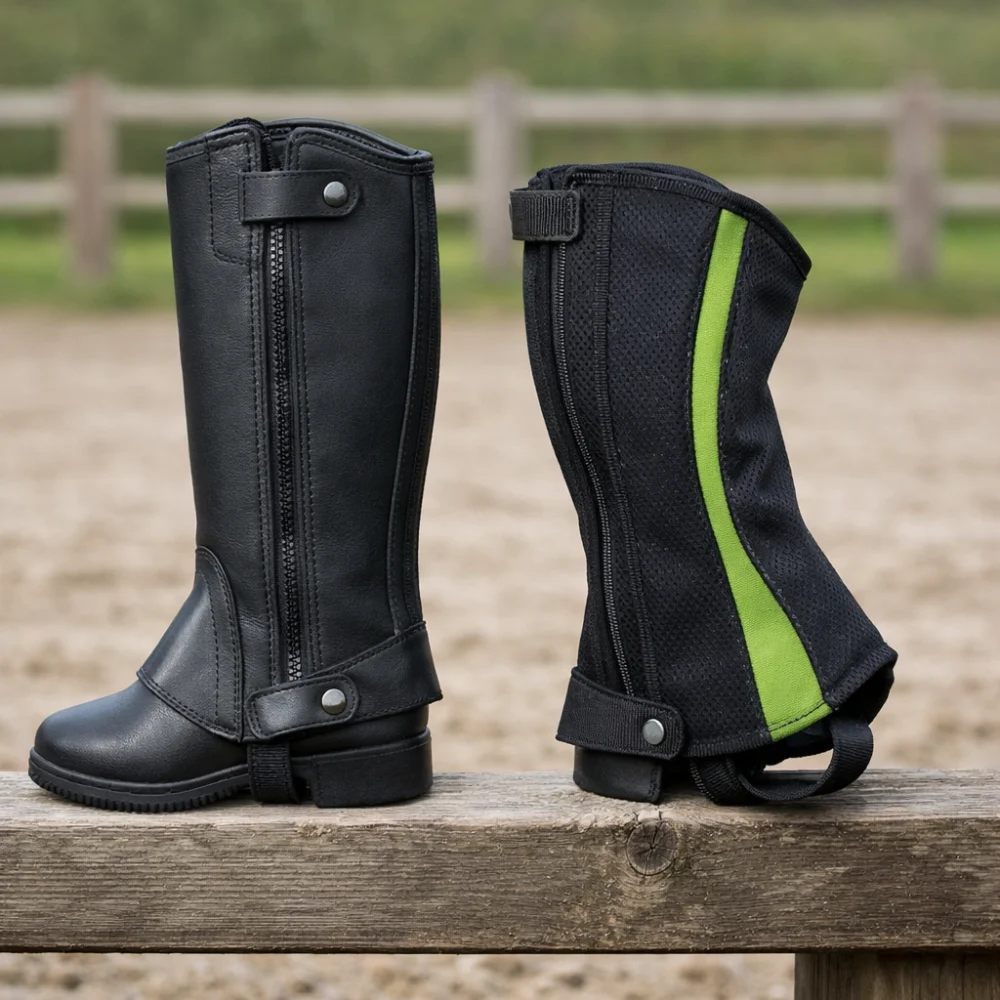
Children’s riding chaps are a practical riding accessory for adding grip, coverage and a more traditional riding feel over other legwear. They are usually chosen to work alongside jodhpurs or breeches, rather than replacing them entirely.
For younger riders, the main decision is usually not about fashion alone. It is about finding a pair that fits comfortably, suits the kind of riding being done and is easy to put on, take off and move in.
Because children’s riding needs change as they grow, it helps to focus on fit, flexibility and how the chaps are meant to be worn with the rest of the outfit. Specifications vary by model, so always check the individual product page before buying.
What should you look for first?
The best starting point is the rider’s use case: regular schooling, hacking, lessons or occasional leisure riding. Then check how the chaps are intended to sit with the child’s trousers, boots and overall riding outfit. A close but comfortable fit matters because loose chaps can feel awkward, while an over-tight pair may restrict movement.
The main trade-off is between structure and flexibility. A more robust style may hold its shape well, while a lighter or more flexible option may feel easier for everyday wear. The right choice depends on the child’s comfort, the riding environment and how often the chaps will be used.
| Feature | What It Means | Why It Matters | What To Check |
|---|---|---|---|
| Fit | How closely the chaps sit on the leg | Affects comfort, movement and how securely they stay in place | Look at size guidance, leg length and whether the style allows room for layers |
| Material | The outer material and any stretch or lining | Changes comfort, flexibility and the feel of the chap | Check whether the material seems suited to regular wear or occasional use |
| Closure | How the chaps fasten around the leg | Influences ease of dressing and how adjustable the fit is | Review the fastening type and whether a child can manage it easily |
| Coverage | How much of the lower leg is covered | Helps you judge the intended use and overall feel | Compare the rise, height and shape against the rider’s boots and trouser choice |
| Ease of care | How simple the item is to clean and store | Useful for frequent riding and everyday family use | Check care guidance and whether the material suits your routine |
Key decision criteria
Fit and sizing
Fit is the most important factor because children’s legs change quickly and riding comfort depends on a secure but non-restrictive feel. A chap that sits neatly should not pinch at the calf or twist when the child is in the saddle. If the product page gives multiple measurements, compare them carefully rather than guessing from age alone.
Material and flexibility
Different materials can change how the chaps feel during riding and while walking around the yard. Softer or more flexible options may be easier for a younger rider to wear, while firmer styles may keep their shape better. Think about whether the child is likely to wear them for short lessons or longer, more frequent sessions.
Fastening and independence
Some children manage simple fastenings more easily than others, especially when dressing quickly before a lesson. A straightforward closure can reduce fuss, but it still needs to hold securely enough for the intended activity. If the child will put the chaps on without much help, ease of fastening becomes especially important.
Compatibility with boots and jodhpurs
Chaps are usually part of a wider riding outfit, so it helps to check how they are meant to work with the boots and trousers already being used. The goal is a tidy, comfortable fit rather than a bulky layer that changes how the child rides. This is one of the most common reasons to compare products carefully instead of choosing on appearance alone.
Types and variants you may see
Children’s riding chaps are not a single fixed style. You may see simpler everyday designs aimed at general riding use, more structured styles that hold their shape, and options with different closure methods or degrees of flexibility. Each type balances comfort, support and ease of wear differently.
For a younger or newer rider, a straightforward, easy-to-wear design may be the least complicated choice. For more regular use, a buyer may prefer a style that feels a bit more substantial or stable. The trade-off is usually between convenience and the amount of structure the chap provides.
Which type suits which rider?
| Buyer need | What to prioritise | Why it helps | Main compromise |
|---|---|---|---|
| First pair for a child | Simple fit, easy fastening, comfortable feel | Makes dressing and daily use less frustrating | May be less structured than a more specialist option |
| Regular riding lessons | Reliable fit and durable-feeling construction | Better suited to repeated use | Can feel firmer than a lighter everyday design |
| Growing rider | Clear size guidance and enough adjustability | Helps the product remain usable for longer | Too much room can reduce neatness and comfort |
| Occasional leisure use | Comfort and ease of putting on | Keeps the experience simple for infrequent wear | May not offer the same amount of structure as a more riding-focused style |
Common mistakes to avoid
- Choosing by age alone instead of checking the actual size guidance.
- Overlooking how the chaps will work with the child’s boots and trousers.
- Assuming a firmer style will always be more comfortable for a younger rider.
- Ignoring whether the fastening is practical for the child or the adult helping them dress.
- Buying for occasional use without considering whether the item will be easy to clean and store.
Safety and suitability points
Children’s riding chaps are a clothing accessory, not a substitute for safe riding practice or suitable supervision. Check that the style is comfortable, does not restrict movement and matches the intended riding activity. If a child is still growing, it is sensible to re-check fit regularly.
Care, storage and everyday use
Simple care often matters more than buyers expect, especially when riding kit is used frequently. Look at the care guidance before buying so you know whether the material will suit your routine. After use, it is usually sensible to keep the chaps clean, dry and stored flat or neatly hung, depending on the design.
If the chaps will be used in wet, muddy or high-traffic yard conditions, ease of cleaning can become just as important as appearance. A more durable-looking option may suit regular use, while a lighter design may be enough for occasional lessons.
How to compare options efficiently
- Decide how often the child will wear the chaps and for what kind of riding.
- Check the fit guidance and compare it with the child’s leg measurements and usual riding layers.
- Compare the material, fastening and flexibility of each option.
- Think about how easy the chaps will be to put on, clean and store.
- Read the individual product page carefully before deciding.
Summary buyer checklist
- Have you checked the size guidance against the child’s actual measurements?
- Will the chaps work comfortably with the boots and trousers being used?
- Is the fastening simple enough for the rider or the person helping them?
- Does the style suit the intended use, from occasional wear to regular lessons?
- Have you checked the care information and any fitting notes on the product page?
Frequently asked questions
Do children need riding chaps or are they optional?
They are usually optional rather than essential, but they can help create a neater, more comfortable riding outfit. Some buyers choose them for extra coverage or to complement other riding clothes. The main question is whether they suit the child’s riding routine and comfort needs.
How should riding chaps fit a child?
They should sit securely without digging in or limiting movement. A good fit usually feels close and stable while still allowing the child to bend and ride comfortably. If the product page gives detailed measurements, use those rather than estimating from clothing age.
Can they be worn with any riding trousers?
They are commonly worn over jodhpurs or breeches, but fit and comfort can vary depending on the shape of the trousers. It is worth checking the way the chap is intended to sit over the rest of the outfit. That helps avoid choosing something that feels bulky or awkward in use.
Are more structured chaps always better?
Not necessarily. More structure can help the item hold its shape, but some children may prefer a softer or more flexible feel. The better option depends on how often the chaps will be used and what the rider finds comfortable.
What matters most for a growing child?
Clear sizing information and a comfortable fit matter most because children can outgrow riding clothing quickly. It can also help to think about adjustability and how the product will feel as the child moves. Specifications vary by model, so always check the individual product page before buying.
How do I compare similar options quickly?
Start with fit, then compare material, fastening and ease of care. Those are usually the points that make the biggest difference in everyday use. If two options still seem close, choose the one whose size guidance and practical details are easiest to match to the child.