

Women’s sailing gloves are a practical part of sailing clothing for anyone who wants a better grip, a little protection from wind and spray, and less hand fatigue when handling ropes and hardware. The right pair depends on how and where you sail, because the features that matter on a cool, wet coastal day are not always the same as those that matter in warmer conditions.
This guide focuses on the choices that usually make the biggest difference: fit, dexterity, grip, coverage and how much warmth you actually need. It is meant to help you compare options without turning the decision into guesswork.
Sailing gloves also sit between comfort and control. A pair that feels warmer may be less nimble, while a lighter pair may give better feel but less protection from wind and water.
What should you look for in women’s sailing gloves?
The most useful starting point is to match the glove to the conditions and the tasks you expect to do aboard. For many buyers, the best choice comes down to balancing grip and dexterity against warmth and coverage. A glove that fits well and lets you handle lines confidently is usually more useful than one with extra features you do not need.
Specifications vary by model, so always check the individual product page before buying.
| Feature | What it means | Why it matters | What to check |
|---|---|---|---|
| Fit | How closely the glove follows the shape of your hand | Affects comfort, grip and finger control | Size guidance, wrist closure and whether the glove is meant to fit snugly |
| Dexterity | How easily you can move your fingers and hands | Important for knots, clips and handling small items | Finger cut, material thickness and palm design |
| Grip | The surface feel where you hold lines or equipment | Helps with secure handling in damp or windy conditions | Palm finish, reinforcement and how the grip is placed |
| Warmth | How much insulation or coverage the glove provides | Useful in colder, windier or wetter conditions | Material thickness, finger coverage and cuff style |
| Water resistance | How well the glove copes with spray and dampness | Can improve comfort on exposed days | Material description and whether the glove is intended for wet use |
| Durability | How well the glove is likely to stand up to frequent use | Relevant if you sail often or handle abrasive lines | Reinforced areas, stitching details and care guidance |
Key decision criteria
Fit and sizing
Fit is one of the most important factors because sailing gloves need to stay secure without feeling restrictive. A glove that is too loose can reduce control, while one that is too tight can make hand movement awkward and tiring. Check any size guide carefully and consider whether you prefer a close fit for dexterity or a little extra room for comfort.
Dexterity versus protection
Many buyers expect one glove to do everything, but sailing often involves a trade-off between finger feel and coverage. Thinner gloves usually help when you need precision, while more substantial gloves can feel better in cold or rougher conditions. Think about whether your priority is frequent line handling, longer sessions in open water, or occasional use in changing weather.
Grip and palm construction
The grip area matters because it affects confidence when handling wet or moving lines. Look at where reinforcement is placed and whether the palm is designed for general handling or for more abrasion-prone tasks. A strong grip does not automatically mean more comfort, so it is worth considering how the glove balances hold, flexibility and bulk.
Coverage and warmth
Some gloves focus on light protection, while others are intended to add more warmth and shield more of the hand. If you sail in cooler months or spend a long time exposed to wind, extra coverage may be worthwhile. In milder weather, however, a lighter design can be easier to wear for longer periods.
Materials and feel
Materials affect how the glove bends, dries and feels during use. A softer glove may be more comfortable from the start, while a more structured design may offer better protection in demanding conditions. Because material choices vary, it is sensible to check the product description for the intended use rather than assuming one fabric suits every outing.
Common sailing glove types and variants
Within this category, the main differences are usually about coverage and how much protection the glove is trying to offer rather than dramatic changes in purpose.
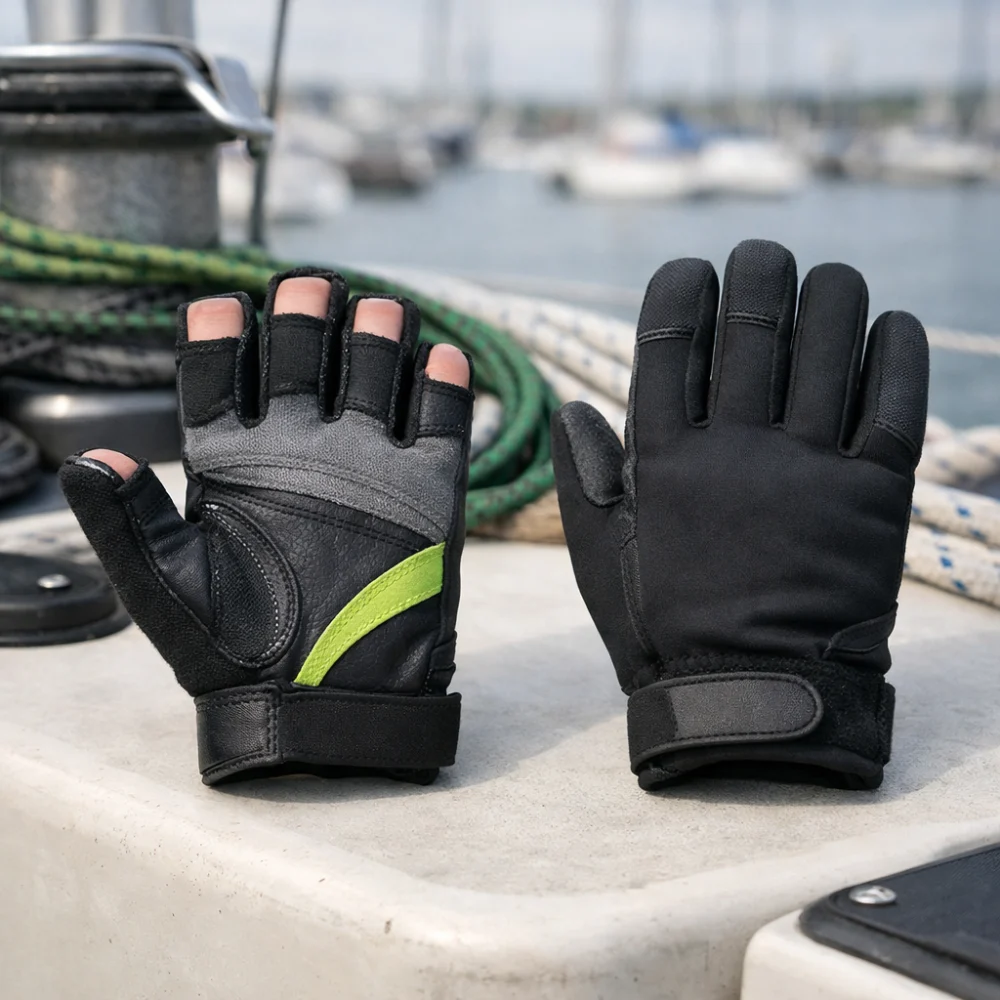
- Lightweight gloves: Suited to buyers who want better grip and some protection without much extra bulk. They may be a good fit for milder conditions or for people who prioritise dexterity.
- Warmer or more covered gloves: Better for colder or windier days where comfort matters as much as control. The trade-off is usually less finger feel.
- More durable handling-focused gloves: Useful for frequent use or where lines and equipment may be harder on the hands. These can be a sensible choice if longevity matters more than a very soft feel.
Which glove suits which buyer?
| Buyer need | What to prioritise | Why | What may be less important |
|---|---|---|---|
| Warm-weather casual sailing | Light feel, grip and easy movement | Comfort and dexterity usually matter most | Heavy insulation |
| Cooler or changeable conditions | Coverage, warmth and secure fit | Hands can get cold quickly on exposed water | Very thin construction |
| Frequent rope handling | Palm reinforcement and control | Helps with repeated handling and comfort | Extra bulk that slows finger movement |
| Buyers comparing upgrades | Fit, finish and intended use | Small differences can matter more than the overall style | Features that do not affect your sailing conditions |
Common mistakes and misunderstandings
- Choosing warmth before fit: A glove can be warm on paper but still awkward if the fit is poor. Start with size and hand movement, then judge warmth.
- Assuming one glove suits every season: Conditions change, and so do hand comfort needs. If you sail in very different weather, you may want to compare lighter and more protective options.
- Ignoring the palm area: The palm is where the handling happens most, so grip and reinforcement often matter more than the back of the glove.
- Overlooking dexterity: A glove that feels secure but makes finger movement clumsy can slow you down when handling lines or fastenings.
Safety and suitability caveats
Sailing gloves are mainly a comfort and handling accessory, not a substitute for sensible seamanship or appropriate clothing for the conditions. Think about the type of sailing you do, how much exposure your hands get and whether you need more warmth or more precision. If you have especially small or large hands, or if you expect heavy use, checking the sizing and construction details becomes even more important.
Maintenance and storage considerations
Gloves often last better when they are dried and stored carefully after use, especially if they are exposed to salt, damp air or repeated wear. Check the care guidance for the specific product, because cleaning needs can vary with the materials used. If a glove relies on grip finishes or reinforcement, frequent rough use may affect how it feels over time.
How to compare options efficiently
- Decide when and where you are most likely to sail.
- Choose whether your main priority is dexterity, warmth, grip or durability.
- Check the fit and sizing information first.
- Compare the palm design, coverage and material description next.
- Read the individual product page for any details that affect your use case.
Summary buyer decision checklist
- Do I need more grip, more warmth or more dexterity?
- Does the fit look suitable for a close, secure feel?
- Is the coverage level right for my sailing conditions?
- Will the palm and finger design suit the tasks I do most?
- Have I checked the product page for care and sizing details?
Frequently asked questions
Do sailing gloves need to fit tightly?
They usually work best with a close fit, but not so tight that they restrict movement. A snug glove tends to improve control and reduce slipping, while an overly tight one can feel tiring. Check the sizing guidance carefully because fit is often the difference between a glove you use regularly and one you avoid.
Are warmer gloves always better for sailing?
Not necessarily. Warmer gloves can be helpful in cooler weather, but they may reduce finger feel and make small tasks less comfortable. Many buyers find that the right choice depends on whether they prioritise warmth or dexterity most often.
Can I use general sports gloves instead?
Sometimes, but sailing gloves are chosen for handling lines, grip and the kind of conditions found on the water. General sports gloves may not offer the same balance of grip, coverage and control. It is better to compare them on the features that matter for sailing rather than assuming they are interchangeable.
What matters most for a beginner?
For most beginners, fit and grip are the most useful starting points. A comfortable glove that helps you hold lines securely is usually easier to live with than one that focuses on specialised features you may not need yet. If you are unsure, begin with the conditions you expect to sail in most often.
How do I know if I need more protection or more dexterity?
Think about what you do with your hands during a typical outing. If you often handle ropes, clips or small fastenings, dexterity matters more. If you sail in cooler or wetter conditions for longer periods, extra protection may be the better compromise.
How important is maintenance for sailing gloves?
It matters because repeated exposure to dampness and salt can affect comfort and appearance over time. Simple drying and storage habits can help, but care needs vary by material. Check the product details for any specific cleaning guidance.