


Airsoft protective masks are chosen for a mix of comfort, coverage and compatibility. The right option depends on how much of the face you want protected, how well the mask fits your head and eyewear, and whether you need easier breathing, better hearing or a wider field of view.
This guide helps you compare the main factors without turning the decision into guesswork. It is especially useful if you are buying your first airsoft face covering, replacing an old one or trying to narrow down the type that suits your play style.
Compare Airsoft Protective Masks


As an Amazon Associate we earn from qualifying purchases.
What should you look for first?
Start with fit and coverage. A mask can only do its job if it sits securely and feels workable for the way you play, whether that means more full-face coverage or a lighter design that leaves more of the lower face open. After that, check comfort, compatibility with eyewear and your preference for ventilation and visibility. Specifications vary by model, so always check the individual product page before buying.
| Feature | What it means | Why it matters | What to check |
|---|---|---|---|
| Coverage | How much of the face and lower face is enclosed | More coverage may suit players who want broader face protection | Which areas are covered and whether that matches your intended use |
| Fit | How securely the mask sits on the head | Poor fit can move around, feel distracting or reduce comfort | Strap design, adjustability and head size guidance on the product page |
| Visibility | How open or restricted the viewing area feels | Better visibility can help awareness and reduce claustrophobia | Shape of the eye area and how much peripheral vision may remain |
| Ventilation | How easily air moves through the mask area | Ventilation affects comfort during longer sessions and can help reduce fogging concerns | Airflow design and whether the model is described as more open or enclosed |
| Eyewear compatibility | Whether it works with glasses or separate eye protection | Some buyers need space for prescription eyewear or goggles | Internal room, seal area and any compatibility notes supplied by the seller |
| Weight and bulk | How substantial the mask feels when worn | Lighter options may be easier for long sessions, while bulkier styles may feel more reassuring | General design style and whether the mask is intended for compact or fuller coverage |
Key decision criteria explained
Coverage and protection style
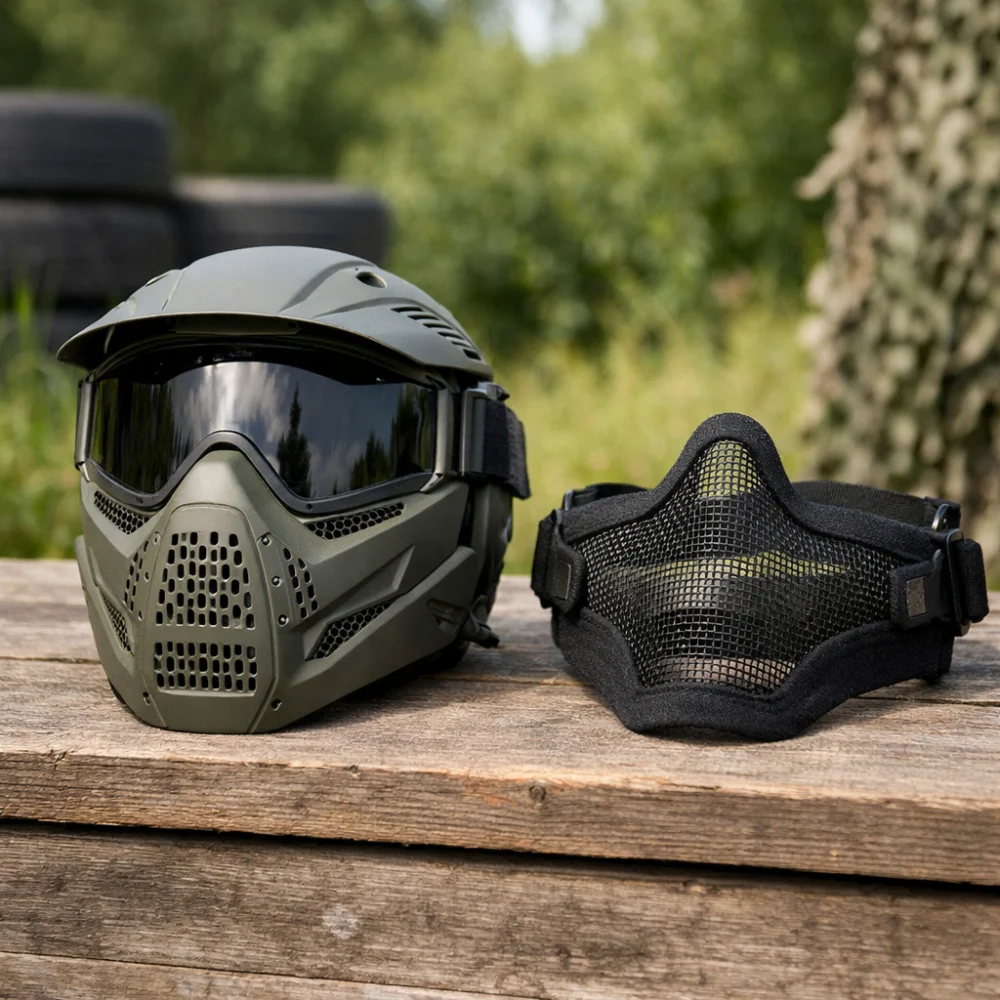
Some buyers want a fuller face covering, while others prefer a more compact mask that leaves more of the lower face open. The right choice depends on comfort, how much coverage you want and whether you plan to combine the mask with other eye or face protection. A fuller design can feel more enveloping, while a lighter design may feel less restrictive.
Fit and adjustability
Fit matters because a mask that shifts is harder to ignore during play. Look for enough adjustability to suit your head shape, and pay attention to how the mask is held in place. If a product page gives guidance on head size, strap style or compatibility with helmets or hats, treat that as especially useful.
Ventilation and fog management
Ventilation is often overlooked until the mask is worn for a longer session. Better airflow can improve comfort, but more open designs may feel less enclosed than heavier ones. If fogging is a concern, compare the shape of the eye area and any notes about airflow, because design details often matter more than the general category name.
Eyewear and facegear compatibility
If you wear prescription glasses or use other eye protection, compatibility becomes a key buying filter. Do not assume any mask will work with every setup. Check how much internal space is available and whether the product description mentions use alongside goggles, glasses or a helmet.
Common types and variants
Within this category, buyers usually compare fuller face masks against lighter, more compact styles. Fuller masks may suit players who want broader coverage, while smaller designs may suit those who value less bulk and easier movement. The trade-off is simple: more coverage can mean more material and less openness, while a lighter design can feel easier to wear but may offer less face coverage overall.
Which mask suits which buyer?
| Buyer need | Features to prioritise | Main trade-off |
|---|---|---|
| First-time buyer | Simple fit, clear coverage description, easy adjustment | Choosing a straightforward design may mean fewer specialist features |
| Buyer who wears glasses | Internal room and compatibility guidance | More space can increase bulk or alter how the mask sits |
| Long-session player | Comfort, ventilation and secure fit | More breathable designs may feel less enclosed |
| Player wanting broader face coverage | Fuller coverage and stable straps | Greater coverage can add weight or reduce openness |
| Buyer seeking minimal bulk | Compact shape and lower profile | Less bulk can mean less coverage |
Common mistakes and misunderstandings
- Assuming all masks fit the same way. Head shape, strap layout and internal room can change the experience a lot.
- Focusing only on appearance. A mask that looks right may still feel awkward if it is too narrow, heavy or difficult to wear with eyewear.
- Ignoring ventilation. Comfort often depends on how the mask handles warmth and airflow during real use.
- Overlooking compatibility with other gear. If you use goggles, glasses or a helmet, check how the mask is meant to work alongside them.
Safety and suitability caveats
Choose protective gear that suits the way you intend to use it and check the product information carefully before buying. Airsoft face protection should be treated as a comfort and compatibility decision as well as a coverage decision, because a poor fit can make gear harder to wear consistently. Do not rely on general category names alone when comparing products.
Maintenance, storage and lifespan considerations
Most buyers benefit from thinking about cleaning and storage before they choose a mask. A design with more openings or padding may need a little more care to stay fresh after use, while a simpler design can be easier to wipe down and store. If a mask includes flexible or adjustable parts, consider how they will hold up to regular use and whether the materials appear easy to keep in good condition.
How to compare options efficiently
- Decide how much face coverage you actually want for your play style.
- Check whether you need room for glasses, goggles or other gear.
- Compare fit, ventilation and how secure the mask is likely to feel.
- Weigh comfort against bulk: lighter can feel easier, fuller can feel more encompassing.
- Read the individual product page carefully for any specific compatibility notes.
Summary buyer decision checklist
- Does the coverage level suit how you want to play?
- Will it fit your head size and stay secure?
- Is there enough room for glasses or other eye protection if needed?
- Does the design seem comfortable enough for longer sessions?
- Are ventilation and visibility likely to work for your preferences?
- Have you checked the individual product page for model-specific details?
Frequently asked questions
Do I need a full-face mask or a lighter face covering?
That depends on how much coverage you want and how much bulk you are happy to wear. A fuller design usually gives broader coverage, while a lighter style can feel less restrictive. Compare the product description against your comfort and gear needs rather than choosing by appearance alone.
Can I wear glasses with an airsoft protective mask?
Sometimes, but not always comfortably. Look for compatibility notes and enough internal space, especially if you wear prescription glasses. The product page is the best place to confirm whether a specific design is likely to suit your setup.
What matters more: ventilation or coverage?
Neither matters in isolation, because both affect the way the mask feels in use. Better ventilation can improve comfort, while more coverage may give a more enclosed feel. The right balance depends on how long you expect to wear it and how much face coverage you want.
How do I know if a mask will fit me?
Check any size guidance, strap adjustability and notes about head shape or fit. If the listing does not give enough detail, compare the general design with what you already know about your current gear. A secure fit is one of the most important buying checks for this category.
Are compact masks always more comfortable?
Not necessarily. Compact masks can feel lighter and less bulky, but comfort also depends on the shape, strap layout and how well they sit with your other gear. A well-fitting fuller mask may be more comfortable than a compact one that sits awkwardly.
Should I buy based on the eye opening alone?
No, because the eye area is only one part of the overall fit. Face coverage, ventilation, internal space and how the mask sits with other equipment can matter just as much. Use the eye area as one comparison point rather than the only one.
Check eye protection separately
A face mask that covers the lower face should not be assumed to provide suitable eye protection. Check whether the individual product includes eye protection and what the product information says it is intended for; a separate pair of goggles may be needed.
Before buying, consider whether the mask and eye protection can be worn together securely and comfortably, including over prescription glasses if relevant. Follow the requirements of the venue or activity where you intend to use the equipment.
More Airsoft Protective Masks
See all 130 Airsoft Protective Masks →


As an Amazon Associate we earn from qualifying purchases.