

Running vests are designed for carrying essentials while keeping weight stable and close to the body. They are often chosen by runners who want easier access to fluids, nutrition, keys, phone or extra layers without carrying a hand-held bottle or a larger pack.
The right vest depends on how far you run, how much you need to carry and how you prefer the fit to feel. A light, compact option may suit shorter training runs, while a more structured vest can be more comfortable when you need to carry more kit for longer outings.
Because fit and storage layout vary between models, it is worth comparing the details carefully rather than assuming one vest will suit every run.
What should you look for in a running vest?
The most useful starting point is the balance between carry capacity, comfort and stability. A vest that feels secure when lightly loaded may behave differently once pockets are full, so think about what you expect to carry on a typical run. Look closely at the fit system, pocket layout and how the vest is meant to sit on your torso.
For many buyers, the main trade-off is simple: more storage usually means more material, more adjustment and potentially more bulk. A smaller vest can feel less noticeable, but it may be limiting if you carry fuel, layers or safety essentials on longer routes.
| Feature | What it means | Why it matters | What to check |
|---|---|---|---|
| Fit and adjustability | How the vest sits on your body and how easily you can tighten or loosen it | Good fit helps reduce bounce and discomfort | Look for adjustability that matches your torso shape and the clothing you wear |
| Storage layout | Where pockets and compartments are placed | Easy access matters if you need frequent snacks, soft flasks or a phone | Check pocket positions, sizes and whether items can be reached while running |
| Carry capacity | How much gear the vest can hold | Determines whether it suits short training runs or longer outings | Compare the intended use with the amount of kit you normally carry |
| Weight and bulk | How substantial the vest feels before and after loading | Lower bulk can improve comfort on faster runs | Consider whether you want the lightest possible feel or a more supportive carry |
| Breathability | How open or ventilated the materials and layout feel | Important for warmer weather and harder efforts | Look for signs that the design aims to reduce heat build-up |
| Stability | How well the vest stays in place as you move | A stable vest is easier to forget about on the run | Check whether the fit is designed to limit movement when loaded |
Key decision criteria explained
Fit and stability
A running vest should feel close-fitting without restricting breathing or arm movement. The best-feeling option for one runner may not suit another, especially if torso length, chest shape or layering habits differ. Pay attention to the adjustment points and whether the vest is designed to be worn over a single layer or over more clothing in cooler weather.
Storage and access
Think about the items you want to reach most often. Some buyers prioritise front pockets for soft flasks or nutrition, while others care more about secure storage for a phone, keys or a small layer. If you expect to use the vest on the move, ease of access can matter as much as total storage space.
Capacity versus simplicity
More capacity is not always better. If you only need a few essentials, a larger vest may feel unnecessary and less streamlined. If you frequently carry extra clothing, safety items or hydration, however, a small vest may feel cramped and awkward to use.
Materials and comfort
Comfort is not just about softness. It also depends on how the vest distributes pressure, how well it breathes and whether seams or edges sit comfortably against your body. Specifications vary by model, so always check the individual product page before buying.
Types of running vest and who they may suit
There can be useful differences even within the same category. A minimalist vest is usually aimed at runners who want the least possible bulk for short to medium outings. A more feature-rich vest is often chosen by people who need more pockets, more adjustment or more space for longer sessions.
Some vests are better suited to hydration-focused use, while others are organised more around general carry. Rather than choosing by label alone, consider how the layout supports the way you actually run.
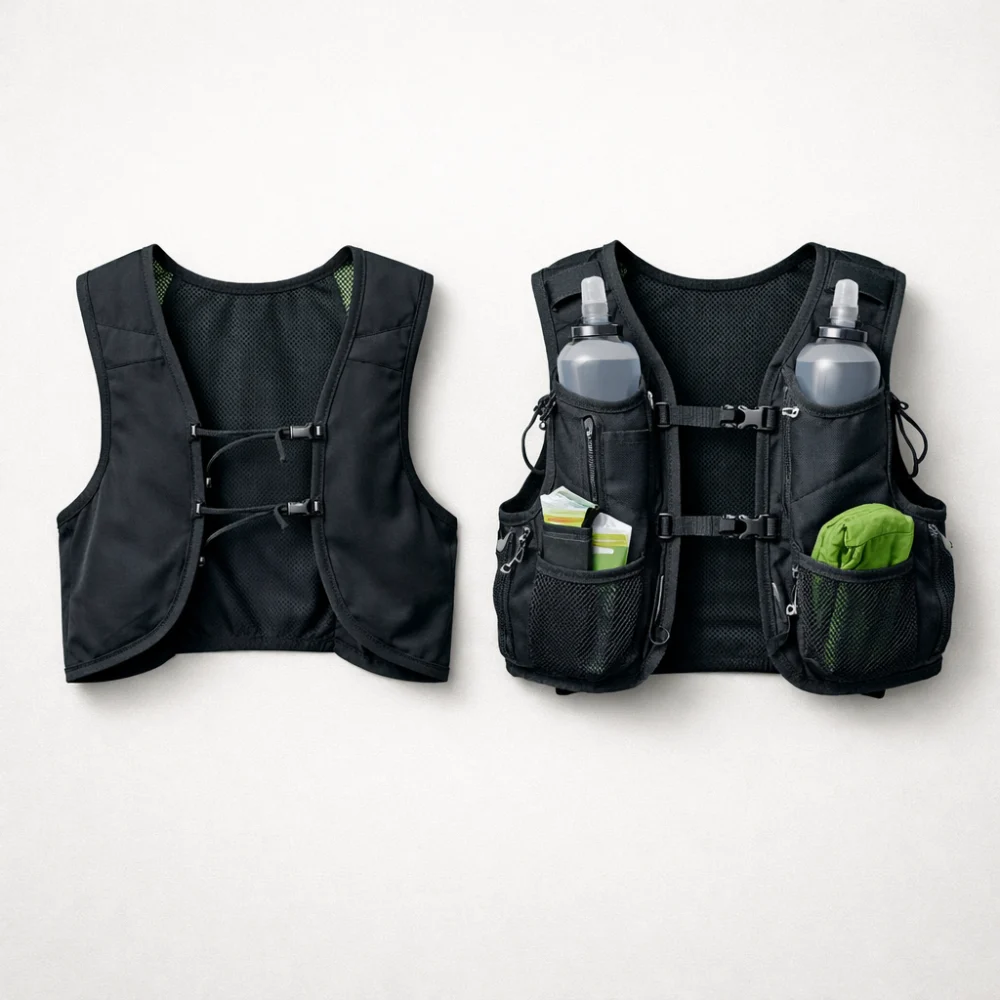
Which vest suits different runner needs?
| Buyer need | What to prioritise | Why it helps |
|---|---|---|
| Short local runs | Light feel, simple storage, secure fit | Less bulk and fewer distractions can make short sessions easier |
| Longer runs | More storage, comfortable load distribution, easy access to essentials | Helps carry hydration, nutrition and small extras without constant adjustment |
| Race or event use | Predictable fit, fast-access pockets, low bounce | Supportive layout can reduce faffing during the run |
| Commuting or mixed use | Secure pockets and enough room for practical carry | Useful if the vest needs to handle more than just running essentials |
Common mistakes and misunderstandings
- Choosing by capacity alone. A larger capacity can be useful, but only if the vest still fits well when loaded.
- Ignoring pocket placement. A vest may have enough space overall yet still be inconvenient if the things you need are awkward to reach.
- Assuming one size fits every use. A vest that works for short runs may feel too limited for longer routes or event days.
- Overlooking layering. If you run in changing conditions, think about how the vest will feel over different clothing combinations.
Safety and suitability caveats
Choose a vest that suits the kind of running you actually do, especially if you carry hydration, nutrition or extra clothing. Do not assume a vest will feel the same once fully loaded, and do not rely on a product name alone to tell you how much it will hold or how it will fit. The useful checks are the layout, the adjustment range and the intended use described on the individual product page.
Maintenance, storage and lifespan considerations
Running vests are usually easiest to live with when they are simple to clean and dry after use. If you expect to use bottles or hydration components, think about whether the storage arrangement will be easy to rinse and keep fresh. It is also sensible to store the vest dry and check wear points regularly if you use it often, since repeated loading and washing can affect comfort over time.
How to compare options efficiently
- Start with the runs you actually plan to do and what you need to carry.
- Decide whether you want a minimalist vest or something with more storage and adjustment.
- Compare fit, pocket layout and stability before looking at any extra features.
- Weigh the trade-off between lightness, storage and ease of access.
- Check the individual product page for the specific details that matter to your use.
Summary buyer decision checklist
- Does the vest suit your usual run distance and carry needs?
- Will the fit and adjustment range suit the clothing you wear?
- Is the storage layout practical for the items you reach most often?
- Will it feel stable when loaded with your typical kit?
- Is the overall bulk acceptable for the way you like to run?
- Have you checked the individual product page for model-specific details?
Frequently asked questions
Do I need a running vest for short runs?
Not always. If you only carry a phone or a single key, a simpler carrying option may be enough. A vest becomes more useful when you want a secure, stable way to carry several items without them bouncing around.
What is the main advantage of a running vest over a belt?
A vest usually spreads load more evenly across the upper body and can offer more pocket space. That can make it a better fit for longer runs or for people who need to carry more than the basics. A belt may still suit runners who want the simplest possible carry.
How important is the fit?
Very important. A vest that does not sit well can rub, bounce or feel distracting, especially once it is loaded. Fit is one of the most important reasons to compare individual product pages carefully.
Should I buy the biggest vest I can find?
Not necessarily. Bigger capacity is only helpful if you actually need it. A more compact vest may be more comfortable and easier to live with for regular training.
Can one vest work for different types of runs?
Sometimes, but the best choice depends on how much you carry and how much comfort you want. A versatile vest is usually one that balances storage, fit and access without feeling overbuilt for shorter sessions.
What should I check before I buy online?
Focus on the fit details, storage layout and intended use. It also helps to read the product description carefully so you understand what the vest is designed to carry and how it is meant to be worn.