

Quick Summary
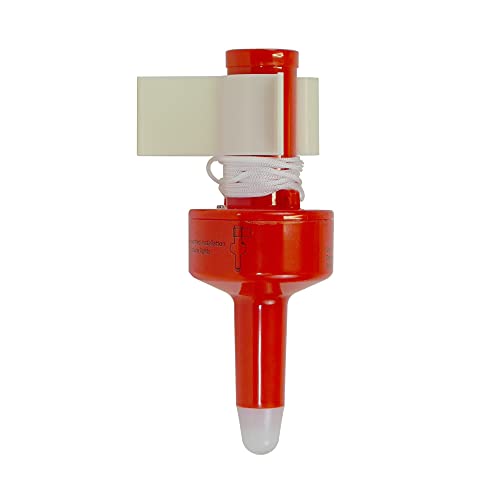
The Xiuganpo Marine Personal Locator Beacon is a portable AIS-MOB device with GPS and a plastic case. It is described as sending AIS messages every minute with GPS updates, and it has a compact size of 24 x 50 x 130 mm.
The stated specification also includes an 800 mAh lithium battery, 2 W power, first transmission after 15 seconds, and a minimum emergency support time of 24 hours.
Key Details
| Detail | Verified information and buyer relevance |
|---|---|
| Product type | Marine personal locator beacon with AIS-MOB and GPS. |
| Case material | Plastic case. |
| Dimensions | 24 x 50 x 130 mm, which is important for checking storage space and mounting or carrying needs. |
| Battery | 800 mAh lithium battery. |
| Power | 2 W power. |
| Transmission timing | First transmission occurs 15 seconds after activation. |
| Emergency support time | Minimum of 24 hours. |
| Standards | EC 61097-14 and ITU-RM 1371. |
What to Compare Before Buying
- Size: The compact 24 x 50 x 130 mm format is a useful check if storage space is limited.
- Battery specification: The stated 800 mAh lithium battery is a key figure to compare with the level of backup time you want.
- Transmission and location functions: This model is described as sending AIS messages with GPS updates every minute, so compare that behaviour with the way you expect to be located in an emergency.
- Standards: EC 61097-14 and ITU-RM 1371 are named, so confirm they match the requirement for the intended use.
Safe Use and Important Precautions
This is a safety-sensitive product. Follow the manufacturer’s instructions for activation, maintenance and use, and check that the exact unit meets the requirements for your intended marine setup.
Before You Decide
Confirm the exact AIS-MOB and GPS configuration, the stated size, and the included standard before choosing an offer. For emergency equipment, make sure the product matches your intended marine use and follow the manufacturer’s instructions carefully.
AIS Receiver Compatibility
An AIS-MOB beacon should not be assumed to provide satellite distress alerting. Check that the intended receiving equipment on the vessel can receive and identify its AIS transmissions, and consult the exact unit’s instructions for activation and any required setup before relying on it.