


Boat battery monitors are for anyone who wants a clearer picture of onboard power use, whether the boat is used for short trips, longer cruising or frequent outings. They can help you judge how much charge remains and spot patterns in power demand without relying on guesswork.
Choosing one is mostly about matching the monitor to your battery setup, the amount of information you want to see and how easy the display is to read in your usual conditions. Some buyers want a simple state-of-charge view, while others prefer a fuller picture of voltage, current and consumption.
This guide keeps the decision focused on practical buying questions: what the monitor is meant to show, how it connects, and how much detail you really need on board.
Compare Boat Battery Monitors



As an Amazon Associate we earn from qualifying purchases.
What should you look for in a boat battery monitor?
Start with the information you need most often, then compare the monitor’s display, sensor setup and compatibility with your battery system. A simpler monitor can suit occasional users who mainly want reassurance, while a more detailed one may suit owners who want closer tracking of power use.
The main trade-off is usually between ease of use and the amount of information provided. More detail can be helpful, but only if the display is clear and the readings are relevant to how you use the boat.
| Feature | What it means | Why it matters | What to check |
|---|---|---|---|
| Display detail | How much battery information is shown at once | Affects how quickly you can understand battery status | Check whether the monitor shows only basic status or a fuller set of readings |
| Reading clarity | How easy the screen is to read on the boat | Important when light levels, glare or distance make small text harder to see | Look for a layout that suits your helm, cabin or mounting position |
| Monitoring method | How the monitor measures battery use and state | Different approaches suit different battery setups and information needs | Confirm how the product is designed to gather its readings |
| System compatibility | Whether it suits your battery type and onboard setup | Prevents choosing a monitor that does not match your installation | Check the individual product page for supported battery arrangements |
| Installation fit | How the unit is intended to be fitted and connected | Affects convenience and whether it suits your space | Review mounting style, wiring approach and available room |
Key buying criteria
Battery compatibility
The first check is whether the monitor is suitable for your battery arrangement. Boats can have simple single-battery setups or more complex systems, so it is worth confirming the monitor matches the way your power is organised. Specifications vary by model, so always check the individual product page before buying.
Display and readability
Think about where the monitor will be viewed from and what conditions it will face. A display that looks clear in a photo may still be hard to read at a distance or in bright light, so readability matters as much as the number of figures shown. If you want quick checks while underway, clarity is often more useful than extra detail.
Depth of information
Some buyers only need a simple indication of charge status, while others want broader battery data to help manage power use more closely. More information can be useful, but only if you are likely to act on it. If you mainly want reassurance, a less complex monitor may be the better fit.
Installation and layout
It helps to consider where the monitor will sit and how easy it will be to connect neatly into the boat. A compact, straightforward unit may suit smaller craft or simple refits, while a more involved setup may be acceptable if you want richer information. Check the mounting and wiring expectations before buying.
Common product types and variants
Within this category, buyers are usually comparing monitors that differ by how much information they present and how they integrate into the boat’s electrical setup. Some are more basic and suit users who want a quick status check, while others are intended for more detailed monitoring.
There are also practical differences in how the display is arranged and how much installation work is involved. The right choice depends less on the name of the type and more on whether it fits your battery system and the way you use the boat.
Which monitor suits which buyer?
| Buyer need | Useful monitor characteristic | Why it helps |
|---|---|---|
| Occasional leisure use | Simple, easy-to-read display | Makes it easy to check battery status without unnecessary complexity |
| Longer days on the water | Clearer tracking of usage and remaining charge | Helps you judge power use more confidently |
| Smaller boat or compact helm area | Straightforward layout and suitable mounting size | Reduces clutter and keeps the display practical |
| Owner refitting onboard electronics | Compatibility and installation fit | Makes it easier to integrate the monitor into an existing setup |
Common mistakes and misunderstandings
- Choosing on display detail alone. A more data-rich monitor is not automatically better if the screen is hard to read or the information is more than you need.
- Assuming all battery monitors suit every system. Compatibility and installation details vary, so the product page matters.
- Overlooking where the unit will be mounted. If it is awkward to see or difficult to access, it will be less useful in daily use.
- Expecting the same level of detail from every model. Some products are designed for simple monitoring rather than in-depth battery analysis.
Suitability and caveats
Battery monitors are decision aids, not substitutes for checking the rest of your electrical setup. It is sensible to match the monitor to the battery type, system layout and the amount of information you actually intend to use. If your boat has a more complex electrical arrangement, take extra care to check the product page details rather than assuming a monitor will fit every setup.
Maintenance and ownership considerations
Most of the long-term value comes from choosing a monitor that stays easy to read and useful over time. Consider whether the display will remain visible in the location you want, whether the fitting is practical to keep tidy, and whether the unit suits the kind of use your boat gets. If a monitor relies on wiring or sensors, a neat installation can make the system easier to live with.
How to compare options efficiently
- Decide what you want the monitor to tell you most often.
- Check whether you need a simple status view or more detailed battery data.
- Compare display clarity, mounting fit and installation expectations.
- Confirm compatibility with your battery setup on the individual product page.
- Choose the option that gives you the right balance of detail and ease of use.
Summary buyer decision checklist
- Does the monitor suit your battery setup?
- Is the display easy to read where you plan to mount it?
- Do you want basic status information or more detailed tracking?
- Does the installation approach fit your boat?
- Will the monitor be genuinely useful in day-to-day use?
Frequently asked questions
What does a boat battery monitor do?
It helps you track battery condition and usage more clearly than guessing from memory or a single reading. The exact information shown varies by model, but the general purpose is to make onboard power easier to understand.
Do I need a detailed monitor or a simple one?
If you only want a basic check, a simple monitor may be enough. If you regularly manage battery use more closely, a more detailed display may be helpful. The best choice depends on how often you look at it and what decisions you want it to support.
Will any battery monitor suit any boat?
No, compatibility matters. The monitor needs to suit your battery arrangement and the way your electrical system is set up, so it is important to check the product details rather than assuming it will fit.
Is a larger display always better?
Not necessarily. A larger display can be easier to read, but layout, brightness and mounting position matter too. A smaller screen that is clear and well placed may be more practical than a bigger one that is awkward to use.
What should I check before buying one?
Check the battery setup it is meant for, how readable the display is likely to be on your boat, and how much detail you actually need. It is also worth looking at how it is intended to be mounted or connected.
Do boat battery monitors replace regular checks?
No. They are useful for monitoring and comparison, but they do not remove the need to keep an eye on your boat’s electrical setup as a whole. They are best viewed as a practical aid rather than a complete solution.
How the monitoring method affects the readings
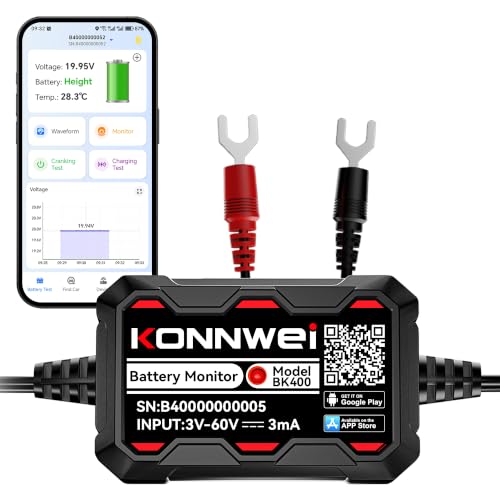
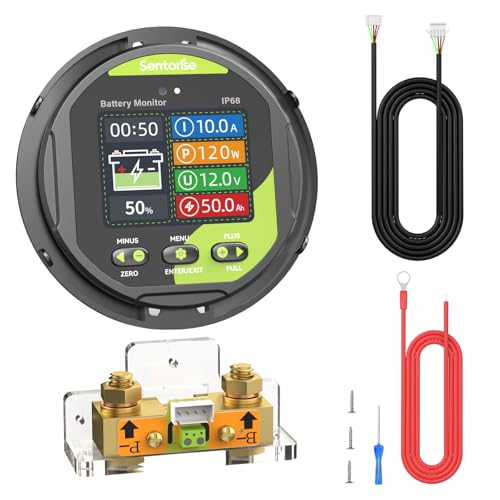
Monitors can differ in how they estimate battery status. A voltage-based unit reads voltage and may use it to indicate charge, while a shunt-based monitor measures current flowing into and out of the battery to provide a fuller usage picture. Voltage can vary with charging and electrical load, so consider whether a voltage reading alone gives you the information you need.
For a shunt-based system, check which battery bank it monitors and whether the intended arrangement accounts for the charging sources and electrical loads you want to track. The monitor’s stated method and setup requirements matter more than a general label such as “battery monitor”.
Battery details worth checking
Before comparing models, note the battery bank’s nominal voltage, capacity and chemistry, then check whether the monitor supports the relevant setup and can be configured for it. If you have separate starter and house batteries, confirm which bank or banks the monitor is designed to cover; a reading for one bank may not describe the condition of another.
Do I need a shunt-based monitor?
Not everyone does. A voltage-based monitor may suit buyers who want a simple indication, while a shunt-based one may be more useful if you want to follow current use and charging over time. Compare the information provided with the decisions you need to make, and check the setup requirements for your battery system.
Can one monitor cover more than one battery bank?
That depends on the product and how it is designed to measure each bank. Check the product information for the number and type of banks it supports, rather than assuming one display monitors every battery on board.
More Boat Battery Monitors
See all 100 Boat Battery Monitors →


As an Amazon Associate we earn from qualifying purchases.