


Instant tents appeal to campers who want a quicker, simpler pitch without giving up the basics of shelter and comfort. They can be a good fit for weekend trips, family outings and anyone who prefers less faff at the campsite.
The main challenge is balancing speed against the practical details that still matter: headroom, sleeping space, packed size, weather suitability and how easy the tent is to live with once it is up. Not every instant tent suits every style of camping, so it helps to look past the headline pitch time and compare the full design.
If you are choosing between instant tents, focus on how you travel, who will sleep inside and how often you expect to use it. Specifications vary by model, so always check the individual product page before buying.
Compare Instant Tents


As an Amazon Associate we earn from qualifying purchases.
What should you look for in an instant tent?
The best starting point is the balance between convenience and comfort. An instant tent is usually chosen for fast pitching, but the easiest tent to set up is not always the one with the most usable space or the best weather protection. Think about how many people will use it, whether you need room for bags and how much weight or bulk you are willing to carry.
In practice, the right choice is the one that matches your campsite routine. A tent that is quick to pitch but cramped inside may be frustrating on a longer stay, while a roomier model may be less compact to transport. Use setup speed as one factor, not the only one.
| Feature | What It Means | Why It Matters | What To Check |
|---|---|---|---|
| Setup style | How the tent is designed to go up quickly | Shapes how easy the first pitch and takedown feel | Look for a setup method you are comfortable managing on your own |
| Sleeping capacity | How many people the tent is intended to shelter | Affects sleeping comfort and how crowded the tent feels | Check whether the space suits solo use, couples or family camping |
| Interior space | How much usable room there is inside | Matters for sitting up, storing kit and moving around | Review layout, peak height and whether there is room for bags |
| Packed size | How much space the folded tent takes up | Influences transport and storage | Make sure it fits your car, boot or storage space |
| Weather suitability | How the tent is intended to cope with typical camping conditions | Helps you judge whether it suits your usual trips | Check the model’s intended use and any stated weather features |
| Ventilation | How air moves through the tent | Helps reduce stuffiness and condensation discomfort | Look for vents, windows or other airflow features |
Key decision criteria explained
Pitching speed versus ease of use
Instant tents are designed to reduce the effort of setup, but that does not mean every model feels equally straightforward. Some are built for very fast pitching, while others are more about making the process less fiddly. Consider who will set it up and whether you value absolute speed or a more forgiving design.
Space and liveability
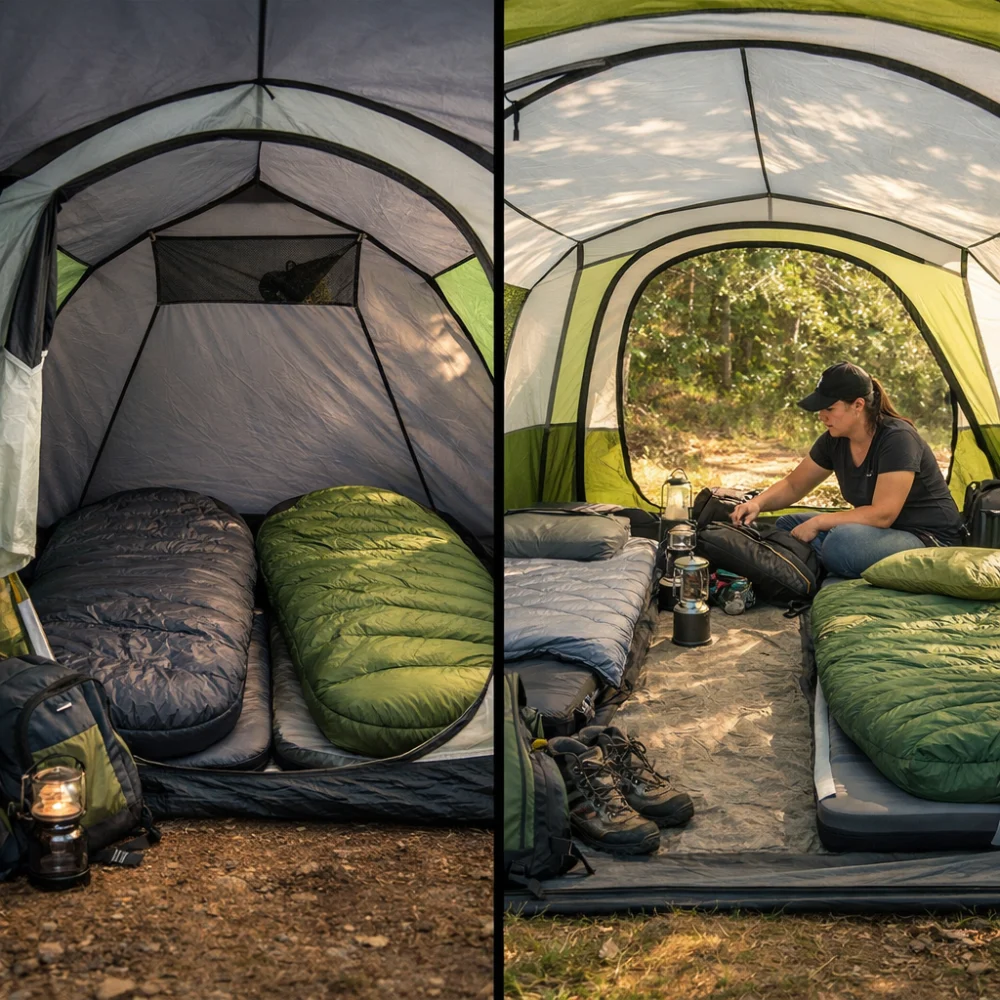
Capacity figures are only a starting point. A tent that is technically large enough may still feel tight once sleeping mats, bags and wet gear are inside. If you like sitting upright, changing clothes in the tent or keeping kit organised, interior shape matters as much as the nominal sleeping count.
Packability and transport
Instant tents can be appealing because they save time at camp, but the mechanism and frame may affect how bulky they are to carry. That is less of a concern for car camping than for trips where space is limited. If you are packing for a busy boot or shared storage area, check the folded dimensions and carry format carefully.
Weather and seasonal use
Instant setup does not automatically mean the tent is suitable for all conditions. If you mostly camp in settled weather, a simple shelter may be enough. If your trips are more exposed or less predictable, pay close attention to the product information about intended use and construction details.
Specifications vary by model, so always check the individual product page before buying.
Types and variants within the category
Instant tents are usually chosen for convenience, but they still vary in shape and intended use. Some prioritise fast family pitching and extra room, while others are more compact and better suited to lighter loads or shorter breaks. The main differences are usually in size, structure and how much comfort they aim to provide once pitched.
If you are comparing options, ask whether you want the quickest possible setup, the easiest family shelter or a more portable tent that still pitches fast. That will narrow the field more effectively than treating all instant tents as the same kind of product.
Which instant tent suits which buyer?
| Buyer need | What to prioritise | Why |
|---|---|---|
| First-time camper | Simple setup and clear layout | Makes the tent less stressful to use on arrival |
| Family trips | Space, access and liveability | Helps the tent feel comfortable for sleeping and day use |
| Weekend break | Quick pitch and manageable packed size | Reduces effort for short stays |
| Car camping | Comfort and interior room | Weight is often less important than ease at the campsite |
| Occasional use | Practical simplicity and storage size | Useful if the tent will be kept and reused between trips |
Common mistakes to avoid
- Choosing purely on pitch time and ignoring interior comfort.
- Assuming the stated capacity will feel spacious with bags and sleeping mats inside.
- Overlooking packed size when the tent needs to fit into a car or cupboard.
- Forgetting that quick setup does not replace checking suitability for the weather you expect.
- Not confirming whether the tent design suits one person setting it up alone.
Safety and suitability caveats
An instant tent should be matched to the kind of camping you actually plan to do. A model that suits fair-weather family breaks may not be the right choice for more exposed or changeable conditions. It is also worth checking how much ventilation and internal space the design offers, especially if several people will use it.
Do not rely on the word “instant” as a guarantee of easy use in every situation. Ground conditions, wind and campsite layout can still affect pitching and comfort, so read the product details carefully.
Maintenance, storage and lifespan considerations
Any tent lasts longer when it is packed away clean and dry, stored somewhere suitable and handled carefully during pitching and takedown. Instant tents may have mechanisms or poles that benefit from a bit of extra care, so it is sensible to avoid forcing parts or packing the tent away when it is damp.
If you expect to use the tent regularly, think about how easy it will be to dry, store and repack after each trip. A design that is simple to live with off the campsite can be just as important as one that is quick to set up.
How to compare instant tent options efficiently
- Decide how many people and how much kit the tent needs to accommodate.
- Choose the level of pitching convenience you want, rather than assuming every instant tent feels the same.
- Compare usable interior space, packed size and the likely comfort trade-off.
- Check the product page for weather suitability, ventilation and any model-specific setup notes.
- Pick the option that fits your camping style, not just the fastest-looking pitch.
Instant tent buyer checklist
- Does the tent suit the number of people who will actually use it?
- Is there enough room for sleeping gear and personal items?
- Is the packed size practical for your car, storage space or transport method?
- Will the setup style feel manageable for the person pitching it?
- Does the tent seem appropriate for the kind of weather and campsite conditions you expect?
- Have you checked the individual product page for the exact model details?
Frequently asked questions
Are instant tents worth it for beginners?
They can be, because a simpler pitch reduces pressure on a first trip. The main benefit is convenience, but it is still worth checking size and packed dimensions so the tent feels practical as well as easy to set up.
Do instant tents always pitch in a few minutes?
Not necessarily. “Instant” usually means quicker and less fiddly than a conventional setup, but the actual experience still depends on the design and on ground and weather conditions.
Are instant tents good for families?
They often are when the priority is getting shelter up quickly and reducing hassle at the campsite. Families should pay extra attention to interior space, access and whether the layout leaves room for bags and day-to-day use.
What matters more: capacity or interior space?
Both matter, but interior space often decides whether the tent feels comfortable. A capacity figure tells you the basic size, while the usable layout tells you how liveable it is once people and kit are inside.
Can an instant tent be used in poor weather?
That depends on the individual model rather than the category name. Check the product page for the tent’s intended use and keep expectations realistic, especially if you camp in more exposed conditions.
What should I check before storing an instant tent?
Make sure it is clean and dry before packing it away. Good storage habits help avoid unpleasant smells, moisture issues and unnecessary wear over time.
Is a bigger instant tent always better?
Not always. A larger tent can feel more comfortable inside, but it may also be bulkier to carry and store, so the right choice depends on how you camp.
Instant and pop-up: check what the label means
“Instant” and “pop-up” are not always used consistently in tent descriptions. Rather than relying on the label, check how the individual design is pitched and packed away; quick-pitch tents can use different frame or deployment systems.
This matters because setup style affects what you will handle at camp and how the tent fits into your transport and storage space. Look for clear product information about the pitching method and packed dimensions, and consider whether that format suits the person who will set it up.
More Instant Tents
See all 60 Instant Tents →


As an Amazon Associate we earn from qualifying purchases.