


Bike derailleurs are one of the key parts that help a bike shift gears smoothly and reliably. If you are replacing a worn part, upgrading a drivetrain or trying to understand what fits your bike, the main task is to match the derailleur to the rest of the system rather than chasing the fanciest-looking option.
This guide keeps the choice practical. It explains the features that usually matter most, the common mistakes to avoid and the checks worth making before you buy.
Specifications vary by model, so always check the individual product page before buying.
Compare Bike Derailleurs



As an Amazon Associate we earn from qualifying purchases.
What should I focus on when choosing a bike derailleur?
The most important starting point is compatibility. A derailleur has to suit the drivetrain setup on the bike, including the number of gears it is meant to work with and the type of gearing arrangement it supports. After that, think about cage length, mounting style and the kind of riding the bike is used for. The best choice is usually the one that matches the rest of the drivetrain cleanly, shifts as expected and does not add unnecessary complication.
The main trade-off is between simplicity and flexibility. A derailleur that closely matches your current setup is easier to choose with confidence, while a more specialised option may offer better tuning for a particular drivetrain but needs more careful checking.
| Feature | What it means | Why it matters | What to check |
|---|---|---|---|
| Compatibility | Whether the derailleur suits your drivetrain and shifter setup | A mismatch can prevent proper shifting | Confirm gear count, mounting type and intended drivetrain use |
| Cage length | The length of the derailleur cage that manages chain slack | It affects how the derailleur handles different gear ranges | Match it to the cassette and chainring range your bike uses |
| Front or rear use | Whether the part is for the front chainrings or rear cassette | Front and rear derailleurs serve different jobs and are not interchangeable | Check which position the product is designed for |
| Mounting and pull type | How the derailleur attaches and how it is operated by the shifter | These details affect fit and function | Look for the exact mount and actuation style listed on the product page |
| Riding style | The kind of use the derailleur is intended for | Road, mountain and commuting setups can prioritise different qualities | Compare the intended use with your bike and terrain |
Which derailleur features matter most?
Compatibility with the drivetrain
Compatibility is the first thing to confirm because derailleur choice is tied to the rest of the transmission. A part that works well on one bike may be the wrong choice on another if the gearing system, shifter or mounting setup differs. This is especially important if you are replacing only one component rather than updating the whole drivetrain.
Cage length and chain capacity
Cage length helps determine how much chain slack the derailleur can manage. That matters when the bike has a wide gear range, because the derailleur needs to cope with the difference between easier and harder gears without the chain becoming too loose or too tight. Longer cages are not automatically better; the right size depends on the gearing setup.
Front or rear derailleur
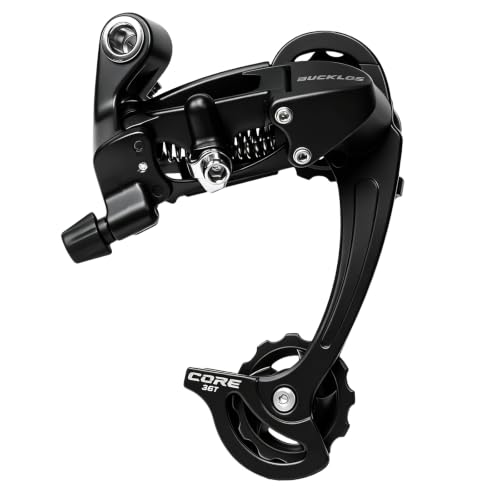
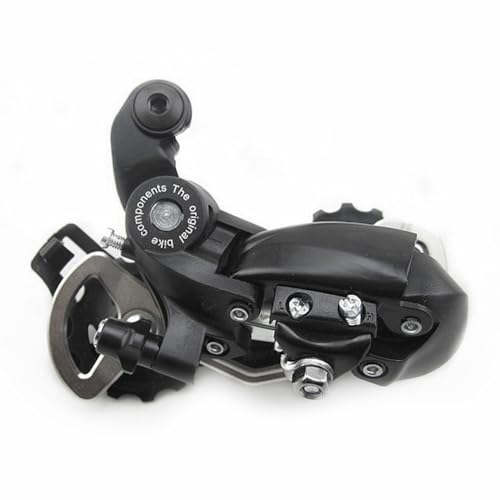
Front and rear derailleurs do different jobs. The rear derailleur moves the chain across the cassette, while the front derailleur shifts it between chainrings. If you are replacing a worn component, make sure you are looking at the correct position and not assuming one type will suit both.
Mounting style and actuation
How the derailleur mounts and how it is moved by the shifter both affect fit. These details can be easy to overlook because two derailleurs may look similar at a glance but still be designed for different setups. Checking the product information carefully helps avoid an expensive mismatch.
Types and variants within this category
Derailleurs are usually grouped by their position on the bike and the style of drivetrain they are intended for. The practical question is not which type sounds more advanced, but which one matches your existing parts and the way you ride.
- Rear derailleurs suit bikes that shift across the rear cassette and are the most common replacement choice.
- Front derailleurs suit bikes with multiple chainrings at the crank and require the correct frame and drivetrain setup.
- Different cage lengths suit different gear ranges, so the same general type may still come in several practical versions.
If you are unsure, compare the product page against the bike’s existing drivetrain layout before narrowing the choice further.
Which type suits which rider or need?
| Buyer need | What to prioritise | Why it helps |
|---|---|---|
| Replacement after wear | Close match to the current derailleur and drivetrain setup | Reduces the chance of compatibility issues |
| Drivetrain upgrade | Compatibility with the full system, not just the old part | Lets you check whether other components also need attention |
| General commuting use | Reliable shifting and straightforward matching to the bike | Practical choice matters more than specialist features |
| Hilly or mixed-terrain riding | Suitable cage length and gear-range support | Helps the derailleur manage wider shifts between gears |
| First-time buyer | Clear product-page information and simple compatibility checks | Makes the decision easier and lowers the risk of a wrong fit |
Common mistakes and misunderstandings
- Choosing by appearance alone: two derailleurs can look similar while fitting very different drivetrains.
- Ignoring the shifter: the derailleur has to work with the shift system, not just the cassette or chainrings.
- Assuming all cage lengths are interchangeable: the gear range matters, so a longer cage is not always the right answer.
- Mixing front and rear parts: they are designed for different jobs and are not general-purpose substitutes.
- Replacing one part without checking the rest of the drivetrain: worn chains, cassettes or shifters can affect how well a new derailleur performs.
Safety and suitability caveats
A derailleur is a functional bike part, so suitability is mainly about fit and intended use. If a listing does not clearly state the drivetrain type, mount or gear compatibility, treat that as a sign to check further before buying. For bikes used regularly on rough roads, wet routes or loaded rides, the exact setup matters even more because small mismatches can be more noticeable in use.
Maintenance, storage and lifespan considerations
Derailleurs do not usually require complex day-to-day care, but they do benefit from a clean drivetrain and regular inspection. Dirt, wear and impact can all affect shifting over time, so a buyer may want to think about how easy the part will be to keep in good condition. If the bike is stored outdoors or used in poor weather, choosing with maintenance in mind can be more useful than focusing only on the initial fit.
How to compare options efficiently
- Start with the bike’s current drivetrain setup and identify whether you need a front or rear derailleur.
- Check the gear count, mounting style and actuation style listed on the product page.
- Compare cage length or chain capacity with the bike’s gearing range.
- Look for any notes about intended riding style or drivetrain family.
- Choose the option that fits cleanly rather than the one with the broadest-sounding description.
Summary buyer decision checklist
- Have I confirmed whether I need a front or rear derailleur?
- Does the derailleur match the bike’s gear count and drivetrain setup?
- Have I checked the mounting style and actuation type?
- Is the cage length suitable for the gearing range?
- Have I compared the product page against the bike’s existing parts?
- Am I clear on any limits, trade-offs or compatibility notes before buying?
Frequently asked questions
How do I know which derailleur I need?
Start by identifying whether you are replacing the front or rear derailleur. Then check the bike’s gearing setup, including the number of gears and the type of shifter system. Matching those details is usually more important than choosing based on brand names or appearance.
Can I replace just the derailleur and keep the rest of the drivetrain?
Often yes, but only if the replacement matches the rest of the system closely. If the chain, cassette or shifter are also worn or incompatible, the new part may not solve the shifting issue on its own. It is worth checking the whole drivetrain rather than treating the derailleur as an isolated part.
What does cage length actually change?
Cage length affects how much chain slack the derailleur can manage across different gears. That becomes important when the bike has a wider range of gearing. The right cage length depends on the drivetrain setup, so bigger is not automatically better.
Are front and rear derailleurs interchangeable?
No. They perform different jobs and are built for different positions on the bike. A front derailleur shifts the chain between chainrings, while a rear derailleur moves it across the cassette.
Why does shifter compatibility matter so much?
The shifter and derailleur have to work together to move the chain correctly. If the actuation style or drivetrain family does not match, shifting can feel poor or may not work properly at all. This is one of the main details to verify on the product page.
What should I check if I ride in mixed conditions?
Look closely at the intended use, the drivetrain match and how easy the part will be to maintain. Mud, weather and frequent use can make small differences in setup more noticeable. A careful match is usually more useful than a feature-heavy option that does not suit the bike.
Do I need to replace other parts at the same time?
Not always, but it is sensible to inspect the chain, cassette and shifter if shifting has become inconsistent. Worn parts can affect performance even when the derailleur itself is new. That is why it helps to think about the drivetrain as a system rather than one isolated component.
Check whether you are buying a complete derailleur or a related part
Listings in a derailleur category may cover more than complete front or rear derailleurs. A derailleur hanger, gear cable or pulley is a separate replacement part; buying one will not replace the derailleur itself. First identify the part you need, then check the product details against the bike and the existing component. For a hanger in particular, confirm the exact frame or hanger fit rather than relying on a broad description such as “universal”.
| Part type | What it replaces | Key check before buying |
|---|---|---|
| Complete derailleur | The front or rear mechanism that moves the chain between gears | Position, drivetrain and shifter compatibility, and gearing range |
| Derailleur hanger | The frame-mounted fitting to which a rear derailleur attaches | Whether its shape and mounting arrangement match the specific frame |
| Gear cable | A cable used to operate a mechanically shifted derailleur | Whether the listing is for the cable or cable set you need, and its stated fit |
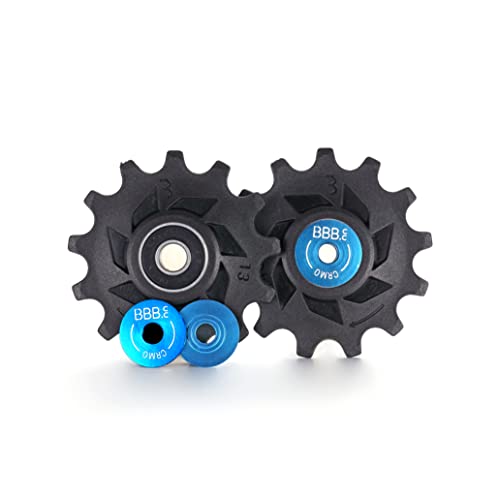
| Derailleur pulley | A wheel within a rear derailleur cage | Compatibility with the particular derailleur and the stated pulley dimensions or arrangement |
More Bike Derailleurs
See all 93 Bike Derailleurs →



As an Amazon Associate we earn from qualifying purchases.