

Quick Summary
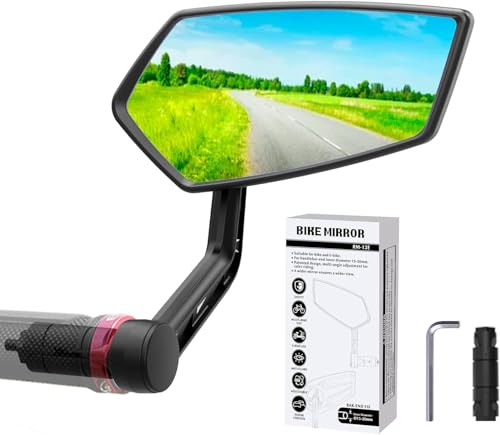
The BYKING Bar End Bike Mirrors are a pair of rear-view mirrors for open-ended bicycle handlebars. They feature 360° adjustment and are described as suitable for handlebars with a 15-20 mm inner diameter.
The mirrors are presented as a wide-view safety accessory for bicycles, scooters and ebikes, so the main buying checks are handlebar fit, mirror position and whether you want a pair rather than a single mirror.
Key Details
| Detail | Verified information and buyer relevance |
|---|---|
| Brand | BYKING. Useful for matching the correct product. |
| Product type | Bar end bike mirrors. Designed to mount at the handlebar end. |
| Quantity | Pair. Check this suits the setup you want. |
| Adjustment | 360° adjustable. Helps set the viewing position. |
| Fit | Fits open-ended handlebars with a 15-20 mm inner diameter. Measure before choosing. |
| Included item | Allen key. Helpful for installation. |
What to Compare Before Buying
- Handlebar fit: This pair is stated to suit open-ended handlebars with a 15-20 mm inner diameter. Check your bars before ordering.
- Mirror quantity: It comes as a pair, which matters if you want matching left and right mirrors.
- Adjustment range: The mirrors rotate 360°, so compare that with the viewing angle you want at the bars.
- Included fitting: An Allen key is included, which may matter if you want to install it straight away.
Compatibility, Size and Fit
These mirrors are intended for open-ended bicycle handlebars with a 15-20 mm inner diameter. That makes fit the most important check before purchase. Measure the handlebar opening on the bike, scooter or ebike you plan to use them on, and confirm the bar end is open before choosing a set.
Before You Decide
Confirm that your handlebars are open-ended and within the stated 15-20 mm inner diameter. Check that you want a pair of mirrors, not a single mirror, and make sure the 360° adjustment suits the viewing position you need on the bike or scooter.
Positioning the Mirrors
Before setting off, adjust the mirrors while stationary from your usual riding posture, then check what they show. Treat them as an aid to awareness, not a substitute for looking around directly before turning or changing position.