


Fishing bait containers are a simple accessory, but the right choice can make bait easier to carry, organise and keep ready for use. The best option depends on what kind of bait you use, how much you need to take with you and whether you want quick access on the bank.
This guide focuses on the practical differences that matter when comparing bait tubs, pots and other storage styles within the category. It is for anglers who want a cleaner way to transport bait, reduce fuss and choose a container that fits their fishing routine.
Compare Fishing Bait Containers


As an Amazon Associate we earn from qualifying purchases.
What should you look for in a fishing bait container?
The main decision is whether you want a container that is easy to carry, simple to open, and suited to the bait you use most often. A good starting point is the bait itself: soft baits, loose feed and small portions often need different handling from liquid-heavy or scent-rich bait. The useful trade-off is usually between compact convenience and the amount of storage or separation you get.
Specifications vary by model, so always check the individual product page before buying.
| Feature | What it means | Why it matters | What to check |
|---|---|---|---|
| Capacity | How much bait the container is intended to hold | Helps you match the container to short sessions or longer outings | Whether it suits a single bait type or several portions |
| Lid style | How the container opens and closes | Affects speed of access and how secure the contents feel in transit | Whether the closure seems easy to manage with cold, wet or muddy hands |
| Shape and stackability | How the container sits in a bag, box or tray | Useful for anglers who carry several bait types | Whether the shape looks easy to store together with other tackle |
| Material and finish | The general construction of the container | Can affect cleaning, durability and how well it handles repeated use | Whether the product page describes it as suitable for the bait you plan to carry |
| Portability | How easy it is to carry to and from the water | Important if you walk to your swim or travel light | Size, weight and whether it fits your other tackle storage |
Key decision criteria
Bait type
Different bait benefits from different storage. Dry bait, prepared feed and small portions are often easier to manage in simple tubs, while wetter or stronger-smelling bait may need a better seal or a more contained layout. Think about the bait you use most frequently, not the occasional backup option.
Capacity and separation
Some anglers need one compact container, while others prefer several smaller ones so bait can be separated by type. Separate storage can reduce mixing and make it easier to grab the right bait quickly. The trade-off is that more containers can mean more items to carry and clean.
Access on the bank
If you change bait often, fast access matters more than maximum capacity. A container that opens easily and closes securely can be more useful than a larger one that is awkward to manage. For short sessions, convenience may matter more than bulk storage.
Cleaning and re-use
Because bait containers are used around damp, sticky or odorous contents, a simple design is often easier to maintain. Look for shapes that do not trap residue unnecessarily and that can be emptied quickly after a session. That tends to make regular use more pleasant and helps the container stay fit for repeat outings.
Common types and how they differ
Within this category, the differences are usually about form rather than dramatic specialisation. The most useful way to compare options is by how they fit your fishing style.
- Single tubs or pots: Useful when you carry one bait type or a small amount of feed. They are straightforward, but may be less flexible if you like to separate several items.
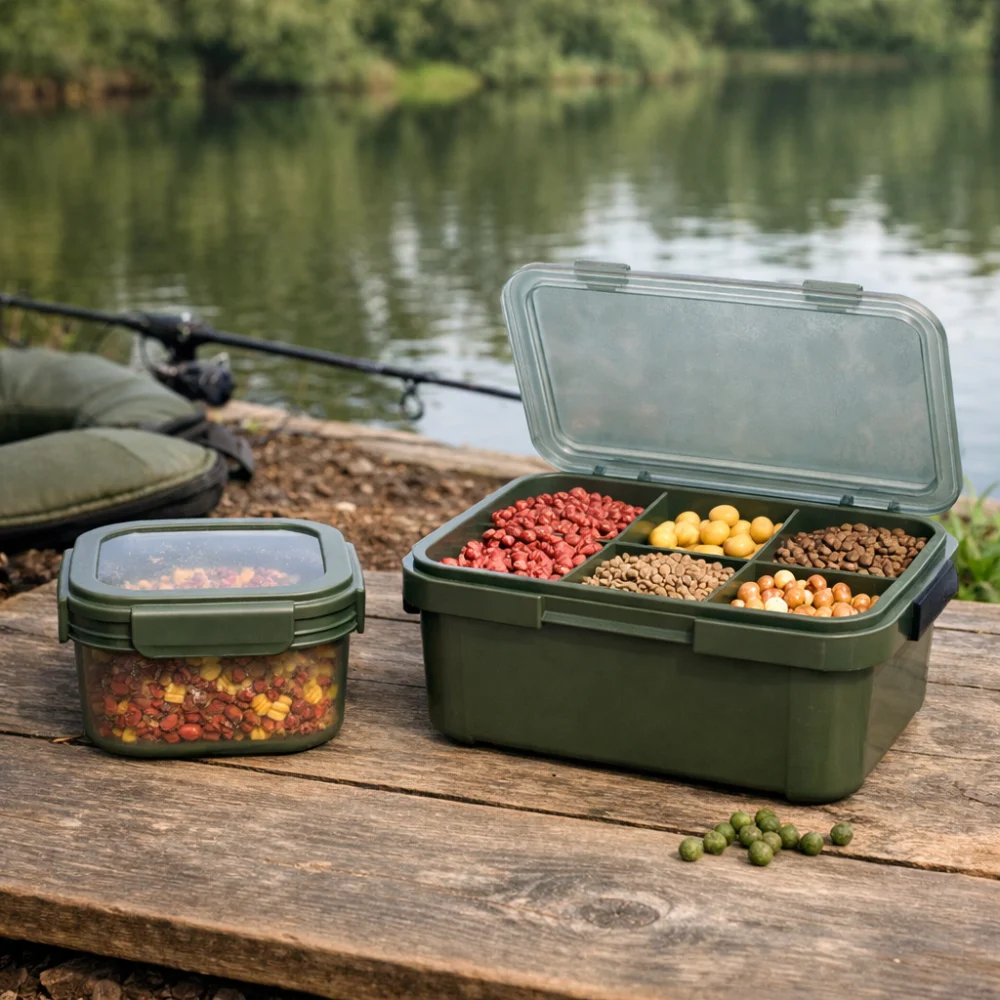
- Multi-container storage: Better for anglers who want different baits kept apart. This can improve organisation, although it adds complexity and takes up more room.
- Compact travel-friendly containers: Suited to mobile fishing and light tackle setups. They usually prioritise portability over large capacity.
Which container suits which angler?
| Buyer need | Usually worth prioritising | Why |
|---|---|---|
| Short, simple sessions | Compact size and easy access | Less to carry and quicker to use |
| Longer sessions | More capacity and better organisation | Helps keep different bait ready without repacking |
| Mobile or walking anglers | Lightweight, space-conscious storage | Fits better with minimal tackle |
| Anglers using several bait types | Separate compartments or multiple containers | Helps avoid mixing and confusion |
Common mistakes to avoid
- Choosing by size alone: A large container is not always more useful if you only take a small amount of bait.
- Ignoring how the lid works: Easy opening and closing matters when your hands are wet or cold.
- Overlooking storage space: Some containers fit one bag or box better than another, even when the capacity seems suitable.
- Buying for rare bait rather than regular bait: The container should suit what you use most of the time.
Safety and suitability caveats
Fishing bait containers are generally straightforward, but it is still worth checking that the size and design suit the bait you plan to store. If you carry scent-rich or damp bait, think about how securely the container closes and how it will be transported with the rest of your tackle. Specifications vary by model, so always check the individual product page before buying.
Maintenance, storage and lifespan considerations
Bait containers usually last longer when they are emptied and cleaned soon after use. Drying them before storage can help reduce odours and residue build-up. If you carry several containers together, consider how they nest, stack or fit in your tackle bag so they stay easy to manage between sessions.
How to compare options efficiently
- Start with the bait you use most often and the amount you normally carry.
- Decide whether you need one simple container or several separate ones.
- Compare access, sealing, stackability and ease of cleaning.
- Check how the size fits your bag, box or carry system.
- Choose the option that best matches your usual fishing routine rather than the most elaborate one.
Summary buyer decision checklist
- Does the container suit the bait you use most often?
- Is the capacity right for your usual session length?
- Will the lid or closure be easy to use when fishing?
- Do you need separate storage for more than one bait type?
- Is it simple to clean and store after use?
- Will it fit comfortably with the rest of your tackle?
Frequently asked questions
Do I need more than one bait container?
Not always. One container may be enough if you only carry a single bait type or a small amount of feed. Multiple containers become more useful when you want to keep different baits separate or make access quicker during a session.
Are larger bait containers always better?
No. Larger containers help if you carry more bait, but they can be unnecessary for short sessions and may take up more space than you want. The better choice is the one that matches your normal routine.
What matters most for mobile fishing?
For mobile fishing, compact size and easy carrying are usually the key points. You want a container that fits your tackle system without becoming awkward to pack or access.
How important is the lid design?
Quite important, because the lid affects both convenience and how secure the contents feel in transit. A simple, reliable closure is often more practical than a more complicated design if you use the container often.
Can I use any container for any bait?
Not necessarily. Some bait is easier to store than others, and damp or scent-heavy bait may benefit from a more suitable closure or format. Check the individual product information for guidance on what the container is intended to hold.
How should I store bait containers between trips?
Empty and clean them before storing, then keep them dry and together with your tackle so they are ready for the next outing. That helps reduce odours and keeps the contents area easier to manage.
Match the container format to the bait
Capacity and portability are only part of the choice: the container’s format should suit how the bait is prepared and used. A general-purpose tub may work well for portions of feed, while other formats are designed around a more specific task. Check the stated intended use rather than assuming that every bait container can handle every bait.
- Bowls and larger tubs: May suit loose feed or bait that needs room to be portioned or mixed. Their larger footprint can be less convenient if you carry only small amounts or have limited bag space.
- Containers with a strainer or tray: Can help keep bait separate from liquid or allow excess liquid to drain, where that is appropriate for the bait. Check what the insert is intended to hold and whether the overall container size suits your setup.
- Small pots and bottles: Useful for carrying smaller portions or liquid-style products. Check the closure and intended contents, especially if you need to transport liquids alongside other tackle.
- Live-bait containers: Treat these as a distinct choice: check that the product is intended for the bait and conditions you have in mind rather than relying on a generic storage description.
- Bait-boat hoppers: These are components for a particular bait-delivery setup, not ordinary carry tubs. Confirm the intended boat and fit from the individual product information before considering one.
Is a bait-boat hopper the same as a bait storage tub?
No. A hopper is intended for a bait-boat setup, whereas a standard tub is for carrying or storing bait. Do not assume a hopper will fit a particular boat; check the product information for the intended compatibility.
More Fishing Bait Containers
See all 139 Fishing Bait Containers →



As an Amazon Associate we earn from qualifying purchases.