

Fishing tackle kits can be a convenient starting point when you want a ready-made selection of small fishing essentials without building everything from scratch. They are also useful as a simple backup or gift, especially if you want a practical bundle rather than a single item.
The main challenge is not finding a kit, but finding one that matches how and where you fish. A kit that suits coarse fishing from the bank may not be the right choice for sea fishing, lure fishing or a beginner who needs a very simple setup.
This guide focuses on how to compare tackle kits sensibly, what details matter most and which trade-offs are worth noticing before you choose.
What should you look for in a fishing tackle kit?
The best starting point is to match the kit to your fishing style, then check how complete and practical the contents are. A useful kit should save time and reduce guesswork, but it should still be relevant to the species, venue and tackle you intend to use. The most important trade-off is usually between convenience and flexibility: a larger kit may cover more situations, while a smaller one can be easier to carry and easier to understand.
| Feature | What It Means | Why It Matters | What To Check |
|---|---|---|---|
| Intended fishing style | The type of fishing the kit is meant to support | Helps you avoid buying tackle that does not suit your usual setup | Look for clues about coarse, lure, sea or general-purpose use |
| Contents | The mix of tackle items included | Shows whether the kit is a simple starter pack or a broader assortment | Check the individual item list rather than relying on the word kit alone |
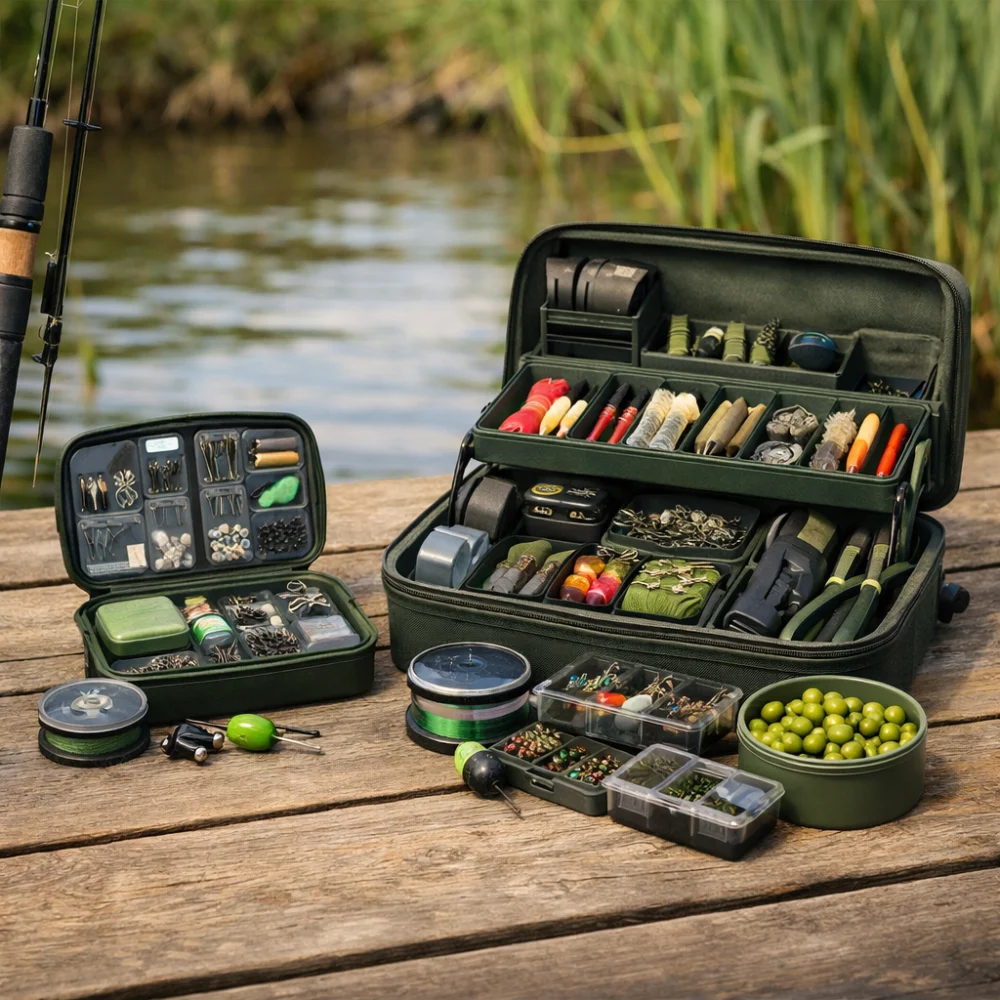
| Organisation | How the items are packed and separated | Affects how easy the kit is to carry, store and find parts in the field | See whether it uses compartments, boxes or pouches |
| Size and portability | How easy it is to transport and keep with you | Important if you fish from mobile spots or want a backup kit | Consider whether the kit is compact enough for your bag or seat box |
| Skill level fit | How straightforward the kit is to understand and use | Helps beginners avoid unnecessary complexity | Choose a simpler kit if you only need the basics |
| Replacement value | Whether the kit fills gaps or duplicates tackle you already have | Prevents buying items you already own | Compare the contents with your current tackle box |
Key decisions that make the biggest difference
Match the kit to your fishing method
Different fishing methods rely on different tackle choices, so the same kit will not suit every angler. A broad general-purpose kit may be a good introduction, but a more specific kit can be more useful if you already know the style of fishing you prefer.
If you mainly fish one way, look for a kit that supports that approach instead of choosing a larger bundle just because it looks comprehensive.
Check what is actually included
The label on a kit can sound complete, but the usefulness depends on the actual contents. Some kits focus on small terminal tackle, while others may be closer to a mixed starter selection. Read the item list carefully so you know whether the kit gives you practical pieces you will use or mostly extras you might not need.
Think about storage and access
Some anglers want everything grouped neatly in one place, while others prefer to sort parts into their own system. A kit with clearer organisation can be helpful if you want quick access on the bank or a simple way to keep spares together. If you already have a storage setup, make sure the kit fits into it rather than creating more clutter.
Balance simplicity against flexibility
A beginner may prefer a straightforward kit with fewer choices, because it is easier to understand and use. An experienced angler may want a kit that fills a very specific gap or adds variety to an existing setup. The more flexible a kit is, the more likely it is to include items you may not use every time.
Common kit types and how they differ
Fishing tackle kits are usually best thought of by purpose rather than by a fixed standard. The useful differences are often about how specific or general the contents are.
- Starter-style kits: Suited to new anglers who want a simple introduction, but they may include items that are more basic than specialised.
- General-purpose kits: Useful if you want a broader assortment for occasional use or as a backup, though some contents may be less relevant to one fishing method.
- Method-focused kits: Better when you already know the type of fishing you do, because the contents are more likely to fit a particular setup.
- Replacement or spare kits: Helpful for topping up an existing tackle box, but they only make sense if the contents overlap with your current needs.
Which kit suits which buyer?
| Buyer need | What to prioritise | Why it helps | Potential drawback |
|---|---|---|---|
| Complete beginner | Simplicity and clear contents | Makes the first setup easier to understand | May not be flexible for future changes |
| Occasional angler | General usefulness and easy storage | Keeps a small, practical selection ready to use | Some items may remain unused |
| Experienced angler | Specific contents and relevance to a method | More likely to add genuine value to an existing setup | Can be too narrow if your fishing changes |
| Gift buyer | Clear purpose and broad appeal | Reduces the risk of choosing a kit that feels too specialised | A very general kit may duplicate tackle the recipient already has |
| Backup kit buyer | Compactness and completeness | Useful for keeping a spare set together | May not cover every situation |
Common mistakes to avoid
- Buying by quantity alone: More pieces do not always mean better value if the contents are not relevant.
- Ignoring your current tackle: A kit is less useful if it mostly duplicates what you already own.
- Choosing a kit that is too broad: A general kit can be convenient, but it may not be the best fit for a specific fishing method.
- Overlooking storage needs: A poorly organised kit can be harder to use than separate items.
- Assuming one kit suits every venue: Different waters and fishing styles call for different tackle priorities.
Suitability and buying caveats
Fishing tackle kits are usually low-risk purchases, but the details still matter. Check whether the kit is intended for your type of fishing, whether the contents suit your experience level and whether any separate items you need are included elsewhere in your setup.
Specifications vary by model, so always check the individual product page before buying.
Maintenance, storage and practical use
Most tackle kits are easiest to manage when you keep them dry, organised and separated from loose items in your wider fishing gear. If a kit includes small components, a tidy storage layout helps prevent mix-ups and makes it easier to spot what needs replacing later. Think about how often you fish and whether you want a kit that stays packed ready to go or one that becomes part of a larger tackle system.
How to compare fishing tackle kits quickly
- Decide what kind of fishing the kit needs to support.
- Check whether the contents match your current level and setup.
- Compare how the kit is organised and how easy it is to carry.
- Look for any unnecessary extras that add clutter without adding value.
- Confirm the individual product page details before making a choice.
Summary buyer checklist
- Does the kit suit the fishing style you actually use?
- Are the contents clearly listed and genuinely useful to you?
- Is the kit simple enough for your experience level?
- Will it fit your existing storage or tackle bag?
- Are you buying a starter kit, a backup kit or a more specific bundle?
- Have you checked the individual product page for the exact contents?
Frequently asked questions
Are fishing tackle kits good for beginners?
They can be, especially if the contents are simple and clearly described. A beginner-friendly kit can reduce confusion by grouping the basics together, but it still helps to choose one that matches the style of fishing you want to try.
Is a general-purpose kit better than a specialised one?
Not always. A general-purpose kit is useful if you want flexibility, while a more specialised kit is often better when you already know the exact kind of fishing you do.
Should I buy a tackle kit if I already have a tackle box?
That depends on whether the kit fills a gap or just duplicates what you own. It can be useful as a spare, a travel option or a way to separate tackle for a particular style of fishing.
What matters more: the number of pieces or the type of pieces?
The type of pieces matters more. A kit with fewer, relevant items is often more useful than a larger one filled with parts you are unlikely to use.
Are tackle kits a good gift idea?
They can be, as long as the kit is broadly suitable for the recipient’s fishing style. If you are unsure, a more general kit is usually safer than one that is highly specific.
How do I know if a kit is too specialised?
If the contents only make sense for one narrow fishing method and you are not sure the buyer uses that method, it may be too specialised. In that case, a more general kit is often the safer choice.