


Surf fishing rod holders are simple items, but the right choice depends on where you fish, how long you want to leave a rod set up and how much stability you need in sand or shingle. A good holder should suit the beach conditions as well as the style of fishing you prefer.
If you are comparing options for the first time, it helps to think about ground grip, rod support and portability before anything else. Those three factors usually determine whether a holder feels dependable on the day or awkward to use.
This guide focuses on the practical differences that matter when choosing within the category. It is about matching the holder to your fishing setup, not about one universal design that suits every shore.
Compare Surf Fishing Rod Holders


As an Amazon Associate we earn from qualifying purchases.
What should you look for first?
Start with the fishing ground and how you plan to use the holder. On softer sand, a design that sinks or anchors securely may be more relevant than a compact one, while on firmer or mixed ground you may care more about ease of carrying and quick setup. The best starting point is usually the balance between stability, portability and how confidently the rod sits when unattended.
Specifications vary by model, so always check the individual product page before buying.
| Feature | What It Means | Why It Matters | What To Check |
|---|---|---|---|
| Ground grip | How securely the holder sits in sand, shingle or mixed beach ground | Affects stability and how well the rod stays positioned | Whether the design is suited to softer or firmer ground |
| Rod support | How the rod is held while resting | Affects convenience and how neatly the rod is kept in place | The shape of the support and whether it suits your rod setup |
| Portability | How easy the holder is to carry and move between spots | Important if you walk a lot or change positions often | Size, weight and how awkward it is to transport |
| Setup style | How the holder is placed or secured before use | Impacts speed of use and the amount of effort needed on the beach | Whether it suits quick stops or longer sessions |
| Durability expectations | The general build quality and resistance to typical beach use | Salt, sand and repeated use can be hard on equipment | Materials, finish and any care guidance on the product page |
Key decision criteria
Where you fish most often
The beach environment matters more than many buyers expect. Deep, soft sand gives different support from compacted sand, pebbles or mixed ground, so a holder that works well in one setting may feel less secure in another. If you fish several spots, look for the type that seems most adaptable to the surfaces you actually use.
How much stability you need
Stability is about more than whether the holder stands up at all. A secure holder can reduce wobble and keep the rod positioned more predictably, which is especially useful if you are waiting between casts. The trade-off is that more secure designs can sometimes be less compact or take a little more effort to place.
Portability and carrying comfort
If you walk down the beach with other gear, a lighter and less awkward holder can make the session easier. If you only move a short distance from the car or a fixed access point, portability may matter less than firmness in use. Think about how much gear you already carry and whether the holder needs to fit inside a bag or alongside other tackle.
Rod fit and support shape
Different holders support the rod in different ways, and the shape can affect how securely the rod rests. What feels comfortable for one setup may not feel as reassuring for another, especially if your rod and reel combination is bulky or has a different balance. Check how the holder is designed to cradle the rod and whether that style suits your own tackle.
Materials and maintenance expectations
Saltwater use places extra demands on equipment. Look for information about the materials and any care guidance so you can judge whether the holder is likely to suit regular beach use. A simple design can be easier to rinse and store, while more complex parts may need a little more attention after each outing.
Product types and variants
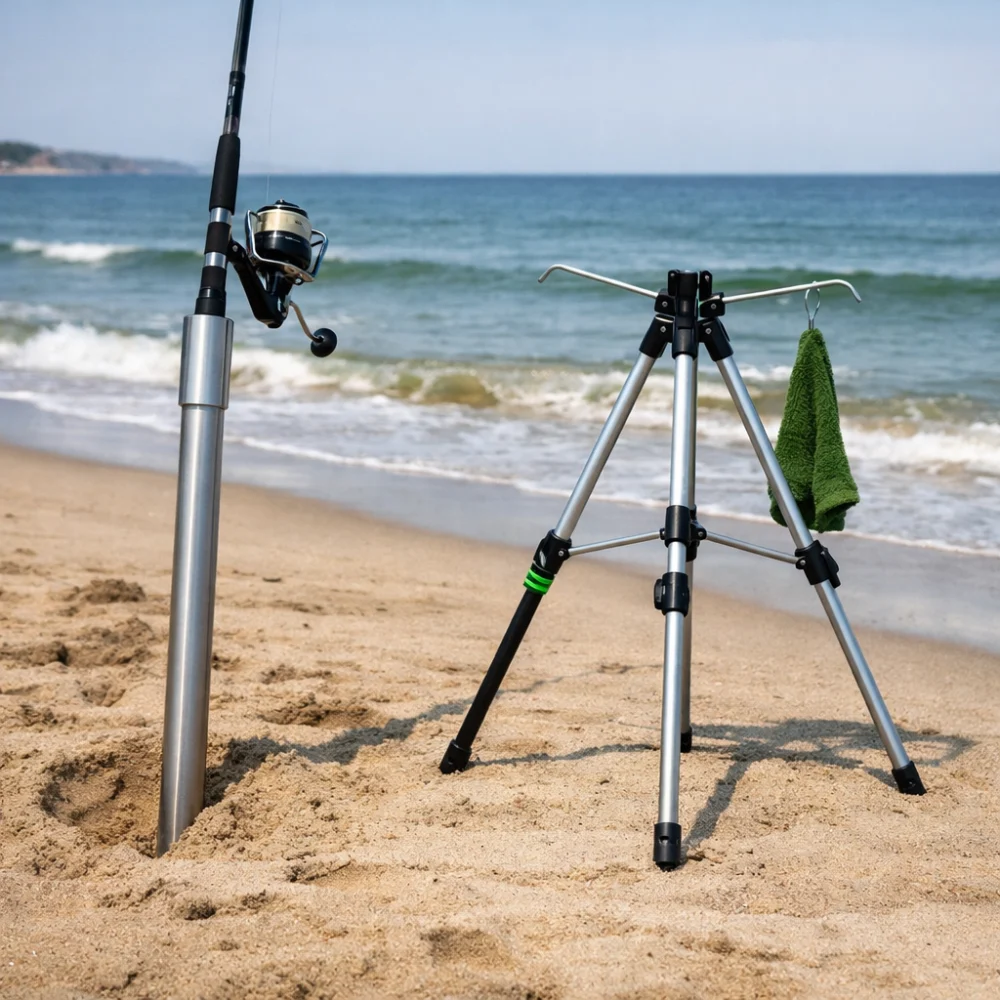
Within surf fishing rod holders, the main differences are usually about how they stand, how they anchor and how easy they are to carry. Some are aimed more at firm placement, while others are chosen for convenience or fast setup.
- Anchoring-style holders: These are suited to anglers who want a more planted feel in the ground. Their main limitation is that they may be less convenient if you move often.
- Portable holders: These prioritise easy carrying and quick repositioning. Their limitation is that lighter, more compact designs may not feel as secure in every beach condition.
- Simple support holders: These focus on holding the rod neatly between casts without much complexity. They can suit straightforward sessions, but may offer fewer adjustments.
Which type suits which buyer?
| Buyer need | What to prioritise | Why it helps |
|---|---|---|
| Long, relaxed sessions | Stability and dependable ground grip | Keeps the rod positioned securely while you wait |
| Frequent spot changes | Light weight and easy carrying | Makes it simpler to move along the shore |
| Mixed beach conditions | Adaptability and practical support shape | Helps the holder feel usable on different surfaces |
| Occasional or beginner use | Straightforward setup and simple handling | Makes the first few sessions less fiddly |
Common mistakes and misunderstandings
- Choosing for looks rather than ground conditions: A holder that seems sturdy may still be the wrong style for the beach surface you actually fish most.
- Overlooking portability: A very secure design can become inconvenient if you have to carry it a long way.
- Ignoring rod fit: The support shape matters, especially if your rod and reel setup is not a very standard size.
- Assuming one design suits every beach: Conditions change from soft sand to firmer or mixed ground, so flexibility can matter.
Safety and suitability caveats
Surf fishing rod holders are generally simple accessories, but they still need to suit the conditions and the rest of your setup. Check that the product page makes sense for the ground you fish, the size of rod you use and how you plan to transport the holder. If you fish in busy areas, think about placement and visibility as part of practical suitability rather than relying on the holder alone.
Maintenance, storage and lifespan considerations
Salt, sand and moisture can shorten the useful life of beach accessories if they are not cared for sensibly. A holder that is easy to rinse, dry and store may be more convenient if you fish regularly. If the product has moving parts, joints or fittings, those details are worth checking because they may affect long-term upkeep even when the holder itself seems simple.
How to compare options efficiently
- Decide where you will use it most often, such as soft sand, firmer ground or mixed beach conditions.
- Choose the type that matches your usual style, whether that is more portable, more planted or more straightforward.
- Compare rod support, ground grip and carrying convenience.
- Think about the trade-off between stability and ease of transport.
- Read the individual product page carefully before buying.
Summary buyer decision checklist
- Will it suit the kind of beach ground you fish most often?
- Does the support shape suit your rod setup?
- Is the holder easy enough to carry for your usual sessions?
- Does the design feel practical for long waits or quick moves?
- Are the material and care details suitable for saltwater use?
- Have you checked the individual product page for model-specific details?
Frequently asked questions
What is a surf fishing rod holder used for?
It is used to hold a rod in position while you wait between casts or set up your tackle. The main benefit is convenience, but the exact usefulness depends on how stable the holder is in the ground and how your rod sits in it.
Are all surf fishing rod holders suitable for any beach?
No, suitability depends on the ground and how the holder is designed to be placed or secured. A style that works well in soft sand may not feel as dependable on firmer or mixed surfaces.
What matters more: portability or stability?
That depends on your fishing habits. If you walk a lot or move frequently, portability matters more; if you leave a rod set up for longer periods, stability usually becomes the bigger concern.
How do I know if a holder will suit my rod?
Check how the rod is supported and whether the shape looks practical for your setup. If the product page gives model-specific guidance, use that rather than assuming all rods will sit the same way.
Do I need a more complex design to fish effectively?
Not necessarily. Many buyers are better served by a straightforward holder that matches their beach conditions and is easy to carry and use. The most useful design is often the one that fits your routine without unnecessary complication.
What should I check before buying online?
Look at the intended ground type, the way the holder supports the rod, any transport considerations and the care advice for saltwater use. Specifications vary by model, so always check the individual product page before buying.
More Surf Fishing Rod Holders
See all 50 Surf Fishing Rod Holders →


As an Amazon Associate we earn from qualifying purchases.