


Equestrian safety vests are bought for riders who want extra upper-body protection and a closer fit to their riding activity. They are not a substitute for good judgement, a properly fitted helmet or safe riding practices, but they can be an important part of a rider-safety setup.
Because fit, coverage and construction can vary a lot, the main buying task is understanding what level of protection and mobility you need. The right choice depends on the type of riding, the rider’s build and how much freedom of movement matters in the saddle.
If you are comparing options for the first time, focus on comfort, fit and intended use before looking at any other details. A vest that feels bulky or restricts movement is unlikely to be worn consistently, even if it looks suitable on paper.
Compare Equestrian Safety Vests


As an Amazon Associate we earn from qualifying purchases.
What should you look for in an equestrian safety vest?
The most useful starting point is fit: the vest should be close enough to stay in place, but not so tight that it interferes with breathing or riding position. After that, compare the style of vest, the amount of coverage and how easy it is to adjust. Specifications vary by model, so always check the individual product page before buying.
| Feature | What It Means | Why It Matters | What To Check |
|---|---|---|---|
| Fit | How closely the vest follows the rider’s body | A poor fit can affect comfort and reduce confidence in the saddle | Size guidance, adjustability and how it is intended to be worn over riding layers |
| Coverage | How much of the torso the vest is designed to protect | More coverage can mean more bulk, while less coverage may feel lighter | Which areas are covered and whether that suits the riding activity |
| Mobility | How freely the rider can bend, twist and sit correctly | Riders need a vest that supports movement rather than fighting it | Shape, panel layout and whether the design is described as flexible or rigid |
| Closure and adjustment | How the vest is fastened and fine-tuned | Adjustability helps the vest sit securely over clothing | Fastening style and whether there is enough adjustment for seasonal layers |
| Intended riding use | The type of riding the vest is meant for | Different disciplines and riding environments can place different demands on comfort and movement | Product description, intended rider type and any usage guidance on the product page |
| Comfort | How the vest feels during longer wear | If it feels heavy or awkward, it may not be worn when needed | Weight, breathability claims if supplied, and the shape around the shoulders and waist |
Key decision criteria explained
Fit and sizing
Fit is the first thing to get right because a vest that is too loose can shift around, while one that is too small may feel restrictive. Many buyers think a slightly larger size is safer, but comfort and stability matter more than simply choosing bigger. Check the size guidance carefully and consider the layers usually worn underneath.
Coverage versus freedom of movement
Some riders want as much torso coverage as possible, while others prioritise a lighter, less intrusive feel. More coverage often means more material and a more noticeable vest, so there is a trade-off between reassurance and ease of movement. Think about how long the vest will be worn and whether the rider needs maximum flexibility.
Construction and shape
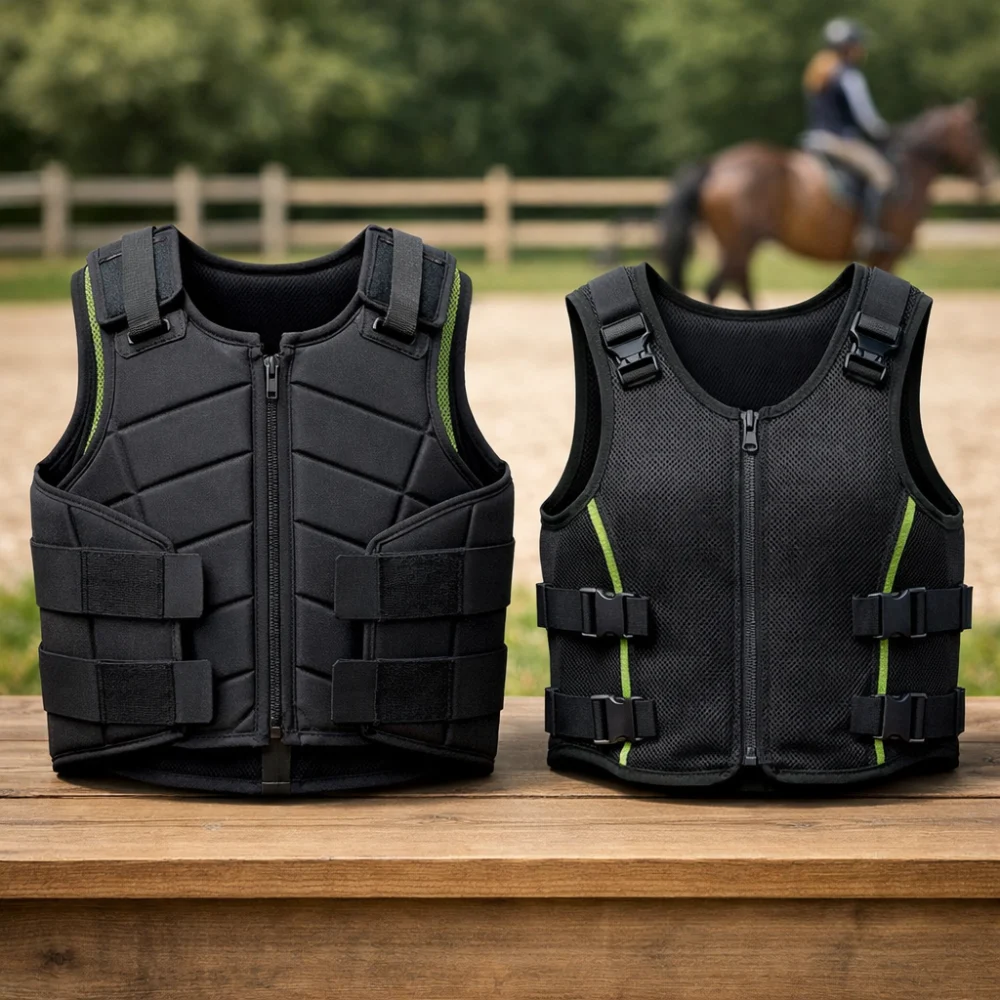
The way a vest is built affects how it sits on the body and how noticeable it feels when riding. A more structured design may feel reassuring, while a simpler design may feel easier to wear regularly. The important question is not which is universally better, but which shape best suits the rider’s discipline and comfort level.
Adjustment and layering
Many riders wear different layers through the year, so some adjustment is useful. A vest that only fits well in one outfit may become awkward once thicker clothing is added. Check whether the adjustment system looks practical for the clothing the rider will usually wear.
Common types and variations
Within this category, the main differences are usually about structure, fit and how much rider movement the vest allows. Some options are made to feel more substantial, while others aim for a lighter or more flexible profile. The right variant depends on whether the priority is reassurance, comfort or ease of wear.
In practical terms, buyers are often comparing a more protective-feeling vest with a less intrusive one. Neither is automatically right for everyone. The better option is the one that suits the rider’s level of experience, the riding environment and the likelihood that the vest will be worn consistently.
Which vest suits which rider?
| Buyer need | What tends to matter most | Useful trade-off to consider |
|---|---|---|
| New or cautious rider | Comfort, confidence and a secure fit | A more substantial feel may be reassuring, but it should still allow normal movement |
| Regular leisure rider | Wearability over longer sessions | Choosing a lighter-feeling vest may improve consistency of use |
| Rider with seasonal layering needs | Adjustment range | More adjustability can help, but only if the vest still sits neatly when tightened |
| Buyer comparing different disciplines | Intended use and mobility | The most secure-feeling option is not always the most comfortable for every riding style |
Common mistakes to avoid
- Choosing by appearance alone rather than fit and intended use.
- Assuming a tighter vest is always better, when comfort and breathing room are also important.
- Forgetting to account for extra layers worn in colder weather.
- Overlooking how much movement the rider needs for the specific kind of riding they do.
- Assuming one vest suits every rider in the same family or yard.
Safety and suitability caveats
A safety vest should be treated as one part of a wider riding setup, not as a guarantee of protection. It is important to check whether the vest is intended for the rider’s activity and whether the fit remains secure when worn with the clothing normally used for riding. If the vest feels restrictive, distracting or unstable, it is unlikely to be a good choice.
It is also sensible to check the product information for any guidance on size, intended use and care. If the rider’s needs are unusual, or if there is any uncertainty about suitability, the individual product page should be read carefully before making a decision.
Maintenance and storage
Care needs can affect the value of a vest as much as the initial purchase does. A model that is easy to keep clean and store neatly is often more practical for regular use than one that is awkward to manage after riding. Follow the care guidance supplied with the product and avoid treating all vests as if they have identical materials or cleaning needs.
How to compare options efficiently
- Start with the rider’s main use and the level of comfort needed.
- Compare the fit and adjustment options first.
- Look at coverage, structure and how much movement the vest allows.
- Check the product page for intended use, sizing guidance and care information.
- Choose the option that is most likely to be worn consistently, not just the one that looks most protective.
Summary buyer decision checklist
- Does the vest suit the rider’s intended type of riding?
- Is the fit suitable over the clothing normally worn underneath?
- Does the design allow enough movement to ride comfortably?
- Is the adjustment range practical for the rider’s build and layers?
- Does the vest feel comfortable enough to wear regularly?
- Have you checked the individual product page for model-specific details?
Frequently asked questions
Are equestrian safety vests the same as body protectors?
In practice, buyers often use these terms in overlapping ways, but product designs can differ. The safest approach is to read the product description carefully and focus on the intended use and fit rather than the name alone.
Should a safety vest feel tight?
It should feel secure without making it hard to breathe or move naturally. A vest that is too loose may shift, while one that is too tight may be uncomfortable and less likely to be worn.
Can I wear a safety vest over winter layers?
Often yes, but only if the vest has enough adjustment for the extra bulk. This is one of the main reasons to think about layering before choosing a size.
What matters more: protection or comfort?
Both matter, because a vest that is uncomfortable may not be worn consistently. A practical choice usually balances the level of coverage you want with the freedom of movement you need for riding.
Do riders need a different vest for different disciplines?
Sometimes the same vest can suit more than one activity, but not always. The most important check is whether the design and fit work for the rider’s usual style of riding and the movement it requires.
How do I know if a vest will fit properly?
Use the product’s sizing guidance and compare it with the clothing the rider normally wears while riding. If possible, leave enough room for movement without allowing the vest to shift around.
More Equestrian Safety Vests
See all 100 Equestrian Safety Vests →


As an Amazon Associate we earn from qualifying purchases.