


Shooting gloves cover a broad set of designs, from gloves intended for archery to those used for other shooting activities. The right choice depends on what you do, how the glove needs to fit and how much finger coverage you want.
Start by identifying the intended activity rather than relying on the word “shooting” alone. Then compare the glove’s shape, sizing information and practical features with your own requirements.
Compare Shooting Gloves


As an Amazon Associate we earn from qualifying purchases.
Which shooting gloves should you choose?
Choose a glove described for your specific activity and check that its finger arrangement suits the way you shoot. A close fit can help preserve dexterity, while more coverage may suit buyers who also want warmth or protection from the elements. Check the size guidance and which hand the glove is made for, rather than assuming one design will suit every user.
Compare the key buying factors
| Feature | What it means | Why it matters | What to check |
|---|---|---|---|
| Intended activity | The discipline or use the glove is designed for. | Different activities can call for different finger coverage and construction. | Look for a clear description matching your use, especially if you shoot archery. |
| Finger coverage | Whether the design covers several fingers, selected fingers or the whole hand. | Coverage affects dexterity, feel and how the glove works with your shooting technique. | Check product images and descriptions for the exact finger arrangement. |
| Fit and sizing | The dimensions or size guidance used to select a glove. | A poor fit can feel restrictive or leave excess material where you need control. | Compare the individual sizing guidance with your measurements and note any fit advice. |
| Handedness | Whether the glove is intended for the left hand, right hand or either. | Some designs are made for a particular hand or shooting setup. | Confirm the stated hand and how it relates to your own equipment and technique. |
| Material and construction | The materials and design details specified for the individual glove. | These can influence feel, flexibility, durability and care requirements. | Check the listed materials and care information; do not infer performance from appearance alone. |
| Weather-related features | Any stated features intended for use in particular conditions. | Coverage and comfort needs may differ between indoor and outdoor use. | Read the exact claims and limitations for the individual product rather than assuming a rating. |
What to consider before buying
Match the glove to your activity
For archery, check whether the design is intended to cover the fingers used in your technique. For other shooting activities, look for a description that matches that use and prioritises the feel and coverage you want. A general “shooting glove” label may not tell you enough on its own.
Balance fit with dexterity
The glove should fit in a way that allows the hand movements your activity requires. A snug fit may help avoid loose material, but a glove that feels too tight can restrict movement. Use the product’s own size guide and check whether it offers advice about fit or intended wear.
Check finger design and hand
Finger coverage is a functional difference, not just a style choice. Make sure the design matches how you use your fingers, and confirm whether it is for the left or right hand. If you are unsure how a listing describes handedness, check the product details before choosing.
Consider materials and conditions
Material and construction can affect the feel of a glove and how it should be cared for. If you expect to use it outdoors, consider whether its stated features fit the conditions you have in mind. Do not treat a product name or photograph as proof of a particular weather rating.
Specifications vary by model, so always check the individual product page before buying.
Types and design differences
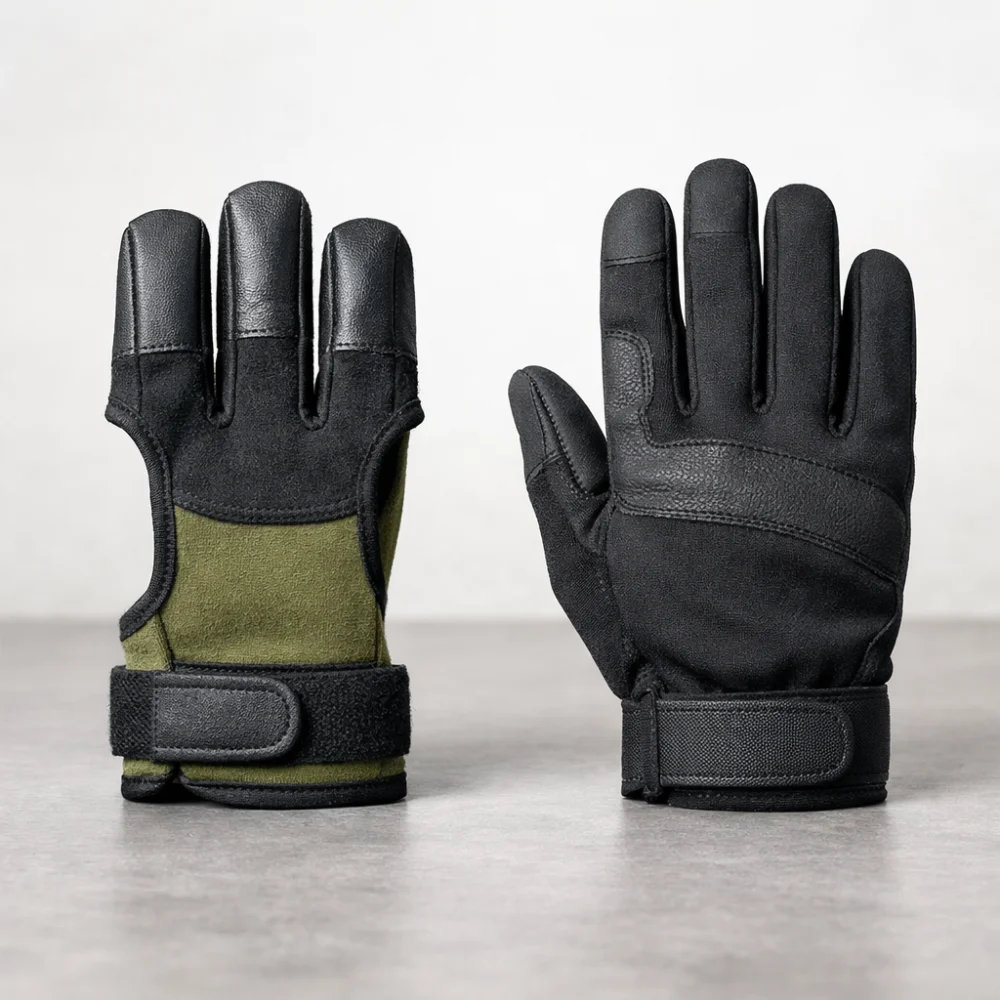
Two broad design distinctions are useful when narrowing your choice. Archery gloves may have a finger arrangement intended for archery use, while full-finger designs cover the whole hand and may be described for other shooting or outdoor uses. These are general descriptions, not guarantees of suitability: check the individual glove’s stated purpose, coverage and hand.
A specialised finger design may suit a particular technique but feel less versatile for general wear. A fuller-coverage glove may offer a different balance of coverage and dexterity, so consider what you need the glove to do rather than choosing by appearance alone.
Choose for your intended use
- For archery: prioritise a design explicitly described for archery, then check which fingers it covers, its hand orientation and whether the fit suits your technique.
- For other shooting activities: check that the product description names or clearly suits your activity. Consider whether you value finger feel, broader coverage or comfort in the conditions you expect.
- For a replacement glove: compare the old glove’s hand, coverage and fit with the new product details. Similar-looking designs may differ in how they are intended to be used.
- When buying for someone else: confirm the recipient’s activity, hand and sizing information first. If those details are unknown, a specific design may be difficult to choose confidently.
Common buying mistakes
- Assuming every shooting glove is for the same activity. Check the stated purpose, especially when choosing between archery and other shooting designs.
- Choosing by size label alone. Sizing can vary between products, so use the individual measurements or guidance where provided.
- Overlooking which hand the glove fits. Verify left, right or either-hand wording before deciding.
- Assuming more coverage is always better. Coverage can trade off against finger feel and dexterity; choose according to your use.
- Reading a product name as a technical guarantee. Check the specific description for material, weather claims and care information rather than inferring details from a name or image.
Safety and suitability
Choose a glove intended for your activity and make sure it does not interfere with the handling or feel your technique requires. A glove is not a substitute for suitable equipment, instruction or the safety practices relevant to your activity. If the product’s intended use is unclear, check its details before relying on it for a particular purpose.
Care and storage
Follow the care information supplied for the individual glove, as materials and construction can differ. Check whether any special cleaning or drying guidance is stated, and store the glove in a way that suits its material and keeps it in good condition. Do not assume that every glove is washable or requires the same care.
A practical buying process
- Write down the activity and the hand for which you need a glove.
- Decide what finger coverage and level of dexterity suit your use.
- Compare the stated materials, fit guidance and any relevant weather features.
- Weigh coverage and comfort against the feel and movement you need.
- Check the individual product details, sizing and care information before choosing.
Buyer checklist
- Is the glove described for your shooting activity?
- Does its finger coverage suit your technique and preference?
- Is it made for the correct hand?
- Have you checked the product-specific size guidance?
- Are the materials, weather claims and care details clear enough for your needs?
Frequently asked questions
Are archery gloves the same as other shooting gloves?
Not necessarily. Archery designs may have finger coverage intended for a particular archery use, while other shooting gloves can have different coverage and purposes. Check the product description rather than relying on the category wording alone.
How do I choose the right size?
Use the sizing information for the individual glove, including any measurement guidance. Do not assume that the same size label will fit identically across different designs.
Do shooting gloves come in left- and right-hand versions?
Some designs are specified for a particular hand, while wording can vary between products. Confirm the stated hand on the product page and make sure it matches your needs.
Should I choose a full-finger or partial-finger design?
Base the choice on your activity and the finger feel and coverage you prefer. Check the exact design, since descriptions and coverage can differ between gloves.
Can one glove suit different shooting activities?
That depends on the glove’s stated purpose, fit and finger arrangement. Do not assume a design intended for one activity will suit another; check its details and consider whether its construction meets both sets of needs.
How should I care for shooting gloves?
Follow the care instructions provided for that specific product. Materials and construction differ, so avoid assuming that a cleaning method suitable for one glove is suitable for another.
Archery gloves: check which hand the glove fits
For an archery glove, distinguish the hand that wears the glove from labels such as “right-handed shooter”. Check the product description to confirm which hand it is designed for and whether that matches the hand you use to draw the bowstring; do not infer this from the handedness label alone. If the listing is unclear, confirm the intended hand before choosing.
More Shooting Gloves
See all 97 Shooting Gloves →


As an Amazon Associate we earn from qualifying purchases.