

Airsoft goggles are a straightforward category in principle, but the details matter because fit, coverage and comfort can vary a lot from one design to another. If you are choosing for yourself, for a new player or as a replacement, it helps to focus on how the goggles will sit, how much face coverage they provide and whether they suit your usual playing conditions.
This guide keeps the decision practical. It is about understanding the differences that affect everyday use, not about chasing features you may never need.
What should you look for in airsoft goggles?
The best starting point is a secure fit with clear coverage around the eyes. After that, compare the style of frame, the way they fasten, how they fit with other face protection and how much comfort you are likely to get during longer sessions. Specifications vary by model, so always check the individual product page before buying.
The main trade-off is usually between coverage, comfort and compatibility. A more enclosed design may feel more reassuring, while a lighter or more open design may be easier to wear for longer. The right choice depends on your face shape, your other kit and how much protection you want the goggles themselves to provide.
| Feature | What it means | Why it matters | What to check |
|---|---|---|---|
| Fit | How securely the goggles sit on your face | Poor fit can be uncomfortable and distracting | Look for sizing guidance, strap adjustment and shape that suits your face |
| Coverage | How much of the eye area and surrounding face is enclosed | Different designs offer different levels of enclosure | Check the visible coverage area and whether you also need compatible lower-face protection |
| Comfort | How they feel during longer use | Comfort affects whether you can wear them for a full session | Consider cushioning, weight and how the strap sits |
| Compatibility | Whether they work with other kit | Some players wear glasses, helmets or face masks | Check space, strap layout and whether the shape suits your other equipment |
| Lens design | The type and shape of the lens area | It can affect visibility and ease of use | Review the lens style, field of view and any care or replacement information |
| Maintenance | How easy they are to clean and store | Regular care helps keep them usable and clear | Look for cleaning guidance and whether the design is easy to keep free from dirt and scratches |
Key decision criteria
Fit and face shape
Fit is one of the most important buying checks because even good goggles are frustrating if they slide, pinch or leave gaps where they should sit securely. Face shape, strap adjustment and frame shape all affect how well they stay in place. If possible, compare the product photos and any fit notes carefully rather than assuming one style will suit everyone.
Coverage and use case
Some buyers want goggles that feel as compact as possible, while others prefer a more enclosed design. The right level of coverage depends on how you play, what other face protection you use and how much clearance you want around the eyes. Be cautious about assuming that a more closed design is automatically better; comfort and compatibility are just as important.
Comfort for longer sessions
For casual or short sessions, minor pressure points may be less of a concern. For longer use, the way the strap distributes pressure and the way the frame sits against the face become more noticeable. If you plan to wear them for extended periods, comfort should be treated as a core feature, not an extra.
Compatibility with glasses and other gear
Some shoppers need goggles that sit more comfortably with prescription glasses or alongside a helmet and lower-face protection. This is less about a universal rule and more about whether the shape leaves enough room for your own setup. Check the product information for any fit notes rather than assuming all goggles work the same way.
Types and variants you may see
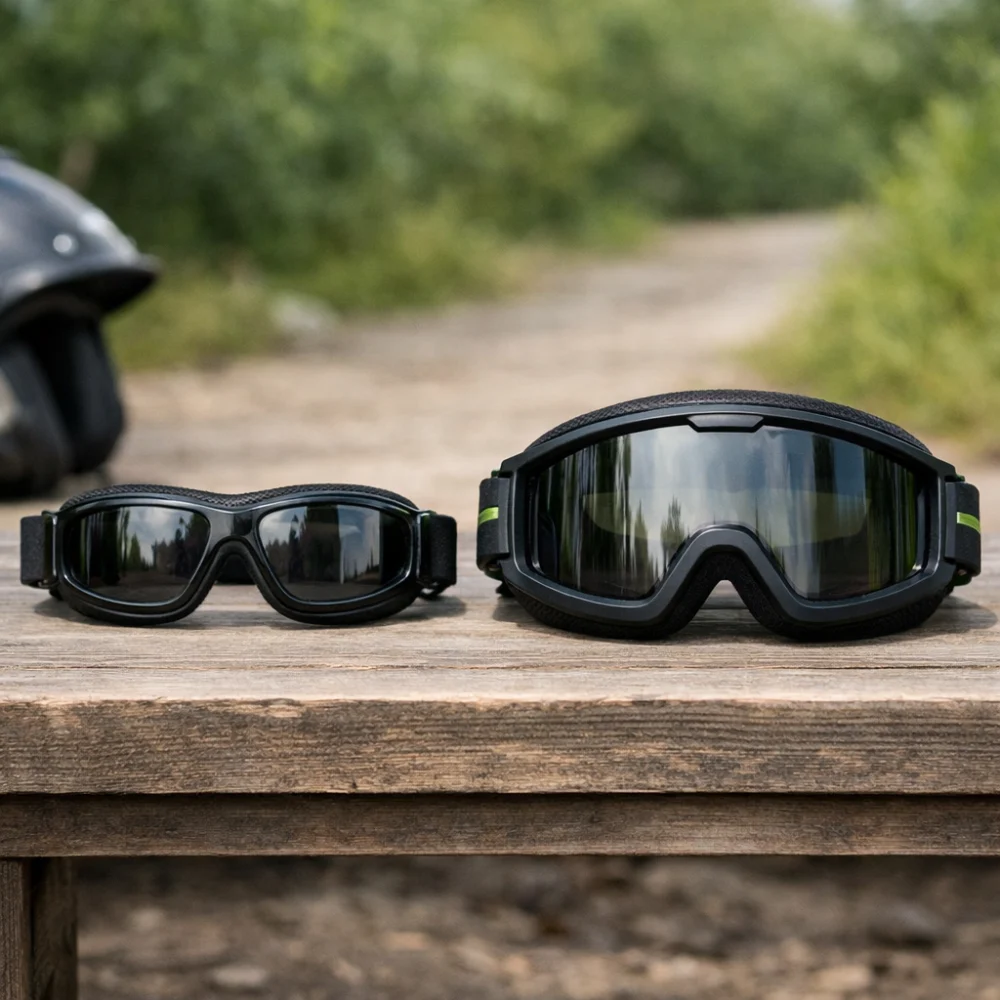
Within this category, the most relevant differences are usually about coverage, profile and intended wear style rather than radically different product classes. A more compact option may suit someone who wants less bulk, while a more enclosed option may suit someone who values fuller coverage and a closer seal around the eye area.
- Compact goggles may feel lighter and less intrusive, but they may offer less surrounding coverage.
- More enclosed goggles may suit players who want a closer-fitting design, but they can feel warmer or bulkier.
- Goggles intended for pairing with other face kit may suit players who already use a mask or lower-face protection, provided the shapes work together.
Which type suits which buyer?
| Buyer need | What to prioritise | Why | What to confirm |
|---|---|---|---|
| First-time buyer | Simple fit, clear coverage and easy adjustment | It makes the choice less confusing and more likely to be comfortable | Check strap adjustment and product notes on fit |
| Player who wears glasses | Space and shape that work with eyewear | Comfort and clearance matter more than a compact profile | Look for compatibility notes and enough internal space |
| Someone building a full face setup | Compatibility with mask, helmet or other protection | Goggles need to work with the rest of the kit, not just on their own | Check how the strap and frame sit alongside other equipment |
| Occasional player | Balanced comfort and straightforward use | There is usually no need to overcomplicate the purchase | Focus on fit, comfort and basic care |
| Frequent player | Comfort, ease of cleaning and consistency of fit | Small annoyances become more important over time | Review maintenance guidance and overall wearability |
Common mistakes and misunderstandings
- Choosing only by appearance. A style may look right in photos but still sit badly on your face.
- Assuming one design fits all accessories. Goggles and other face kit need to work together in practice, not just in theory.
- Overlooking comfort. If you expect to wear them for longer periods, minor pressure can become a real issue.
- Ignoring care requirements. A design that is awkward to clean or store can become frustrating to own.
Safety and suitability checks
Airsoft goggles are a protection item, so buyers should be careful about the intended use and the exact product details. Check the product page for any information about fit, coverage and whether the goggles are meant to be used on their own or with other face protection.
Do not assume that a goggle will suit every face shape or every style of play. If you are unsure, prioritise comfort, secure fit and compatibility with the rest of your kit.
Maintenance, storage and everyday care
Most goggles are easier to keep in good condition if they are stored where the lens and frame will not be scratched. Cleaning should be gentle and appropriate to the materials used, so check the product guidance before using any cleaning method. If you expect regular use, ease of care is worth considering at the buying stage because it affects how long the goggles stay comfortable and clear.
How to compare options efficiently
- Decide who the goggles are for and how they will be used.
- Choose the level of coverage and profile that seems most suitable.
- Check fit notes, adjustment details and compatibility with other face kit.
- Compare comfort, cleaning and storage needs.
- Read the individual product page carefully before deciding.
Summary buyer checklist
- Will the goggles suit the intended wearer’s face shape?
- Is the coverage level appropriate for the intended use?
- Will they work with glasses, masks or a helmet if needed?
- Are the comfort and strap details suitable for longer wear?
- Is cleaning and storage straightforward enough for regular use?
Frequently asked questions
Are all airsoft goggles the same size?
No, and fit is one of the main reasons buyers compare options carefully. Different frame shapes and strap arrangements can change how they sit on the face. Check the individual product page for any size or fit guidance.
Can I wear them with glasses?
Sometimes, but not always comfortably. The important question is whether the shape leaves enough space for your eyewear without pinching or lifting the goggles out of position. Compatibility notes are especially useful here.
Do I need goggles if I already use a face mask?
Yes, if the mask does not provide the eye protection you need for your chosen use. The key is to make sure the goggles and mask work together without leaving awkward gaps or pressure points.
What matters more: comfort or coverage?
Both matter, but in different ways. Coverage is about what area the goggles are intended to cover, while comfort affects whether you can wear them properly for the whole session. The best balance depends on your kit and how long you expect to wear them.
How should I choose for a beginner?
Start with fit, clear coverage and simple adjustment rather than chasing extra features. A straightforward, comfortable option is often the easiest way to avoid disappointment.
What should I check before buying online?
Check the fit notes, coverage description, compatibility with other gear and any cleaning guidance. Specifications vary by model, so always check the individual product page before buying.