

Backpack child carriers are designed for carrying a young child on your back while keeping your hands free. They are often considered for family walks, sightseeing, outdoor events and other times when a pushchair is less practical.
The right choice depends less on a single headline feature and more on how the carrier fits the adult, supports the child and suits the length and style of outing. A good guide should help you separate useful comfort and convenience features from details that sound impressive but may matter less in practice.
If you are comparing options for the first time, start with fit, support and how easy the carrier is to use in real life. Specifications vary by model, so always check the individual product page before buying.
What should you look for first?
The best starting point is whether the carrier is comfortable for the adult and secure for the child over the kind of outing you expect to do. After that, look at adjustment, storage and weather-related extras only if they match your plans. The main trade-off is usually between a lighter, simpler carrier and one with more support or features.
| Feature | What It Means | Why It Matters | What To Check |
|---|---|---|---|
| Adult fit | How well the carrier adjusts to the wearer | A poor fit can make carrying uncomfortable quite quickly | Harness adjustment, waist support and how the load is carried |
| Child support | How the seated area and restraint system hold the child | Comfort and stability matter on longer walks | Seat shape, harness arrangement and support around the child |
| Weight and bulk | How heavy and large the carrier is to carry and store | A lighter carrier can be easier for shorter trips and travel | How it feels to lift, wear and pack away |
| Storage and extras | Pockets, sun protection, rain protection and similar additions | Useful on longer outings, but they can add weight or complexity | Which extras are included and whether they suit your routine |
| Materials and cleaning | How easy the carrier is to maintain | Helps keep the carrier practical after outdoor use | Cleaning guidance and how the fabric and padding are finished |
Key decision criteria explained
Comfort for the carrying adult
Comfort is usually the biggest factor, because the adult carries the full load. Look for features that spread weight sensibly and allow the carrier to be adjusted to different body shapes if needed. If two adults may share use, flexibility becomes more important.
Child fit and seated position
The child should sit securely and comfortably for the intended duration of use. A good carrier will give the child a stable position without feeling cramped, but the exact shape and level of support can vary a lot by model. Check the age, size or weight guidance on the product page rather than assuming all backpack carriers suit the same child.
Ease of use
Think about putting the carrier on, lifting the child in and taking it off again. Some buyers value a simpler design that is quick to manage, while others prefer added adjustment or extras. The best option is the one you will actually use confidently and regularly.
Storage and practicality
Pockets, attachment points and other carrying conveniences can be helpful for snacks, small essentials and day-trip items. They are worth paying attention to if you expect longer outings, but they are not always worth extra bulk for short walks. Consider whether the carrier will be used for errands, holidays or mainly outdoor routes.
Weather and environment
For outdoor use, it is sensible to think about sun, showers and changing conditions. Some buyers may want added cover or compatibility with accessories, while others prefer a simpler setup and will carry separate protection instead. If weather handling matters to you, check exactly what is included and what is optional.
Types and variants you may see
Within this category, the main differences are usually about support level, feature set and intended outing length rather than dramatic changes in overall purpose. Some carriers are likely to feel more streamlined for shorter trips, while others may emphasise more carrying comfort or practical extras for fuller days out.
For some buyers, the key distinction is whether they want a straightforward carrier for occasional use or a more adjustable option for regular walks. Think about who will carry the child most often and how long the carry will usually last.
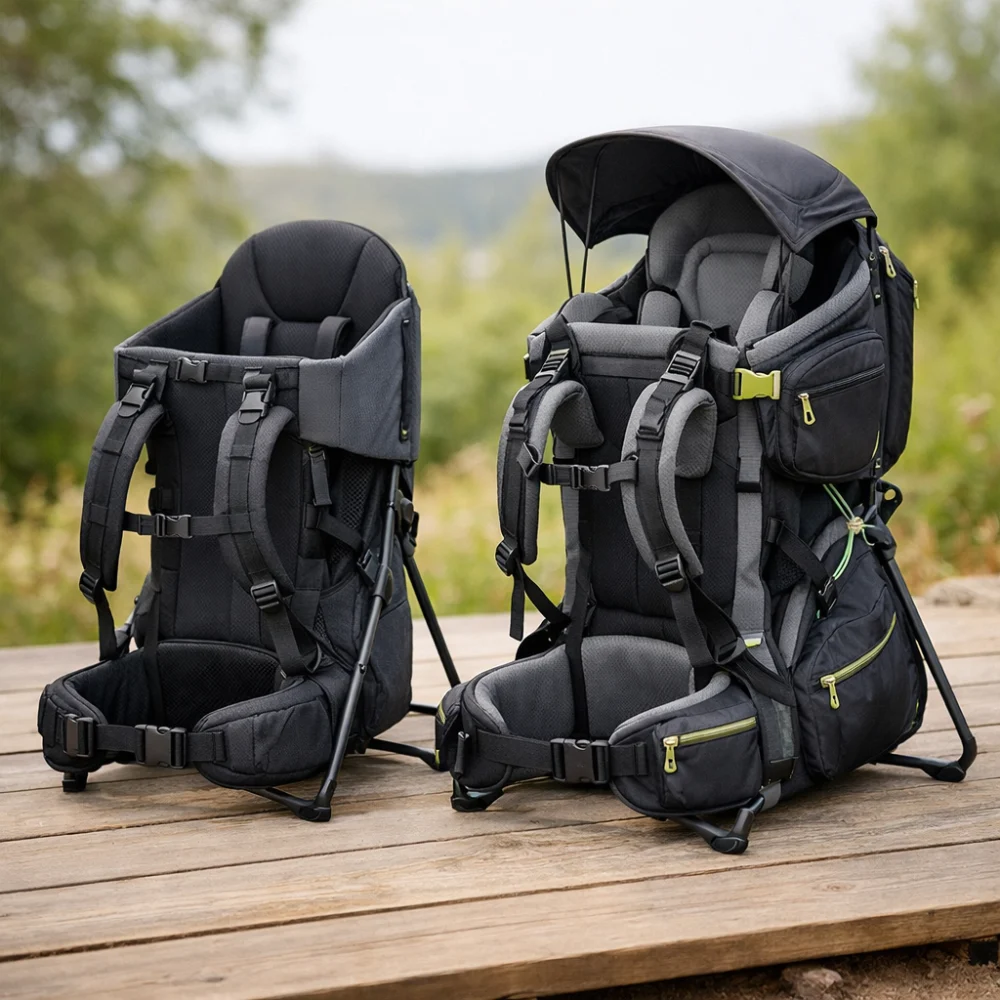
Which carrier suits which buyer?
| Buyer need | What usually matters most | Trade-off to consider |
|---|---|---|
| Short family walks | Simplicity, reasonable comfort and easy handling | Fewer extras may mean less bulk |
| Longer days out | Adult comfort, child support and practical storage | More features can add weight |
| Shared use by different adults | Adjustability and fit range | Extra adjustment can take longer to set up |
| Travel or occasional use | Manageable size and easy storage | Compactness may reduce some convenience features |
| Outdoor all-weather outings | Compatibility with weather protection | Protection may be separate rather than built in |
Common mistakes and misunderstandings
- Choosing on features alone: pockets and extras are useful, but comfort and fit matter more if the carrier will be worn for a long time.
- Assuming all carriers fit all children: check the product page for the relevant guidance rather than relying on the category name alone.
- Overlooking the carrying adult: a carrier that looks suitable on paper may still feel awkward if the harness or support does not adjust well.
- Ignoring how often it will be used: occasional use may favour a simpler option, while regular outings may justify more comfort-focused features.
Safety and suitability caveats
Choose a carrier that is appropriate for the child’s size and stage of use, and follow the individual product information carefully. Do not assume that every accessory or carry position is included, or that every model is suitable for every outing. If in doubt, check the full product page for any limits or fitting guidance.
Maintenance, storage and lifespan considerations
Think about how easy the carrier will be to keep clean after outdoor use, especially if it is likely to encounter mud, snacks or wet weather. Simple fabrics and accessible surfaces are often easier to manage than complicated structures with more parts. When not in use, sensible storage helps protect the carrier and keeps it ready for the next trip.
How to compare options efficiently
- Start with the kind of outing you expect most often.
- Check adult comfort and adjustment first.
- Confirm the child support and suitability guidance on the product page.
- Compare practical extras only after the basics are covered.
- Look at cleaning, storage and any weather-related needs before deciding.
Summary buyer decision checklist
- Will the carrier suit the main adult wearer?
- Is the child support appropriate for the intended user?
- Does the carrier feel simple enough to use regularly?
- Are the storage and extras useful, not just decorative?
- Will the size and weight suit your usual outings?
- Have you checked the individual product page for model-specific details?
Frequently asked questions
What is a backpack child carrier for?
It is designed to let an adult carry a child on their back while keeping hands free. That can be useful for walks, days out and places where a pushchair is less convenient. The main buying question is usually how comfortable and practical it will be for your normal use.
How do I know if a carrier will be comfortable?
Look for adjustment, load support and a design that suits the adult wearer’s body shape. Comfort is very personal, so a carrier that sounds well featured may still not suit everyone in the same way. Trying to judge fit from the product page can only go so far, which is why the individual details matter.
Are extra pockets and accessories worth it?
They can be useful if you do longer outings and want to carry snacks or small essentials. For short walks, they may simply add bulk and complexity. It is worth deciding whether you value convenience enough to accept the extra weight or size.
Should I choose the lightest option?
Not necessarily. A lighter carrier can be easier to carry and store, but it may not offer the same level of comfort or convenience as a more substantial design. The better choice is the one that balances portability with the support you need.
Can one carrier suit different adults?
Some carriers are easier to share than others because they offer broader adjustment. If more than one adult will use it, check how flexible the fit is before buying. Shared use can make comfort and adjustability more important than extra features.
What should I check before buying online?
Check the size or suitability guidance, the adjustment range, what is included, and how the carrier is intended to be used. It is also sensible to review cleaning and storage information if you expect regular outdoor use. Specifications vary by model, so always check the individual product page before buying.