

Bait buckets are a practical part of many fishing setups, helping you carry, store and manage bait before and during a session. The right choice depends less on brand and more on how much bait you need to keep organised, how far you carry your gear and whether you want extra convenience features.
Because bait can vary widely in form and use, it is worth checking the size, shape and lid style of each bucket rather than assuming they all behave the same way. A simple bucket may be enough for short sessions, while a more specialised design may suit longer days or more frequent use.
For most buyers, the main decision is whether you want the easiest possible carry solution or something that gives more control over bait handling, cleaning and storage.
What should you look for in a bait bucket?
Start with the way you actually fish. A bait bucket should be easy to carry, simple to access and suited to the bait you use most often. The main trade-off is usually between compact convenience and extra space or features.
| Feature | What it means | Why it matters | What to check |
|---|---|---|---|
| Size and capacity | How much bait or related tackle it can hold | Helps you avoid overfilling or carrying more bulk than needed | Whether the bucket suits your typical bait quantity and session length |
| Lid and closure | How the bucket is closed and kept shut | Affects access, spill risk and how secure the contents feel in transit | Whether it closes firmly and is easy to open with cold or wet hands |
| Portability | How comfortable it is to carry | Important if you walk a long way to your fishing spot | Handles, shape and whether the size is practical for your setup |
| Cleaning and drainage | How easy it is to rinse out and dry | Useful when bait leaves residue or moisture behind | Whether the design is straightforward to clean and store after use |
| Organisation | Any internal or external features that separate contents | Can make it easier to keep bait types or accessories tidy | Whether you genuinely need compartments or prefer a simpler container |
Key decision criteria explained
Capacity and shape
Capacity matters because bait buckets that look similar can still suit very different jobs. A wider shape may be easier to reach into, while a deeper bucket may be better for compact storage. Think about what you normally carry, then choose a size that leaves a little room without becoming awkward.
Access and lid design
Some buyers value quick access above everything else, especially if bait needs to be reached repeatedly during a session. Others care more about keeping contents covered and tidy in transit. If you often fish in wind, rain or around sand, the way the lid fits and opens can be more important than it first appears.
Cleaning and drying
Bait containers often need to be rinsed out after use, so a design that is simple to clean can save time later. Smooth interiors and straightforward shapes are usually easier to maintain than designs with awkward corners. Specifications vary by model, so always check the individual product page before buying.
Carry comfort
If your fishing involves a long walk, a good handle and manageable size can matter more than extra features. A bucket that is easy to carry is often more useful than one with add-ons you do not need. Consider how it will fit with the rest of your tackle rather than viewing it in isolation.
Types of bait bucket you may see
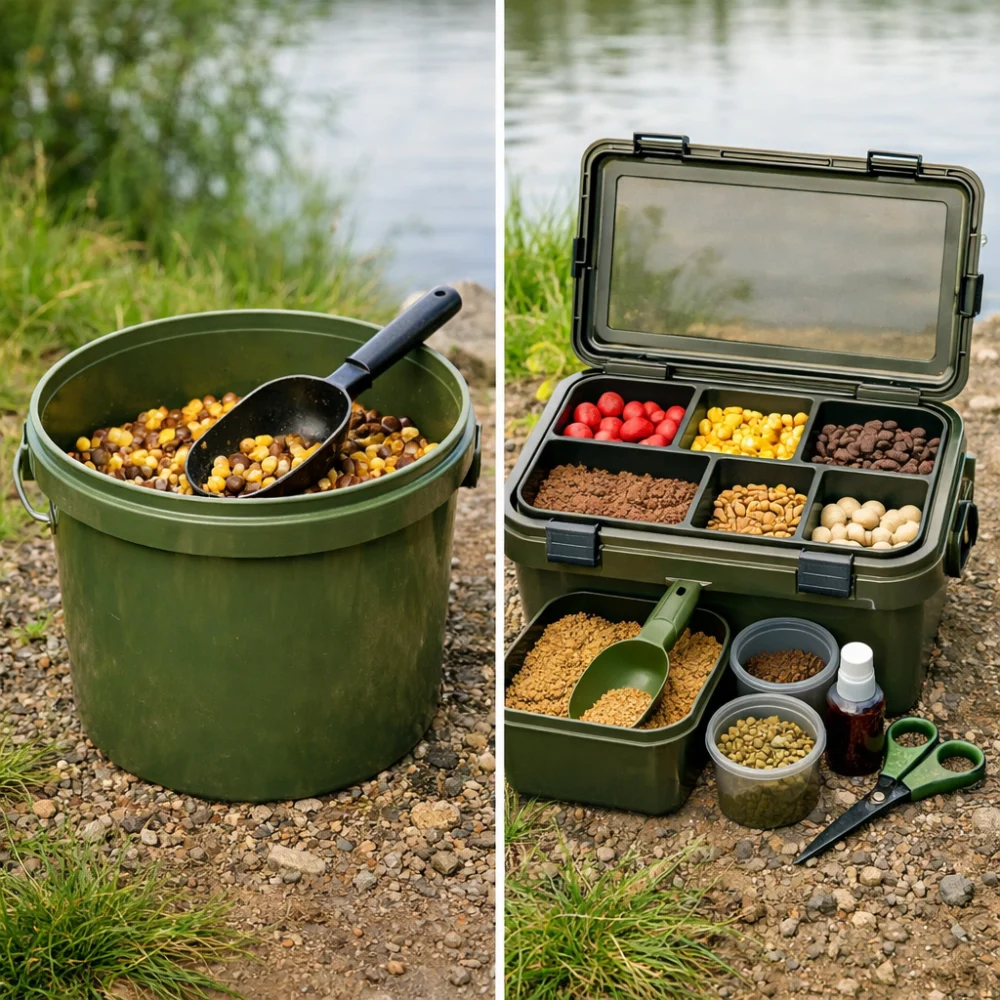
There is usually more variation in practical design than in category name. Some bait buckets are very simple and focused on carrying, while others are shaped to help with handling, rinsing or keeping bait organised. The useful question is not whether a bucket looks more advanced, but whether the design matches your fishing routine.
- Simple carry buckets suit buyers who want an uncomplicated container for short sessions or basic transport.
- Organised or compartmented buckets may help if you like separating bait or accessories, but they can add complexity.
- Specialist bait containers may suit more particular bait-handling needs, although they may be less flexible for general use.
The right type is the one that removes friction from your usual setup rather than adding extra parts you do not need.
Which bait bucket suits different buyers?
| Buyer need | What to prioritise | Why it helps |
|---|---|---|
| Short, simple sessions | Easy carry, straightforward access | Keeps the setup light and practical |
| Longer sessions | Enough room, sensible closure, easy cleaning | Helps bait stay manageable over time |
| Long walks to the water | Comfortable handle and sensible size | Makes transport less awkward |
| Buyers who value neatness | Organisation and secure closure | Helps keep bait and accessories tidy |
| Low-fuss buyers | Simple construction and easy rinsing | Reduces maintenance and decision overhead |
Common mistakes to avoid
- Choosing on size alone. A larger bucket is not always better if it becomes cumbersome to carry or store.
- Overlooking how it opens. Easy access can matter more than extra features when you are using it in real conditions.
- Ignoring cleaning needs. A bucket that is awkward to rinse may be less pleasant to use over time.
- Assuming all bait buckets serve the same purpose. The right choice depends on whether you need basic transport, better organisation or easier bait handling.
Safety and suitability checks
Check that the bucket suits the bait you use and the way you travel to your fishing spot. If you fish in wet or sandy conditions, a secure closure and a design that is easy to clean may be more important than appearance. It is also sensible to make sure the bucket fits comfortably with the rest of your tackle so it does not become an awkward extra item.
Maintenance, storage and lifespan
Most bait buckets are easiest to look after if they are emptied, rinsed and dried after use. That helps reduce lingering smells and residue, and it can make storage simpler between sessions. A straightforward design is often easier to keep in good condition because there is less to trap dirt or moisture.
How to compare bait buckets efficiently
- Work out what you need to carry and how often you will use the bucket.
- Decide whether you want a basic container or something with more organisation or convenience.
- Compare size, lid design, portability and cleaning ease first.
- Check whether any extra features genuinely help your fishing style.
- Read the individual product information carefully before deciding.
Summary buyer decision checklist
- Does the size suit your usual bait and session length?
- Is it easy to carry with the rest of your gear?
- Does the closure feel secure enough for transport?
- Will it be easy to rinse and dry after use?
- Do any extra features genuinely match your fishing routine?
Frequently asked questions
Do I need a bait bucket for every fishing trip?
Not necessarily, but many anglers find one useful for keeping bait contained and easier to carry. If you only take a very small amount of bait or already have a suitable container, a dedicated bait bucket may be optional.
What size bait bucket should I choose?
Choose the size that fits your normal bait load rather than the largest one available. A bucket that is too large can be awkward to carry, while one that is too small can be inconvenient during a longer session.
Are lids important on bait buckets?
Lids are often useful because they help keep contents covered and easier to transport. The right lid design depends on how often you need access and whether you prioritise convenience or a more enclosed feel.
Is a more expensive bait bucket always better?
Not necessarily. The best choice is the one that suits your fishing style, carries comfortably and is easy to clean. Extra features only matter if you will actually use them.
Can I use a regular container instead?
Sometimes yes, especially for simple storage or transport. A bait bucket is mainly helpful when you want a container that feels more practical for fishing use and is easier to integrate into your tackle setup.
How important is cleaning?
Quite important, because bait residue can build up quickly. A bucket that rinses out easily will usually be more pleasant to use and store between trips.