


Bicycle hubs are the centre of a wheel build, and they have a bigger effect on fit and feel than many buyers expect. If you are replacing a worn hub, building a wheel from parts, or comparing upgrade options, the main task is to match the hub to the rest of the bike and the way it will be used.
That usually means checking axle standard, spacing, brake type, spoke drilling and the way the freehub or drivetrain interface works. It also means deciding how much maintenance you want to take on, because some hub designs are chosen for simplicity while others are chosen for easier servicing or smoother long-term running.
This guide focuses on the buying decisions that matter before you compare individual products. It does not assume one hub style suits every rider, because the right choice depends on wheel size, frame compatibility and how much performance or practicality you want from the build.
Compare Bicycle Hubs



As an Amazon Associate we earn from qualifying purchases.
What should you look for when choosing bicycle hubs?
Start with compatibility, then decide how much performance, durability and maintenance convenience matter to you. A hub can only work properly if it matches the wheel, frame and drivetrain standards it is meant to support. After that, the main trade-off is usually between lighter or smoother-feeling designs and more robust or easier-to-service options.
Specifications vary by model, so always check the individual product page before buying.
| Feature | What it means | Why it matters | What to check |
|---|---|---|---|
| Axle standard | The way the hub mounts into the frame or fork | It must match your bike for the wheel to fit correctly | Axle type, axle diameter and whether the hub suits your frame or fork standard |
| Spacing | The width the hub is designed to sit between | Spacing affects whether the wheel can be installed safely and straight | Front and rear spacing on the product page and on your bike |
| Brake interface | How the wheel works with the braking system | A mismatched brake setup can make the hub unsuitable for the bike | Disc, rim-brake or other intended braking arrangement |
| Drivetrain interface | How the rear hub accepts the cassette or freewheel arrangement | This affects gear compatibility and rear-wheel function | Freehub standard, cassette compatibility or other listed interface |
| Spoke drilling | The number and layout of spoke holes | The hub must suit the rim and wheel build pattern | Hole count and whether it matches the rim and intended build |
| Serviceability | How easily the hub can be maintained or rebuilt | Important if you want long-term use and simpler upkeep | Bearing type, replaceable parts and service information on the listing |
Key decision criteria explained
Compatibility first
Hub choice begins with fit. If the axle, spacing, brake setup or drivetrain interface does not match the rest of the bike, the hub may be unusable even if it looks otherwise suitable. This is the most important filter because it narrows the field before you think about weight, engagement or service preferences.
Front and rear hubs are not the same decision
Front hubs are mainly about fit, bearing quality and brake interface. Rear hubs also need to suit the drivetrain interface, so there is more room for mismatch. If you are replacing only one wheel component, compare the existing setup carefully rather than assuming a front and rear hub are interchangeable.
Bearing type and maintenance preference
Some buyers want a hub that asks very little of them over time, while others prefer a design that can be serviced more directly. The trade-off is usually between simplicity, replaceable wear parts and the level of maintenance you are willing to do. Look for clear information on bearings, seals and whether service parts are available where that matters to you.
Riding use and durability
Different riding conditions place different demands on a hub. A commuter, tourer or bikepacking rider may value dependable running and easier maintenance, while a performance-focused rider may care more about reduced drag or quicker pickup. The key is to choose based on the demands you actually place on the wheel, not on a feature that sounds impressive in isolation.
Common hub types and variants
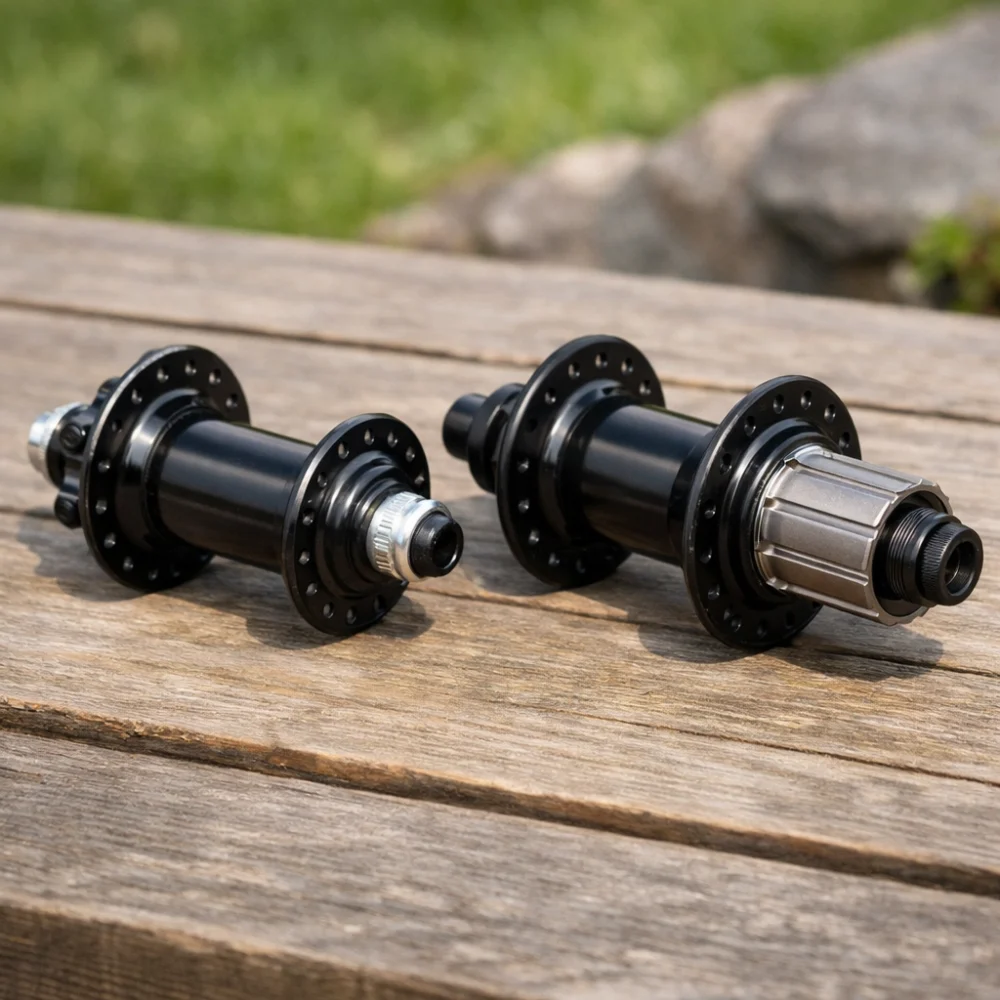
Within this category, the most useful differences are usually between hub standards rather than dramatic product “types”. Buyers commonly compare hubs by wheel position, axle format, brake interface and rear freehub or freewheel arrangement. That means the category is less about choosing a style and more about matching the correct technical variant to the bike.
- Front hubs: simpler to choose, as they mainly need to match axle and brake requirements.
- Rear hubs: more compatibility-sensitive because they also need to work with the drivetrain.
- Serviceable designs: suited to buyers who want easier long-term upkeep.
- Replacement-focused options: useful when matching an existing wheel build as closely as possible.
For many buyers, the most important distinction is not “better or worse” but “matches the build” versus “does not match the build”.
Which hub features suit different buyers?
| Buyer need | What to prioritise | Why |
|---|---|---|
| Replacement for an existing wheel | Exact fit, spacing and brake/drivetrain compatibility | Matching the current setup reduces the risk of buying a hub that cannot be fitted |
| Wheel-building project | Spoke drilling, axle standard and rim compatibility | The hub has to work as part of the full wheel, not on its own |
| Low-maintenance ownership | Serviceability, bearing arrangement and clear spare-part information | Some buyers want fewer upkeep surprises over time |
| Everyday commuting or mixed-use riding | Durability, sealing and reliable fit | Practical dependability often matters more than marginal performance gains |
| Performance-oriented riding | Weight, engagement feel and overall build quality | Small differences can matter more when the rider is chasing responsiveness |
Common mistakes and misunderstandings
- Assuming all hubs fit the same frame or fork — check axle and spacing standards first, because fit is the first thing that can rule a hub out.
- Overlooking the rear drivetrain interface — rear hubs need to suit the cassette or freewheel arrangement, not just the wheel size.
- Forgetting spoke compatibility — the hub must work with the rim and wheel build pattern you intend to use.
- Focusing only on weight or appearance — a lighter hub is not useful if it does not match the bike or the intended riding use.
- Assuming every hub is equally easy to service — maintenance expectations differ, so check what the listing says about bearings and parts.
Safety and suitability caveats
Hub choice affects wheel fit, brake setup and drivetrain function, so suitability matters more than cosmetic preference. If you are unsure about standards on an existing bike, compare the current parts and the product information carefully before buying. For a wheel build or replacement, the safest approach is to verify the exact hub standard rather than relying on a visual match.
Maintenance, storage and lifespan considerations
General care expectations can influence which hub is the better buy. Some hubs are chosen because they are easier to maintain, while others rely on sealed components or replaceable wear parts to stay in good condition. If you ride in wet or dirty conditions, check what the product page says about bearings, seals and serviceability, and consider how easy it would be to keep the hub clean and correctly adjusted.
It is also worth thinking about the wider wheel build. A hub may be suitable on paper, but the surrounding wheel parts and the way the bike is used will affect how much upkeep it needs over time.
How to compare bicycle hubs efficiently
- Confirm whether you need a front hub, rear hub or a matched pair for a wheel build.
- Check the axle, spacing and brake standard first, because these decide basic fit.
- For rear hubs, confirm drivetrain interface and any cassette or freewheel requirements.
- Compare spoke drilling, bearing arrangement and service information for the level of upkeep you want.
- Choose the option that matches the bike and your riding use rather than chasing a feature you will not notice.
Summary buyer decision checklist
- Does the hub match the frame or fork axle standard?
- Is the spacing correct for the bike?
- Does the brake interface suit the wheels and brakes?
- For rear hubs, does the drivetrain interface match your setup?
- Does the spoke drilling suit the rim and build?
- Are the bearing and service details clear enough for your needs?
- Does the hub suit the riding use you have in mind?
Frequently asked questions
What is the main job of a bicycle hub?
The hub is the central part of the wheel that lets it mount to the bike and rotate. On a rear wheel it also helps connect the drivetrain to the wheel. That is why fit and interface details matter so much.
Can I replace just the hub without replacing the whole wheel?
It can be done in some cases, but it depends on the wheel build and the condition of the other parts. A hub replacement usually means the wheel must be rebuilt, so the rim, spokes and drilling all need to remain suitable. If in doubt, compare the full wheel setup rather than the hub alone.
How do I know if a hub will fit my bike?
Check the axle standard, spacing, brake setup and, for rear hubs, the drivetrain interface. Those are the core compatibility points that decide whether the hub can physically and correctly be fitted. If any of them do not line up, the hub is unlikely to be the right choice.
Are more expensive hubs always better?
Not necessarily. A higher-spec hub may offer a smoother or more refined feel, but only if it suits the bike and the way you ride. The best value choice is the one that matches your needs without paying for features you will not use.
Do front and rear hubs need to match?
They do not need to be identical, but they do need to match the correct standards for each wheel. Front hubs mainly need to suit the fork and brake setup, while rear hubs also need to work with the drivetrain. Matching is about compatibility, not symmetry.
What matters most for a bike build project?
For a build, the most important checks are hub standard, spoke drilling, rim compatibility and drivetrain fit if it is a rear wheel. A good-looking hub is not enough if the wheel cannot be built correctly around it. Start with the technical match, then compare service and durability preferences.
Rear-hub interface and engagement: two separate checks
A cassette fits onto a freehub body, while a freewheel screws onto a threaded hub body. These are different systems, so identify which arrangement your wheel uses before choosing a replacement; a cassette model name alone may not establish compatibility. If the hub listing specifies a freehub standard, check that it suits both your drivetrain and the cassette you intend to use.
Engagement describes how the rear hub’s mechanism connects the drivetrain to the wheel when you pedal. It can affect how quickly the hub responds after coasting, but it does not determine cassette compatibility. Treat interface fit as essential and engagement as a separate preference, then check the product information for the details that matter to your setup.
More Bicycle Hubs
See all 70 Bicycle Hubs →


As an Amazon Associate we earn from qualifying purchases.