

Bike grips and bar tape do one simple job, but they affect comfort, control and how confident a bike feels on the road or trail. The right choice depends on handlebar type, riding position, hand comfort and whether you want a secure, cushioned or easy-to-clean finish.
This guide helps you compare the main options without overcomplicating the decision. It focuses on the practical questions buyers usually ask: what suits flat bars or drop bars, what affects grip feel, and what to check before fitting or replacing a set.
Because grips and tape sit between your hands and the bars, small differences in shape, thickness and surface texture can matter more than they first appear. A good choice is usually the one that suits your riding style and feels consistent over time, not simply the most padded or the most grippy option.
What should you choose: grips or bar tape?
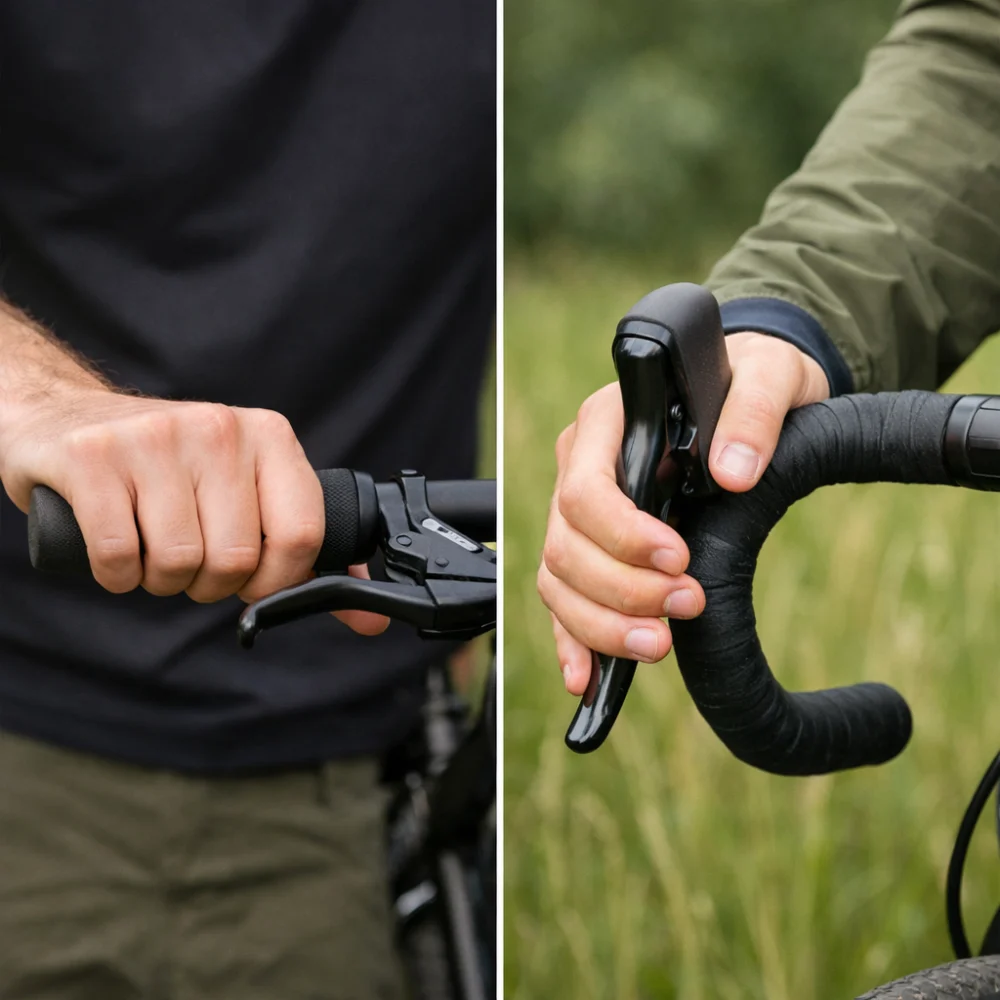
The starting point is the handlebar type. Flat bars and similar straight bars usually use grips, while drop bars usually use bar tape. After that, the key trade-off is between comfort, control and feel: more cushioning can reduce road buzz, while a thinner wrap or slimmer grip can give a more direct connection to the bike.
Look for the option that matches how you ride most often. Casual commuting, fitness riding, off-road use and long-distance road riding can all point to different materials, thicknesses and textures. Specifications vary by model, so always check the individual product page before buying.
| Feature | What It Means | Why It Matters | What To Check |
|---|---|---|---|
| Handlebar type | Whether the bike uses flat bars or drop bars | Determines whether you need grips or bar tape | Match the product to the bar style on the bike |
| Thickness | How much material sits between your hands and the bars | Affects comfort, feedback and hand fatigue | Consider whether you prefer a plush or slimmer feel |
| Surface texture | The pattern or finish that touches the hands or gloves | Influences grip security and hand movement | Look for a texture that suits wet weather, sweat or glove use |
| Material feel | The general softness, firmness or tackiness of the product | Changes comfort, control and how the bars feel during longer rides | Check whether the product is described as cushioned, firm or grippy |
| Fit and length | Whether there is enough product to cover the intended bar area | A poor fit can leave gaps or waste material | Confirm sizing guidance and compatibility details on the product page |
| Maintenance | How easy it is to clean, refresh or replace | Useful for frequent riders and wet or muddy use | Think about how often you want to clean or change it |
Key decision criteria
Comfort versus direct feel
More cushioning can help soften vibration and make longer rides feel less harsh, but it can also reduce the precise feel of the bars. Thinner grips or tape give a more immediate connection, which some riders prefer for steering feedback. Choose based on whether comfort or a sharper riding feel matters more to you.
Grip in dry and wet conditions
Texture, surface finish and glove use all change how secure the contact point feels. A very smooth surface may feel fine in the shop but less reassuring in wet weather, while an overly tacky finish may suit some riders better than others. Think about the conditions you ride in most often and whether you usually wear gloves.
Shape and hand position
On flat bars, some grips are simple and round while others aim to support the palm or reduce pressure in one area. On drop bars, bar tape mainly shapes the feel through thickness and wrap, rather than a moulded grip shape. If your hands tire easily, consider whether the product is designed for a more relaxed or more performance-focused feel.
Ease of fitting and replacement
Some buyers want the simplest possible replacement, especially for regular maintenance or a bike that sees hard use. Others are happy to spend more time on a neater finish or a particular feel. If you plan to change them often, prioritise a product that is straightforward to fit and remove.
Types and variants within this category
For most shoppers, this category breaks down into two main groups: grips for flat-style bars and bar tape for drop bars. Within those groups, the main variation is usually in thickness, texture and overall feel rather than in radically different product types.
- Standard grips: A straightforward option for general use, usually chosen for simplicity and easy replacement.
- Ergonomic or shaped grips: May suit riders who want a more supportive hand position, but they are more dependent on fit and preference.
- Bar tape: Common on drop bars and often chosen to balance grip, comfort and appearance.
- More cushioned options: Useful when reducing vibration matters more than a very direct handlebar feel.
Not every rider needs the same amount of padding or texture, so it helps to think in terms of ride style rather than assuming the most padded option is the most comfortable.
Which option suits different buyers?
| Buyer need | What to prioritise | Why it helps |
|---|---|---|
| Commuting and everyday riding | Reliable grip, easy upkeep and a comfortable but practical feel | Useful for frequent use and mixed weather |
| Longer road rides | Comfort, hand support and a finish that feels steady over time | Can reduce pressure during extended time on the bars |
| Off-road or rough surfaces | Secure texture and a grip that stays confident when conditions change | Helps maintain control when the ride is less smooth |
| Simple replacement | Clear fit guidance and straightforward installation | Makes maintenance easier when refreshing worn parts |
| Lower hand fatigue | More cushioning or a shape that spreads pressure more evenly | May feel better if your hands are sensitive to vibration |
Common mistakes and misunderstandings
- Choosing by appearance alone: A good-looking grip or wrap is not always the most suitable for your hands or riding style.
- Assuming more padding is always better: Extra cushioning can improve comfort, but it can also reduce steering feel.
- Ignoring bar type: Grips and bar tape are not interchangeable for most bikes, so check the handlebar style first.
- Overlooking texture: A surface that feels fine in dry indoor conditions may behave differently outdoors or with gloves.
- Not checking fit details: Length, diameter guidance and intended use all matter more than many buyers expect.
Safety and suitability caveats
Bike grips and bar tape are simple parts, but they still need to suit the bike and the rider. If a product feels too slippery, too thick or awkward for your hand position, it is better to reconsider than to assume you will adapt to it quickly.
For any model-specific claims about fit, compatibility or installation requirements, check the product page carefully. Specifications vary by model, so always check the individual product page before buying.
Maintenance, storage and lifespan considerations
These parts wear gradually through use, sweat, weather exposure and cleaning. Some materials stay looking tidy for longer, while others may mark or compress sooner depending on how often the bike is ridden and stored outdoors.
Cleaning is usually simple, but the best method depends on the material and finish. If you ride often in wet or muddy conditions, it is worth thinking about how easy the product will be to keep fresh and whether replacement will be routine rather than occasional.
How to compare options efficiently
- Start with the handlebar type so you know whether you need grips or bar tape.
- Decide whether comfort, direct feel or easy maintenance matters most.
- Compare texture, thickness and shaping rather than focusing on appearance alone.
- Check the product page for fit guidance and any model-specific notes.
- Choose the option that suits your usual riding conditions, not only ideal conditions.
Summary buyer decision checklist
- Have I matched the product to the correct handlebar type?
- Do I want more cushioning or a more direct feel?
- Will the texture suit dry, wet or gloved use?
- Is the shape or thickness likely to suit my hands?
- Have I checked the fit and any model-specific notes?
- Will maintenance and replacement be straightforward for how I ride?
Frequently asked questions
How do I know whether I need grips or bar tape?
As a general rule, flat bars use grips and drop bars use bar tape. If you are unsure, check the handlebar shape on the bike before buying. That is the most important first step because the wrong type will not suit the bars properly.
Is thicker always more comfortable?
Not necessarily. Thicker options can soften vibration and pressure, but some riders prefer a thinner, more responsive feel. Comfort depends on the whole setup, including hand position, texture and how long you spend riding.
What matters more: material or texture?
Both matter, but texture often makes the more noticeable difference day to day. Material affects the overall feel and how the product wears, while texture affects grip security and hand movement. The best choice usually balances both rather than relying on one feature.
Can I use gloves with any grip or tape?
Usually yes, but gloves change the feel. A smooth surface may feel fine without gloves yet less secure with sweat or rain, while a heavily textured surface may feel ideal with gloves. It is worth thinking about how you normally ride.
How often should grips or bar tape be replaced?
There is no fixed interval because wear depends on use, weather and material. Replace them when they feel worn, slippery, compressed or no longer comfortable. A visual check and a feel check are usually enough to tell when it is time.
Do I need to know the exact bike model before choosing?
Not always, but you do need to know the handlebar type and enough fit information to match the product correctly. For anything more specific, the individual product page should confirm whether it suits your setup. That avoids guessing based on appearance alone.