

Bike repair stands make home maintenance easier by holding the bike at a workable height and freeing both hands for cleaning, adjustments and small repairs. If you are tired of balancing a bike against a wall or turning it upside down, a stand can make routine work feel more controlled and less awkward.
This guide focuses on the practical differences that matter when you are comparing repair stands for home use, occasional tune-ups or more regular maintenance. It is about choosing a stand that suits your bike, your storage space and the type of jobs you expect to do.
What should you look for in a bike repair stand?
The right stand is usually the one that matches your bike weight, your available space and how often you plan to use it. A simple floor stand may suit light occasional jobs, while a more adjustable clamp stand may be better if you clean, adjust and service bikes more regularly. The main trade-off is usually between stability, convenience, portability and price. Specifications vary by model, so always check the individual product page before buying.
| Feature | What it means | Why it matters | What to check |
|---|---|---|---|
| Support style | How the bike is held in place | Affects stability, ease of use and whether the bike is left at a working height | Whether the stand holds the frame, saddle, seatpost or another contact point |
| Height adjustment | How much you can raise or lower the bike | Helps you work more comfortably on different tasks | Adjustment range and whether the locking method feels secure |
| Stability | How firmly the stand stays planted during use | Important when turning pedals, removing wheels or working on heavier bikes | Base design, stance and any weight support guidance from the product page |
| Portability | How easily the stand can be moved or stored | Matters if you have limited space or only use it occasionally | Foldability, folded size and overall handling |
| Clamping or contact points | The part that grips or supports the bike | Can affect compatibility and how gentle the stand is on different frames or parts | Where the stand contacts the bike and any notes about suitable frame areas |
| Work type | The jobs you expect to do most often | Different stands suit cleaning, adjustments and more involved repairs to different degrees | Whether the stand is intended for light maintenance or broader workshop use |
Key decision criteria
How the bike is supported
The biggest choice is how the stand holds the bike. Some stands support the frame or seatpost, while others use a different mounting method. This affects convenience, how much access you have around the bike and whether the stand feels suitable for quick cleaning jobs or more detailed mechanical work.
Stability versus portability
A more solid stand may feel better when you are working on a heavier bike or applying force to tight fasteners, but it may also take up more room. A lighter or folding design is easier to store and move, though it may be less substantial in use. Think about whether the stand will live in a garage, a shed, a workshop corner or a spare room.
Adjustment range and working height
Height adjustment matters because comfortable access reduces awkward bending and makes it easier to reach brakes, derailleurs, chains and wheels. Taller users may care more about the upper range, while anyone short on space may care more about the minimum footprint when the stand is open or stored.
Bike and task suitability
Not every stand is equally convenient for every bike or every job. A stand that works well for cleaning and basic adjustment may not be the most convenient option for repeated workshop-style maintenance. Consider the kind of work you actually do rather than assuming every stand is equally versatile.
Common stand types and variants
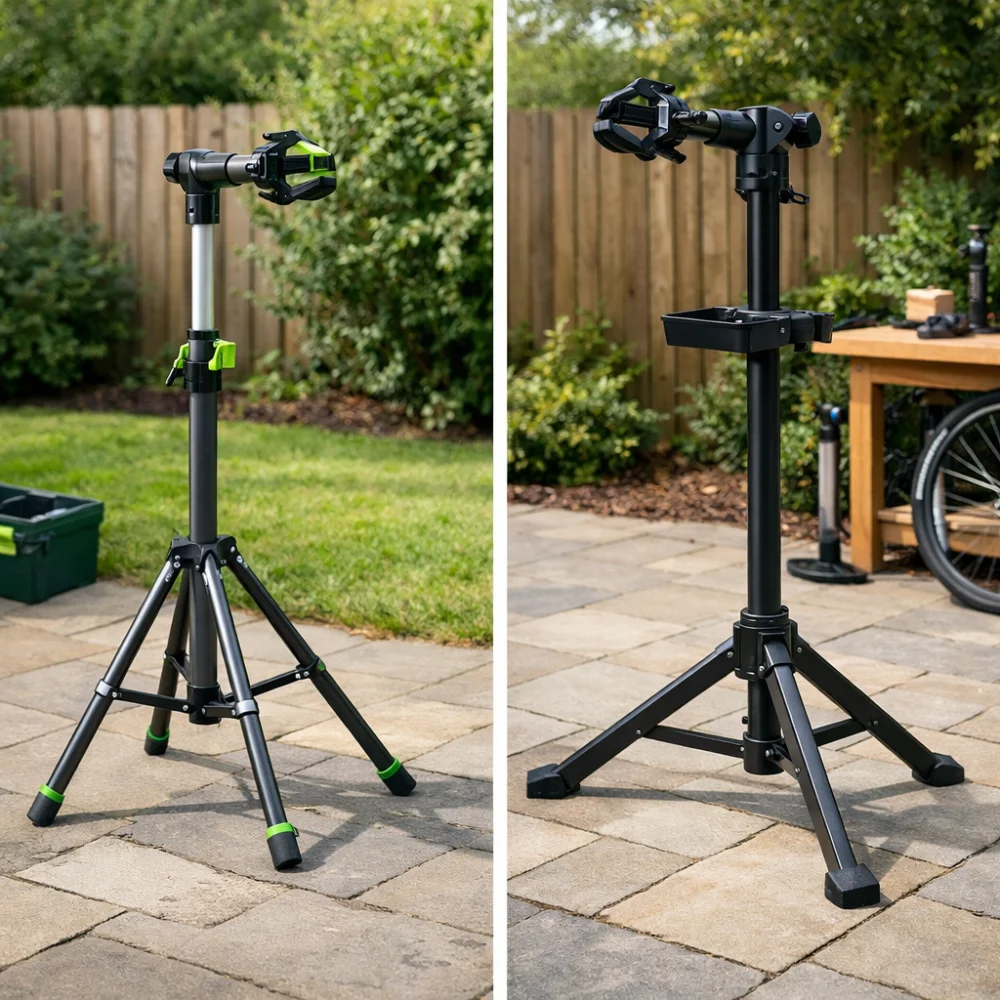
Bike repair stands are usually chosen less by brand style and more by how they support the bike.
- Clamp-style stands hold the bike at a contact point and are often chosen for more involved maintenance.
- Support or floor stands can be simpler to use for basic cleaning or quick tasks where full access is less important.
- Folding stands suit buyers who need easier storage or occasional use.
- Heavier workshop-style stands may suit frequent maintenance where steadiness matters more than compact storage.
Each type has trade-offs. More support can mean more bulk, while more compact designs may be easier to store but less substantial when you are working hard on the bike.
Who each option tends to suit
| Buyer need | What to prioritise | Why it helps |
|---|---|---|
| Occasional home maintenance | Easy setup, compact storage and straightforward support | Keeps the stand practical when it is only used now and then |
| Frequent cleaning and adjustments | Good stability and comfortable working height | Makes regular maintenance less tiring and more controlled |
| Limited storage space | Foldability and a smaller stored footprint | Helps the stand fit into a flat, shed or compact garage |
| Heavier or more demanding jobs | More solid support and secure positioning | Reduces wobble when the bike is being worked on more actively |
Common mistakes and misunderstandings
- Choosing on price alone. A cheaper stand may be fine for simple tasks, but the support style and stability matter more if you plan to use it often.
- Ignoring storage needs. A stand that works well in use can still be awkward if it does not fit where you want to keep it.
- Assuming every stand suits every bike. Different frame shapes, seatposts and bike weights can change how practical a stand feels.
- Overlooking the type of maintenance. A stand for light cleaning may not be the best choice for regular tune-ups.
Safety and suitability caveats
Check the product information for any notes about bike type, weight support and the contact points used by the stand. If you plan to work on a valuable frame, make sure the support method suits the materials and shape of the bike. For wobblier floor surfaces or tight spaces, stability becomes especially important.
Maintenance, storage and lifespan considerations
Repair stands usually need little day-to-day care, but hinges, clamps and folding joints may benefit from occasional cleaning and checking for wear. If the stand folds, think about where it will be stored and whether it is easy to move without clashing with other workshop gear. A model that is easy to keep out of the way is often more likely to be used regularly.
How to compare options efficiently
- Decide how often you will use the stand and what jobs it needs to handle.
- Choose the support style that seems most practical for those jobs.
- Check stability, height adjustment and storage needs side by side.
- Look at the bike-contact points and any stated suitability notes.
- Read the individual product page carefully before deciding.
Summary buyer decision checklist
- Does the stand suit the way you want to support the bike?
- Will it fit the space where you plan to use and store it?
- Is the height adjustment comfortable for your working position?
- Does it seem stable enough for the type of maintenance you expect?
- Are the support points suitable for your bike and frame type?
- Does the folding or storage format suit your home setup?
Frequently asked questions
Do I need a bike repair stand for basic cleaning?
Not always, but a stand can make cleaning easier because the bike is held more securely and is easier to reach. If you only clean a bike occasionally, a simpler stand may be enough. If cleaning is part of regular maintenance, stability and ease of setup become more important.
What is the main difference between a simple and more workshop-style stand?
The main difference is usually how solid and adjustable the stand feels. A workshop-style option is often chosen for more frequent use and more involved maintenance, while a simpler stand may be better for light household use and easier storage. The right choice depends on how much support you need in practice.
Will one stand work for every bike?
Not necessarily. Bike weight, frame shape and where the stand makes contact can all affect suitability. It is worth checking the product details carefully if you have a particularly heavy bike, an unusual frame shape or a bike you want to support in a specific way.
Is portability important?
It matters if you plan to move the stand between rooms, take it to another location or store it away after each use. If the stand will stay in one place, a heavier and more stable design may be a better fit. If space is tight, foldability may matter more.
What should I check first when comparing stands?
Start with how the bike is supported, then look at stability and storage. After that, compare height adjustment and any notes about bike suitability. Those factors usually tell you more than cosmetic differences.
Can a repair stand help with more than cleaning?
Yes, many buyers use one for adjustments and small maintenance tasks as well as cleaning. The amount of access and support you need depends on the jobs you plan to do. A stand that is comfortable for routine maintenance may not be ideal for every workshop task.