


Boat cleats are simple fittings, but they play an important role in securing ropes and helping you moor or tie off safely and tidily. The right choice depends on where the cleat will be fitted, how the line will be used and how much load or wear the fitting is likely to see.
If you are replacing an existing fitting, upgrading hardware or setting up a new boat, it helps to compare cleat style, mounting method, size and material rather than choosing by appearance alone. Specifications vary by model, so always check the individual product page before buying.
Compare Boat Cleats


As an Amazon Associate we earn from qualifying purchases.
What should you look for in a boat cleat?
The best starting point is how and where the cleat will be used. A cleat for a small recreational boat, a dock edge or a busy working area may need a different shape or fixing arrangement, even if they all serve the same basic purpose. The main trade-off is usually between simplicity, strength, ease of tying and how neatly the fitting suits the available space.
| Feature | What it means | Why it matters | What to check |
|---|---|---|---|
| Cleat style | The overall shape and how the line is secured | Affects how easy the rope is to tie, release and keep tidy | Whether the shape suits your usual mooring or tying method |
| Mounting type | How the cleat attaches to the surface | Needs to suit the deck, dock or fitting point available | Fixing pattern, installation space and surface compatibility |
| Material | The construction material used for the fitting | Influences durability, appearance and resistance to the marine environment | Material description and whether it matches the intended location |
| Size | The physical scale of the cleat | Should suit the rope and the space where it will be mounted | Overall dimensions and whether there is room for use and access |
| Finish and edges | The surface treatment and shaping of the fitting | Can affect wear on line and how comfortable it is to handle | Smoothness, profile and any features that help reduce snagging |
Key decision criteria
Cleat style
Different cleat shapes suit different habits and mounting points. Some buyers want a straightforward fitting that is quick to use; others prefer a style that holds line neatly or matches existing hardware. Think about whether the cleat will mainly be used for temporary tie-off, regular mooring or a fixed docking setup.
Mounting location
Where the cleat will sit matters as much as the cleat itself. A deck-mounted fitting, for example, may need a different fixing approach from one used on a dock or another hard surface. Check the available space around the mounting point, including access for fasteners and clearance for hands and rope.
Material and environment
Marine fittings are exposed to moisture, movement and repeated handling, so material choice affects long-term suitability. Buyers often compare appearance first, but practical durability and corrosion resistance are usually more important. If the cleat will be in a more exposed position, pay extra attention to the material description and any care guidance on the product page.
Size and rope handling
A cleat needs to be large enough to work comfortably with the line you expect to use, but not so large that it dominates the fitting area. Larger is not automatically better. The most useful size is the one that suits the rope, the mounting space and the frequency of use.
Common cleat types and how they differ
Within this category, the most important differences are usually practical rather than dramatic. Some cleats are chosen for compact spaces, others for easier tie-off, and some for a more traditional hardware style. The right type depends on how much convenience, neatness and fixing flexibility you need.
- Compact cleats: Useful where space is limited, but they may feel less forgiving with thicker or more frequent line handling.
- General-purpose cleats: A sensible choice for many everyday setups because they balance ease of use and straightforward mounting.
- Heavy-duty-looking fittings: May suit more demanding locations, but you should still check the actual product details rather than relying on appearance alone.
Which type suits which buyer?
| Buyer need | What to prioritise | Why |
|---|---|---|
| Replacing an existing fitting | Mounting pattern and overall size | The new cleat needs to suit the available fixing area without unnecessary changes |
| Setting up a small boat | Simple handling and sensible proportions | Ease of use often matters more than a complex or oversized fitting |
| Dock or pontoon use | Clear access and practical mounting | The fitting should be easy to reach and suitable for repeated use |
| General upgrading | Material, finish and rope-friendly shaping | An upgrade should improve everyday use, not just change appearance |
Common mistakes to avoid
- Choosing by shape alone: A cleat that looks right may not fit the mounting point or the line you use.
- Ignoring the fixing details: The way it mounts can matter as much as the visible fitting.
- Overlooking space around the cleat: A compact area can make even a suitable cleat awkward to use.
- Assuming all marine hardware is interchangeable: Small differences in size or mounting can change whether a fitting is practical.
Safety and suitability checks
Boat cleats are simple hardware items, but they should still be selected carefully for the intended use and mounting position. Check that the product page describes the fitting clearly enough for your boat, dock or hardware location, and avoid assuming that one cleat suits every rope or every surface. For more demanding use, it is especially important to match the product description to the real setup rather than relying on a general category name.
Maintenance, storage and lifespan considerations
Boat hardware is usually easier to live with when it is kept clean and inspected regularly. A cleat that is exposed to weather, spray or frequent handling may need more attention than one used in a more sheltered spot. Before buying, consider whether the material and finish are likely to fit the level of care you are willing to give.
If the cleat will be moved, stored or left unused for long periods, think about how it will be protected from unnecessary wear or corrosion. The more exposed the location, the more useful it is to choose a fitting that is straightforward to maintain.
How to compare options efficiently
- Start with the job: replace, upgrade or fit a new tie-off point.
- Check the mounting space and how the cleat will be fixed.
- Compare the shape, size and material rather than the look alone.
- Think about how often it will be used and how easy it should be to handle.
- Read the individual product page carefully before deciding.
Summary buyer decision checklist
- Does the cleat suit the intended use and mounting location?
- Is the fixing style appropriate for the available surface?
- Is the size practical for the space and line handling?
- Does the material and finish fit the environment it will face?
- Will the shape be comfortable and convenient for regular use?
Frequently asked questions
What is a boat cleat used for?
A boat cleat is a fitting used to secure rope or line. Buyers usually choose one based on where it will be mounted and how often it will be used, rather than on appearance alone.
How do I know what size cleat I need?
The right size depends on the rope, the mounting space and how much room you have for handling the line. A cleat that is too small can be awkward to use, while one that is too large may be inconvenient in a tight area.
Should I choose a metal or non-metal cleat?
Material choice usually comes down to durability, appearance and suitability for the environment. The most useful option is the one that matches the location and the amount of wear the fitting is likely to see.
Can I replace an old cleat with any similar-looking one?
Not always. Fixing pattern, overall size and mounting space all matter, so a similar appearance does not guarantee a good fit. Check the individual product page before buying.
Are all cleats suitable for dock use?
No, not necessarily. Dock or pontoon use may place different demands on access, fixing and durability, so it is worth checking that the product description suits the intended location.
What matters more: style or fixing method?
For most buyers, fixing method is at least as important as style. A cleat has to work in the space available before it can be useful in practice.
Do I need a special cleat for occasional use?
Not usually, but it still helps to choose one that is easy to handle and appropriate for the mounting point. Occasional use can still benefit from a practical, rope-friendly shape.
Recognising different cleat designs
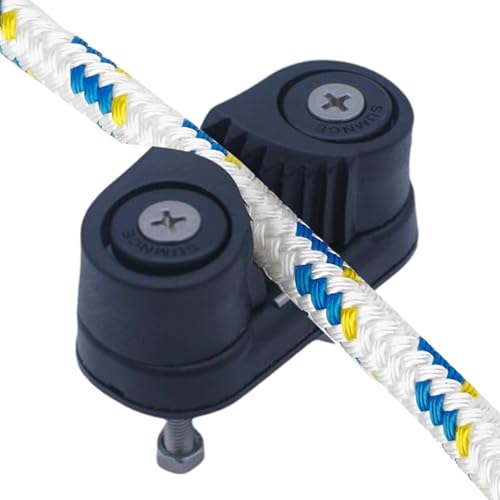
Cleat shape affects how a line is held, so check the design rather than treating all cleats as interchangeable. A conventional horn cleat has two projecting horns around which a line is secured; it may suit a traditional tie-off arrangement, provided there is room for the fitting and line. A jam cleat grips a line between shaped surfaces, which can make it compact, but suitability depends on the line and the intended setup.
Bollard-style cleats use an upright post as the main holding form, while hook-style fittings have a different profile again. These shapes are not proof of load capacity or marine suitability. Check the individual product description for the intended use, dimensions and any stated line or mounting requirements before choosing.
More Boat Cleats
See all 156 Boat Cleats →



As an Amazon Associate we earn from qualifying purchases.