

Boot bike racks are a practical way to carry one or more bikes on the back of a vehicle without needing a towbar or roof system. They are often chosen by riders who want a more flexible option for occasional trips, club outings or family days out.
Because fit and access can vary from one car to another, the main buying decision is not just the rack itself but how well the design suits your vehicle and the bikes you plan to carry. A careful check before buying helps avoid awkward fitting, blocked plates or lights, and frustration when loading and unloading.
This guide focuses on the choices that matter most when comparing boot bike racks, so you can narrow the options with confidence.
What is the best starting point when choosing a boot bike rack?
The best starting point is your vehicle compatibility, followed by how many bikes you want to carry and how often you expect to use the rack. From there, consider whether you want the simplest possible load-and-go setup or a more adjustable design that takes longer to fit but may suit a wider range of cars. The biggest trade-off is usually convenience versus adaptability. Specifications vary by model, so always check the individual product page before buying.
| Feature | What It Means | Why It Matters | What To Check |
|---|---|---|---|
| Vehicle fit | How the rack attaches to the car boot or tailgate | Fit determines whether the rack can be mounted securely and sensibly on your vehicle | Check the compatible vehicle types, fixing method and any restrictions listed for your car shape |
| Bike capacity | How many bikes the rack is designed to carry | Affects whether the rack suits solo rides, couples or family use | Confirm the stated carrying arrangement and whether the load suits your typical trips |
| Loading style | How the bikes are positioned and secured | Influences ease of fitting, access and day-to-day convenience | Look for the type of frame support, strap layout and how simple it is to load the bikes |
| Vehicle access | Whether the rack leaves room to open the boot or tailgate | Important if you need access after the rack is fitted | Check whether access is partially or fully restricted once installed |
| Protection points | Where the rack touches the car and the bikes | Can affect paintwork contact and bike stability | Review padding, contact areas and any guidance on protecting the vehicle finish |
| Storage and handling | How bulky the rack is when not in use | Useful if you will remove and store it between trips | Consider folded size, weight and how easy it is to lift and store |
Key decision criteria explained
Compatibility with your vehicle
Boot bike racks rely on the shape of the rear of the vehicle and the points available for attachment. That means a rack that suits one hatchback, estate or saloon may not suit another in the same general class. The safest approach is to compare the rack’s stated fit with your exact vehicle details and body style.
Pay attention to any notes about spoilers, rear-mounted wipers, split tailgates or unusual rear profiles. These are often the details that affect whether a boot rack sits securely and whether the boot can still be used comfortably.
How many bikes you need to carry
Capacity is about practical use, not just maximum numbers. If you usually carry one bike, a compact setup may be easier to live with than a larger rack. If you travel with friends or family, the way bikes sit on the rack may matter as much as the headline capacity.
Also think about different bike shapes. Adult, junior and e-bike designs can place different demands on space and support, so the way the bikes are held is as important as the count.
Ease of fitting and removal
Some buyers want a rack that stays on the car for a whole season, while others prefer to fit it only when needed. A design that is quick to attach and remove can be convenient, but it may still need careful adjustment each time for a secure setup.
If you are likely to move the rack between vehicles, check how adjustable it is and whether repeated fitting is likely to be straightforward for the same user.
Boot access and daily practicality
Boot bike racks can make the rear of the vehicle harder to use once fitted. That may be fine for a day ride, but less convenient if you need frequent boot access, child seats, pushchairs or luggage. Think about your usual routine, not just your cycling plans.
If access matters to you, compare how the rack sits on the car and whether you will need to remove it for regular journeys.
Protection for the car and bikes
Contact points, straps and supports should be considered carefully. Even when a rack is suitable for a vehicle, the way it sits against paintwork and the way the bikes are held can affect day-to-day confidence and ease of use.
Look for clear guidance on padding, strap placement and any areas where extra care is needed during fitting.
Common boot bike rack types and variants
Strap-on boot racks
These are generally chosen for their flexible fit and relatively simple installation. They can suit buyers who want occasional use without committing to a permanent carrier system. The main limitation is that fitting can take more care, and compatibility still depends on the vehicle shape.
Adjustable multi-bike racks
These are aimed at buyers who want more carrying capacity or a wider range of adjustment. They may suit family use or mixed bike loads, but larger designs can be heavier and less compact to handle.
Compact single or two-bike options
Smaller racks can be easier to store, fit and remove. They are often a good match for solo riders or couples who value simplicity over maximum capacity.
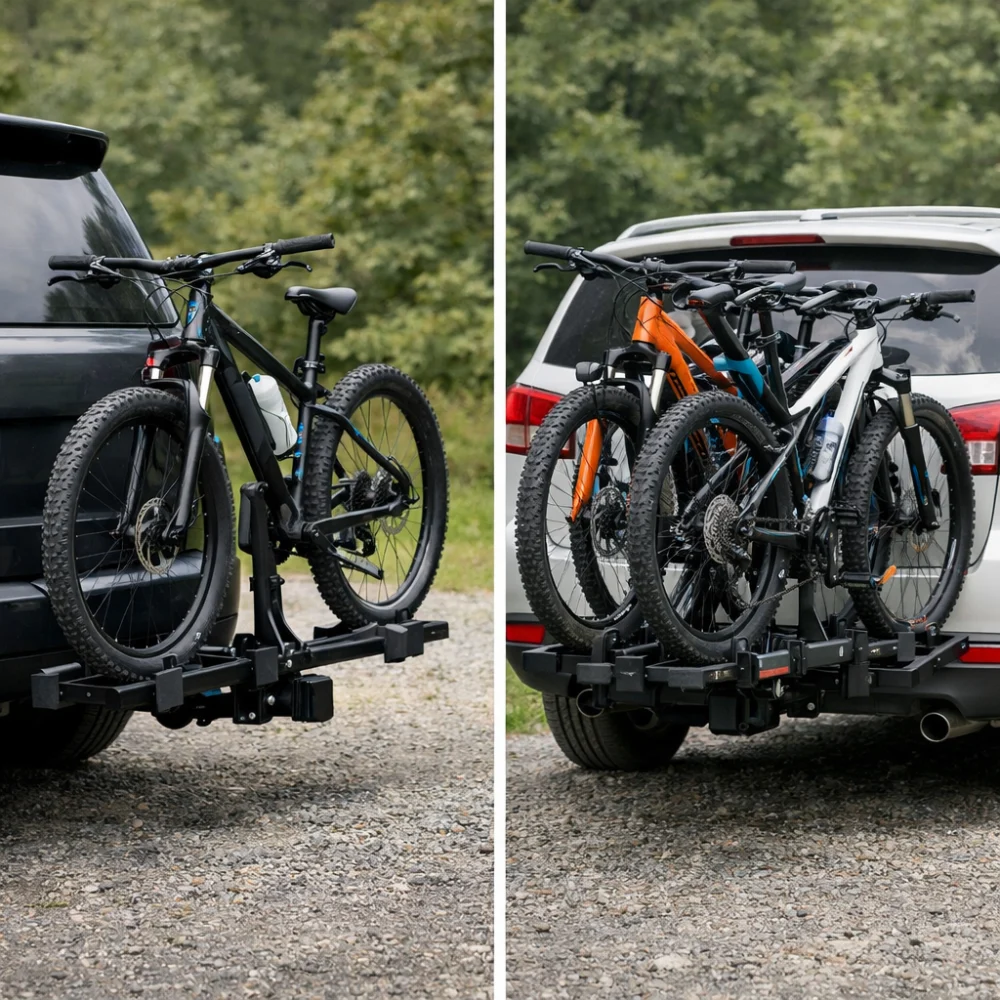
Which boot bike rack suits which kind of buyer?
| Buyer need | What to prioritise | Why it helps |
|---|---|---|
| Occasional weekend rider | Simple fitting, compact storage and moderate capacity | Makes it easier to use the rack only when needed |
| Family trips | Stable bike support, enough capacity and clear loading space | Helps when different bikes need to be carried together |
| Frequent car user | Quick removal and minimal impact on boot access | Reduces hassle when the rack is not in use |
| First-time buyer | Clear compatibility information and straightforward instructions | Makes the choice easier and reduces fitting uncertainty |
Common mistakes and misunderstandings
- Assuming all boot racks fit the same cars. In practice, the rear shape of the vehicle makes a big difference, so fit details matter more than a general description.
- Focusing only on bike count. Capacity matters, but loading style, stability and boot access can be just as important in real use.
- Ignoring what happens to the boot afterwards. If you need regular access to luggage or daily errands, a rack that blocks the rear area may become inconvenient quickly.
- Choosing a rack without checking bike shape. Different frames can sit differently on the carrier, so it helps to think about your actual bikes, not just the number of bikes.
Safety and suitability caveats
Boot bike racks are a vehicle accessory, so suitability depends on the car, the rack design and how the bikes are loaded. It is sensible to read the product information carefully and to treat any fitting guidance as specific to that model. If you are unsure about rear bodywork, boot access or unusual vehicle features, check the individual product page before buying.
Maintenance, storage and everyday care
Most buyers should think about where the rack will live between trips and how often it will be fitted. A rack that is easy to store out of the way is more convenient if you only cycle occasionally. If the design uses straps, pads or moving parts, keeping them clean and checked before use can help the rack feel more reliable over time.
Think as well about whether you want a rack that you can leave ready to use or one that is better removed after each journey. That choice often affects which design feels more practical in everyday life.
How to compare boot bike racks efficiently
- Start with your vehicle and confirm the rack is intended for that kind of rear shape.
- Decide how many bikes you realistically need to carry.
- Check whether boot access, lights or number plate visibility matter for your use.
- Compare how the rack attaches, stores and removes.
- Read the individual product information for any limits, fitting notes or bike-type guidance.
Summary buyer decision checklist
- Does the rack suit your exact vehicle type and rear layout?
- Is the carrying capacity right for the number of bikes you usually transport?
- Will you still be able to use the boot as needed?
- Is the fitting method something you are happy to use regularly?
- Does the rack look manageable to store, lift and remove?
- Have you checked the product page for model-specific suitability notes?
Frequently asked questions
Will a boot bike rack fit every car?
No, fit depends on the shape of the rear of the vehicle and the rack’s intended mounting style. That is why it is important to compare the product details against your exact car rather than relying on a broad vehicle type alone.
Are boot bike racks easy to remove?
Many are designed to be removable, but ease varies by model. If you plan to take the rack on and off often, look for clear fitting guidance and a design that seems practical to handle.
Can I still open the boot with a bike rack fitted?
Sometimes, but not always fully. It depends on the rack design, how it sits on the vehicle and how much clearance remains once bikes are loaded.
What matters more: bike count or vehicle fit?
Vehicle fit comes first, because a rack that does not suit the car will not be a good purchase even if the bike count looks right. After that, choose the capacity that matches your real usage.
Do boot bike racks suit occasional use?
Yes, they are often a sensible option for occasional trips because they can be fitted when needed and removed afterwards. They are especially useful if you do not want a more permanent carrier system.
Should I choose the smallest rack that fits my needs?
Not always. A compact rack may be easier to handle, but you should still allow for the bikes you actually carry and the amount of space they need on the carrier.
What should I check before loading the bikes?
Check that the rack is secure, the bikes are positioned as intended and nothing is obstructing important vehicle features. It is also worth confirming that the rack suits the bikes you plan to carry before each trip.