


Bow presses are specialist archery tools used to help with maintenance, tuning and certain setup tasks on compatible bows. Because the right choice depends on the bow type and how you plan to use the tool, it is worth slowing down and checking the details before buying.
If you are comparing bow presses for the first time, the main question is not simply which one is strongest or most advanced. It is whether the press suits your bow design, fits your workshop or storage space, and gives you the level of control you need for the tasks you expect to do.
Compare Bow Presses


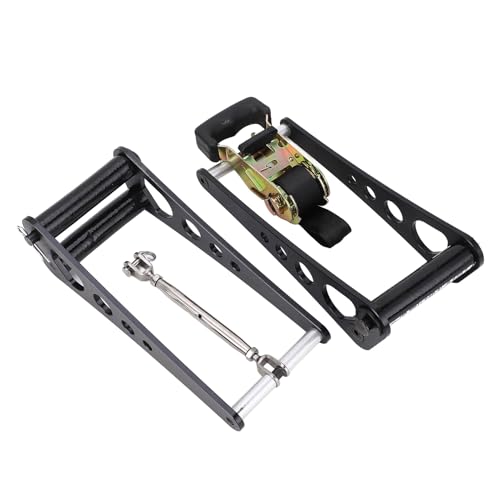
As an Amazon Associate we earn from qualifying purchases.
What should you look for in a bow press?
The most useful starting point is compatibility. A press needs to suit the bow style it will be used with, and that is usually the biggest deciding factor. After that, look at how the press is operated, how much adjustment it offers and whether it feels practical for the space and workflow you have in mind.
Specifications vary by model, so always check the individual product page before buying.
| Feature | What it means | Why it matters | What to check |
|---|---|---|---|
| Compatibility | Which bow types and limb styles the press is intended to work with | Compatibility is the first filter and the most important one | Look for clear support information and match it to your bow |
| Pressing method | How the bow is supported or compressed during use | Different methods suit different workshop habits and bow designs | Check whether the design matches your experience and setup |
| Adjustment range | How much the press can be adapted to different sizes or limb positions | More adjustability can make setup easier, but may also mean more complexity | Look for enough flexibility for the bows you expect to handle |
| Portability and storage | How easy the press is to move, store or keep set up | Important if you have limited space or want a tool that is easy to put away | Consider size, weight and whether it suits a home workshop or club setting |
| Ease of use | How straightforward it is to set up and operate | A simpler press can be better if you do occasional maintenance only | Check the operating style and whether it seems manageable for your experience |
| Build and stability | The general feel of the frame and supporting parts | Stability affects confidence and consistency during use | Look for a design that appears solid and appropriate for regular handling |
Key decision criteria explained
Compatibility comes first
Bow presses are not one-size-fits-all tools. A model that suits one bow style may not suit another, so the safest approach is to treat compatibility as the first decision point, not the last. Check the product page carefully for the bow categories or limb configurations the press is designed around.
Think about how often you will use it
If you only need occasional maintenance support, a simpler press may be enough. If you expect more regular setup work, convenience and adjustment become more important because small differences in setup time and handling can matter more over repeated use.
Ease of control matters
Bow presses are specialist tools, so buyers often focus on the wrong detail and overlook how controllable the press feels in use. A design that is easy to position, adjust and understand can be more practical than one that looks more elaborate but is unnecessarily complicated for your needs.
Workspace and storage should not be ignored
Some buyers have a dedicated tuning area, while others only have a small home workshop or shared space. The physical footprint of the press and how it stores when not in use may be just as important as its pressing method, especially if space is limited.
Types and variants you may see
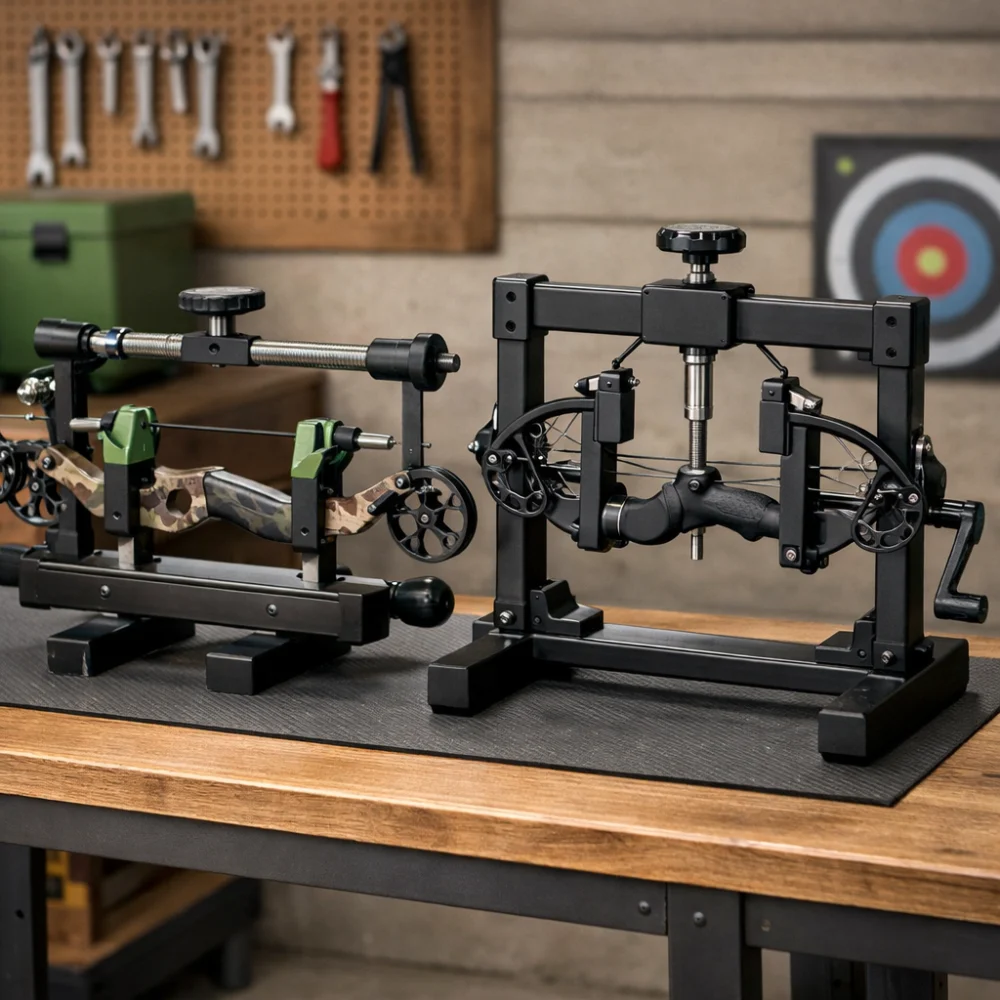
Bow presses are usually compared by how they operate rather than by flashy features. You may see more than one structural style, and each can suit different users depending on the bow type and the way they prefer to work.
- More compact designs may suit occasional users or people with limited storage, but they can feel less convenient for frequent use.
- More adjustable designs can be helpful if you handle different bows or want greater flexibility, but they may ask for a little more setup attention.
- Workshop-oriented designs may suit a more permanent tuning space, where stability and repeat use matter more than portability.
The right variant depends on whether you want convenience, flexibility or a more fixed setup.
Which buyer needs point to which features?
| Buyer need | Likely priority | What to look for |
|---|---|---|
| First-time buyer | Simplicity and clear compatibility information | A straightforward design with product details that explain intended use clearly |
| Occasional maintenance user | Practicality and easy storage | A press that is manageable without taking over your workspace |
| Regular tuner | Adjustment and repeat convenience | Features that reduce setup effort and support repeated use |
| Small-space buyer | Compact footprint | A design that can be stored neatly when not in use |
| Buyer comparing bow types | Defined compatibility | Clear model information that matches the bows you actually use |
Common mistakes to avoid
- Choosing by appearance alone. A bow press should be selected for compatibility and practical use, not just how substantial it looks.
- Overlooking the bow type. The wrong press can simply be unsuitable, so always confirm the intended bow category before buying.
- Ignoring your available space. A press that is awkward to store or set up may become frustrating even if it is otherwise well made.
- Assuming more complexity is always better. A complicated press is not automatically a better choice if your needs are basic.
Safety and suitability caveats
Bow presses are specialist tools, so suitability matters as much as the product itself. Check the product information carefully and make sure the press is intended for your bow type before considering it further. If you are unsure, it is sensible to seek guidance from a qualified archery retailer, coach or technician rather than guessing.
Do not treat a bow press as a universal tool, and do not assume that one press will suit every bow in a collection.
Maintenance, storage and lifespan considerations
General care is usually about keeping the press clean, storing it in a dry place and checking that moving parts or contact points remain in good condition. If the product has any setup or operating requirements, it is worth reading those carefully because neglecting them can shorten useful life or make the tool less pleasant to use.
For buyers comparing options, a design that is easy to keep organised and inspect may be more practical over time than one that feels awkward to put away after each use.
How to compare options efficiently
- Start with your bow type and the tasks you expect to do.
- Filter out any press that is not clearly suitable for that bow.
- Compare how the press is operated, adjusted and stored.
- Decide whether you value simplicity, flexibility or a more permanent workshop setup.
- Read the individual product information carefully before making a final choice.
Summary buyer decision checklist
- Does the press clearly suit your bow type?
- Is the operating style practical for your experience level?
- Will it fit your available workspace or storage area?
- Does the level of adjustment match how often you will use it?
- Have you checked the individual product page for any important limits?
Frequently asked questions
Do all bows work with the same press?
No. Compatibility is one of the most important things to check because different bows may need different press designs or support methods. Never assume a press is universal unless the product information clearly says so.
Is a more adjustable bow press always better?
Not necessarily. More adjustment can be useful, but it can also mean a more involved setup. If your needs are simple, a straightforward press may be the better fit.
What should a beginner prioritise?
A beginner should look for clear compatibility information, straightforward operation and a design that feels manageable. Ease of understanding matters because a press that is confusing to set up is less useful, even if it appears more advanced.
Is portability important?
It can be, especially if you do not have a permanent tuning area. If you only use the press occasionally, a model that is easier to store may be more practical than a larger workshop-style option.
Can I choose a bow press based only on price?
That is not a good idea for this category. Compatibility and suitability matter more than any single headline factor, because the wrong press may simply not be appropriate for your bow.
How do I know if a press is suitable for regular use?
Look for a design that seems easy to set up, stable enough for repeated handling and convenient to keep in a working space. Regular users often benefit more from practicality than from extra complexity.
What if the product page is not very detailed?
If the product information is vague, treat that as a caution sign and avoid assuming compatibility. It is better to choose a press with clear details than to rely on guesswork.
Check compatibility against your exact bow
A broad description such as “compound bow compatible” may not settle whether a press suits your particular bow. Before choosing, identify the bow’s make, model and configuration, then look for explicit compatibility information that matches them. If the product information mentions adapters or additional components, check whether they are needed for your setup and whether they are included; do not assume compatibility from appearance or a general category label.
More Bow Presses
See all 21 Bow Presses →


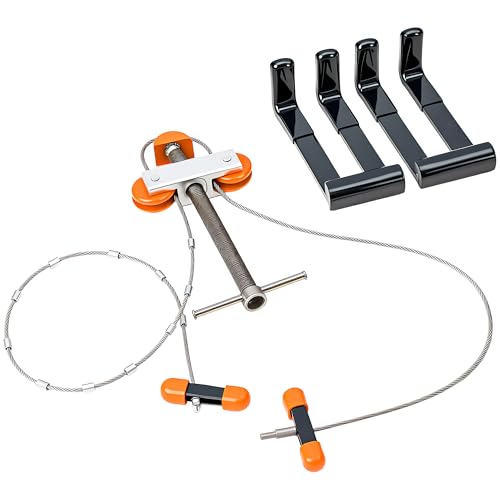

As an Amazon Associate we earn from qualifying purchases.