


Bow sights are one of the most practical archery accessories for improving aiming consistency, but the right choice depends on how you shoot and how much adjustment you want. Some sights are built for simple, repeatable aiming, while others prioritise finer adjustment and more setup flexibility.
If you are replacing an old sight or choosing your first one, it helps to focus on the parts that affect how easy it is to set up, read and use. The main decisions are usually about sight style, adjustment range, visibility and how much complexity you are comfortable with.
This guide keeps the focus on buying decisions rather than brand names or exact product claims, so you can compare options with a clearer idea of what matters.
Compare Bow Sights


As an Amazon Associate we earn from qualifying purchases.
What should you look for in a bow sight?
Start with the kind of shooting you do and how precise you want the aiming system to feel. A simpler sight can be easier to set up and live with, while a more adjustable sight may suit a shooter who wants finer control and more tuning options. The best starting point is usually the sight style that matches your experience level, bow setup and how often you expect to make adjustments.
Bow sights are not all built for the same level of precision or convenience, so the main trade-off is usually simplicity versus adjustability. Specifications vary by model, so always check the individual product page before buying.
| Feature | What it means | Why it matters | What to check |
|---|---|---|---|
| Sight style | The overall design and layout of the sight pins or aiming point | Affects how quickly you can pick up the sight picture and how much adjustment is available | Whether the style suits your shooting routine and experience level |
| Adjustability | How easily the sight can be moved and fine-tuned | Important for setting up the bow and refining aiming at different distances | How simple the adjustment system looks and whether it feels manageable for you |
| Visibility | How clearly the aiming reference can be seen | Can influence confidence and consistency when aiming | Whether the aiming point is easy to read in the conditions you expect to shoot in |
| Setup complexity | How much fitting and tuning the sight may involve | Some shooters want a straightforward fit, while others are happy to spend longer getting it dialled in | Whether you are comfortable with the amount of setup the sight appears to need |
| Portability and robustness | How much the sight adds to the bow and how well it may cope with regular use | Relevant if you move equipment often or use it frequently | The overall build approach and whether it looks suited to your use pattern |
Key decision criteria explained
Ease of use
A sight that is easy to understand can be a better choice for a beginner or for anyone who prefers fewer moving parts. If you want to spend less time adjusting equipment and more time shooting, simplicity often matters more than having every possible feature.
Adjustment range
Adjustment range matters when you want to make precise changes without struggling with the mechanism. More adjustability can be useful, but only if you are comfortable using it and do not mind a more involved setup. For some buyers, a simpler system that is easy to repeat is a better fit than one with more options.
Reading the sight picture
The sight picture should feel clear and predictable. If the aiming point is awkward to see or hard to centre consistently, the sight may become distracting rather than helpful. The right choice is the one that lets you focus on form and release rather than on deciphering the sight itself.
Build and handling
A bow sight should suit how you store, carry and use your bow. If the sight is awkward to handle or feels overly delicate for your routine, that can affect long-term satisfaction even if the aiming system itself looks attractive on paper.
Common bow sight types and variants
Within bow sights, the main differences usually come down to how the aiming reference is presented and how the sight is adjusted. Some buyers prefer a straightforward arrangement that is quick to read, while others want a more tunable setup that supports careful fine-tuning.
Rather than thinking in terms of one universally better type, compare the sight style with your own priorities. A more elaborate sight is not automatically better for a casual or developing archer, and a simpler sight is not automatically too basic for a more experienced user.
Which bow sight suits which buyer?
| Buyer need | Helpful sight characteristics | Why this may suit you |
|---|---|---|
| New to archery | Simple layout, clear aiming reference, straightforward setup | Reduces the learning curve and makes the first tuning steps less confusing |
| Wanting easier repeatability | Consistent adjustment mechanism, easy-to-read sight picture | Helps you return to familiar settings with less guesswork |
| Preferring finer tuning | More adjustment flexibility, precise positioning | Useful if you like to refine setup carefully over time |
| Replacing a worn sight | Design that fits your current bow and your usual shooting style | Lets you keep familiar handling while updating the component |
| Shopping for a gift | Broadly usable, not overly specialised, easy to understand | Safer if you are choosing without detailed knowledge of the recipient’s exact setup |
Common mistakes and misunderstandings
- Assuming more adjustment is always better. Extra flexibility is only useful if you will actually use it and are happy with the added complexity.
- Choosing a sight that looks advanced but feels awkward to read. A clear sight picture often matters more than impressive-looking features.
- Ignoring how the sight fits your existing bow setup. Even within the same category, practical fit and handling can affect whether the sight feels comfortable to use.
- Buying for a future skill level rather than current needs. It is usually better to choose a sight you can use confidently now and grow into later if needed.
Safety and suitability caveats
Bow sights are a fitting and aiming choice, so suitability matters more than raw feature count. Check that the sight works with your bow type and your intended style of shooting, and avoid assuming that a sight suited to one archer will suit another in the same way.
It is also sensible to review the individual product information for any setup notes, mounting requirements or limitations. If you are unsure about a particular fit, use the product page details rather than guessing.
Maintenance, storage and lifespan considerations
Most bow sights benefit from sensible storage, occasional inspection and keeping adjustment points free from unnecessary knocks. If you move your bow around often, it is worth thinking about how well the sight layout may cope with being carried and handled regularly.
Because maintenance needs can vary, look at how simple the design appears to keep in good condition and whether any parts seem especially exposed. A sight that is easy to check and re-set may be more convenient over time than one that demands constant attention.
How to compare bow sights efficiently
- Decide whether you want a simple sight or one with more tuning flexibility.
- Check how easy the aiming point looks to read in normal use.
- Compare the adjustment method and how comfortable it seems to use.
- Think about how the sight will fit your current bow and shooting routine.
- Read the individual product details carefully before making a final choice.
Summary buyer decision checklist
- Choose a sight style that matches your experience and shooting habits.
- Check whether you want simplicity or finer adjustment.
- Look for a sight picture you can read quickly and comfortably.
- Confirm that the setup feels manageable for you.
- Review any fit or mounting notes on the product page.
- Compare how the sight will suit your bow and how often you shoot.
Frequently asked questions
What is a bow sight used for?
A bow sight gives you a more consistent aiming reference when shooting a bow. Different designs can make that reference easier or harder to read, so the main buying question is how much clarity and adjustability you want.
Is a simpler bow sight better for beginners?
Often, yes, because a simpler sight can be easier to understand and set up. That does not mean every beginner needs the most basic option, but fewer complications can make the learning process less frustrating.
Do more adjustable sights automatically perform better?
Not necessarily. More adjustment can be useful, but only if you are happy to use it and maintain it properly. Many buyers are better served by a sight that feels clear and dependable rather than one with features they will rarely touch.
How do I know if a bow sight will suit my bow?
Check the product page for the fitting notes and any relevant setup details. If the information is limited, compare the sight’s mounting approach with your current bow arrangement before buying.
Should I replace my sight if I am not missing shots?
Not always. A replacement makes sense if your current sight is awkward, hard to read or no longer suits how you shoot. If it still feels reliable and comfortable, there may be no need to change it.
What is the most important thing to compare first?
Start with the sight style and how easy it seems to use. After that, compare adjustability, clarity and any fit details that matter for your bow and your routine.
How sight layouts differ
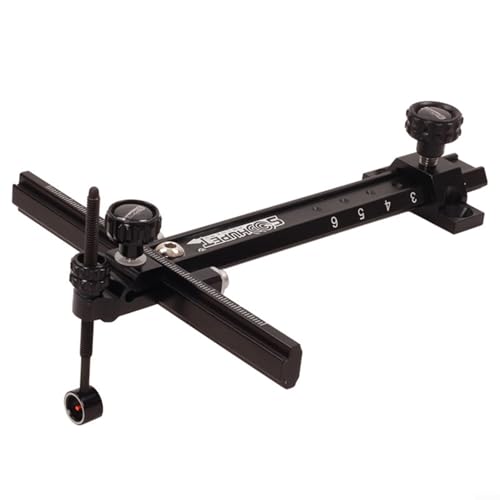
Common layouts include multi-pin sights, which show several aiming references at once, and movable single-pin sights, which use one reference that can be repositioned. Multiple references can make it easier to choose an aiming point without moving the sight, while a movable pin keeps the view less crowded but involves changing its position. Check how the adjustment works and whether the layout suits your intended shooting.
A peep sight is a rear aiming aid fitted in the bowstring, rather than a bow-mounted front sight. It is generally used in line with a front sight, so check whether a product is a complete sight or a component intended to work with other equipment.
Check the sight fits your bow
Do not assume a sight will suit every bow. Recurve and compound setups can use different mounting arrangements, and products may specify a particular bow type or fitting. Before choosing, check the product information for the intended bow type, mounting method and any other components needed for the sighting system.
More Bow Sights
See all 87 Bow Sights →


As an Amazon Associate we earn from qualifying purchases.