

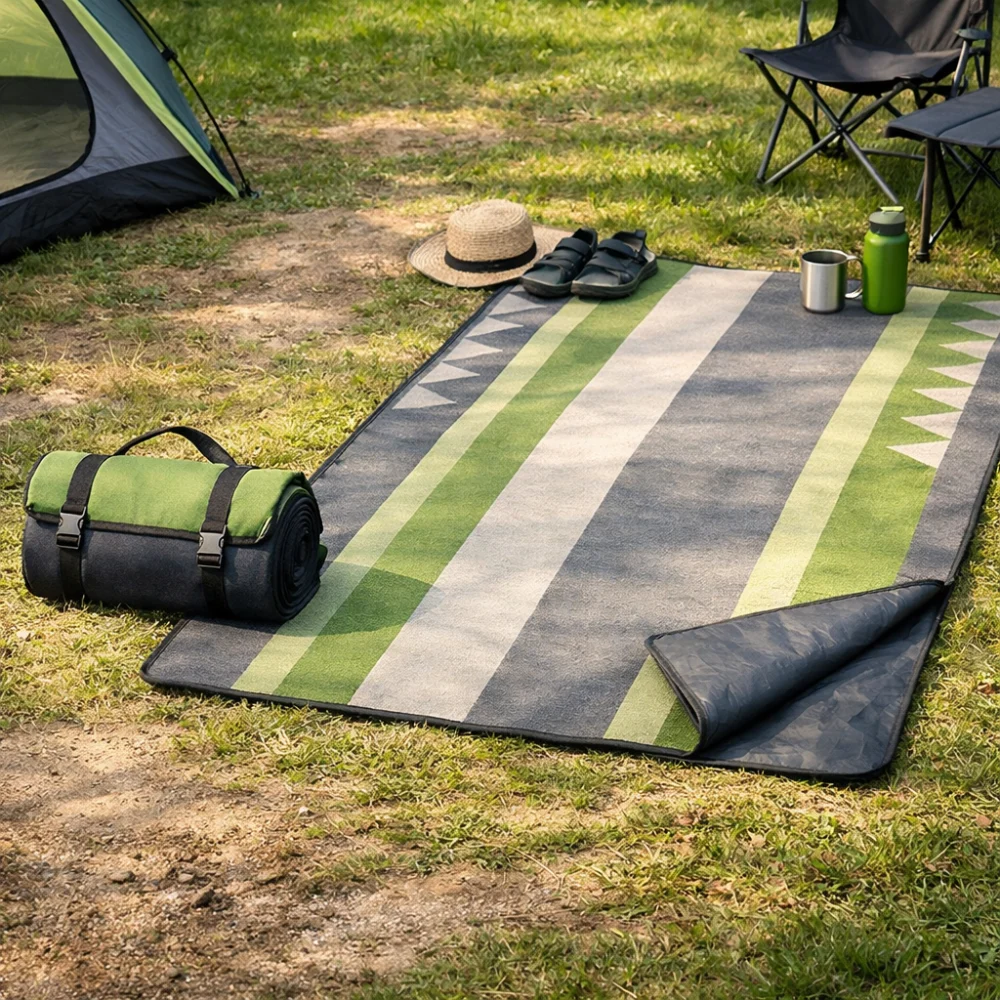
Camping rugs can make a tent porch, awning or campsite sitting area feel more comfortable and more usable. They help define a clean, softer surface underfoot, while also making it easier to keep a dedicated space for shoes, chairs or kit.
Choosing one is less about finding a universal “best” rug and more about matching the rug to where you will use it, how much space you have and how easy it needs to be to carry, clean and store. A good buying decision usually comes down to size, material, weight and how well the rug suits the ground surface.
What should you look for in a camping rug?
The main choice is usually between comfort, portability and practicality. Start with the size of the area you want to cover, then check whether the rug is easy to transport and whether the surface is suitable for tent floors, hardstanding or grass. If a rug is going to be used often, cleaning and packability matter as much as appearance.
Specifications vary by model, so always check the individual product page before buying.
| Feature | What it means | Why it matters | What to check |
|---|---|---|---|
| Size | The floor area the rug covers | Determines whether it fits a porch, awning or seating area without bunching or leaving awkward gaps | Measure the intended space and allow for door swings, chairs and walkways |
| Material | The surface and backing construction | Affects comfort, grip, cleaning and how the rug feels underfoot | Look for a material suited to your usual campsite surface and cleaning routine |
| Weight and packed size | How bulky the rug is when folded or rolled | Important if you carry kit in a car with limited space or move gear by hand | Check whether it will store easily with your other camping equipment |
| Breathability and drainage | How the rug behaves on damp ground | Helps when using the rug outdoors rather than only inside a tent | Confirm whether the rug is intended for outdoor use and how it handles moisture |
| Ease of cleaning | How simple it is to shake out, wipe down or wash | Makes a big difference after muddy boots, food spills or sandy sites | Look for care guidance that fits how often you camp |
| Edge finish and fastening | How the rug is finished and whether it can be secured | Can affect durability and how well it stays put in breezy conditions | Check for reinforced edges, peg points or other practical fixing options if needed |
Key factors that affect the right choice
Size and coverage
Size is the most obvious starting point, but it is easy to misjudge. A rug that is too small can feel awkward and leave mud or damp at the edges, while one that is too large may be cumbersome to lay out or store. Think about whether you want a simple doorway mat, a porch-size ground layer or a larger social area for chairs and shoes.
Surface and comfort
Some buyers want a soft feel underfoot, while others care more about a practical surface that shakes clean easily. The right balance depends on where you plan to use it. A rug for a family tent entrance may prioritise wipe-clean convenience, while a rug for sitting out may place more emphasis on comfort.
Portability and storage
Camping gear has to travel well, so packed size and handling matter. A rug that is easy to fold or roll may be more appealing if you move between pitches often or have limited boot space. If the rug will stay mostly with one setup, portability may matter less than coverage and durability.
Cleaning and maintenance
Camping rugs are exposed to grass, dust, food and wet footwear, so they should be easy to look after. Some are better suited to a quick shake-out, while others may be easier to wipe down or hose clean. Think about how much cleaning effort you are realistically willing to put in after each trip.
Outdoor suitability
Not every rug is equally suited to direct outdoor use. If it will spend time on damp ground, under a awning or at the entrance to a tent, it is worth checking how the rug is designed to cope with moisture and repeated use on rougher surfaces. For a general campsite setup, practicality usually matters more than a decorative finish.
Common camping rug types and uses
Camping rugs are often chosen by use case rather than by strict product category. Some buyers need a compact rug for a tent entrance, while others want a larger piece for an awning or seating area. The main distinction is usually between lightweight, easy-carry options and heavier, more substantial rugs that may offer a more settled feel in camp.
A lighter rug can suit occasional trips and smaller pitches because it is easier to store and move. A larger rug may suit family camping or longer stays where the camp layout is more fixed. The trade-off is usually convenience versus coverage and comfort.
Which camping rug suits which buyer?
| Buyer need | What tends to matter most | Likely trade-off |
|---|---|---|
| Weekend campers | Easy packing and quick setup | May give up some coverage or plushness |
| Families | Enough space for shoes, chairs and movement | Often means more bulk to carry and store |
| Awning users | Coverage, comfort and a neat social area | May need careful measurement before buying |
| Minimal packers | Compact storage and light handling | Usually less emphasis on large floor coverage |
| Frequent campers | Durability and easy cleaning | May prioritise practicality over a softer feel |
Common mistakes to avoid
- Choosing by appearance alone. A rug that looks attractive may not be the right size or surface for a campsite.
- Forgetting to measure the space. Measure the area first so the rug fits the intended setup without blocking access.
- Ignoring cleaning effort. If you camp often, a rug that is difficult to clean can become a nuisance quickly.
- Overlooking storage space. A rug that is awkward to fold or roll may be inconvenient between trips.
- Assuming all rugs behave the same outdoors. Check whether the rug is intended for campsite use and how it handles damp or uneven ground.
Safety and suitability considerations
For campsite use, the main concern is suitability rather than technical complexity. Make sure the rug will not create an unwanted trip point, block a doorway or become inconvenient in wet weather. If it will be used near an entrance or in a shared area, a rug that lies relatively flat is often easier to live with.
If you have children, pets or muddy boots in camp, prioritise easy cleaning and a layout that does not encourage clutter. As with any product in this category, the most useful checks are the intended use, the size and the care guidance on the individual listing.
Maintenance and storage
Most camping rugs will last better if they are shaken out, dried properly before storage and kept free from trapped grit. Moisture, heavy folding and rough handling can all affect how neat a rug looks and how easy it is to use next time. If the rug will live in a vehicle or storage box, packed shape may matter as much as material.
Before buying, think about whether you want something that can be brushed, wiped or washed with minimal effort. A little maintenance after each trip can make a big difference to how practical the rug remains over time.
How to compare options efficiently
- Decide where the rug will be used: tent entrance, awning, porch or seating area.
- Measure the available space and consider how people will move across it.
- Compare the material, cleaning needs and packed size.
- Think about whether comfort, portability or durability matters most.
- Check the individual product page for care guidance and any model-specific details.
Summary buyer decision checklist
- Have you measured the space the rug needs to cover?
- Does the size suit the way you camp and move around the area?
- Is the material practical for your usual ground conditions?
- Will the rug be easy to clean after muddy or sandy trips?
- Can you store and carry it without inconvenience?
- Does it suit the balance of comfort and practicality you want?
Frequently asked questions
Are camping rugs only for tents?
No. They are often used in porches, awnings, social areas and other camp spaces where a cleaner or more comfortable surface is useful. The main question is whether the rug suits the ground and the layout you have in mind.
What size camping rug should I choose?
Choose the size that fits the area you want to cover without obstructing doors or walkways. It helps to measure the space first and allow for furniture, shoes and movement around the edges.
Is a heavier rug always better?
Not necessarily. A heavier rug may feel more settled in camp, but it can be less convenient to carry and store. For many buyers, the better choice is the one that matches how often they travel and how much handling they want to do.
How important is easy cleaning?
Very important for most campers, because rugs collect dirt quickly. If you want low effort between trips, look for a rug that is simple to shake out or wipe clean.
Can a camping rug be used on damp ground?
Some can be, but suitability varies by design. Check the individual product page for guidance on outdoor use, moisture handling and care so you know what the rug is intended to cope with.
Do I need a camping rug if I already have a groundsheet?
They serve different purposes. A groundsheet is usually about protection beneath a tent, while a camping rug is more about comfort, cleanliness and making a usable camp area feel more finished.
What is the main trade-off when choosing a camping rug?
It is usually a balance between comfort, size, portability and ease of cleaning. The right rug is the one that fits your campsite setup without becoming awkward to carry or maintain.