

Chest packs are a compact carry option for people who want quick access to essentials without using a full backpack. They are often chosen for walking, hiking, travel days and outdoor activities where small items need to stay close to hand.
Because chest packs can vary quite a lot in shape, attachment style and storage layout, the main buying decision is usually about fit and usability rather than capacity alone. The right choice depends on how much you want to carry, how you prefer the pack to sit on your body and how often you expect to reach into it.
This guide explains the main features to compare, the trade-offs between different styles and the checks that help narrow down a suitable option.
What matters most when choosing a chest pack?
Start with how you will use it. A chest pack that works well for light essentials on a short walk may feel too small or too fiddly for all-day outings, while a larger style may add bulk you do not need. The most useful approach is to balance access, comfort and stability, then check the layout and attachment details on the individual product page.
Specifications vary by model, so always check the individual product page before buying.
| Feature | What it means | Why it matters | What to check |
|---|---|---|---|
| Carry capacity | How much you can keep inside the pack | Helps you judge whether it suits quick essentials or longer outings | Think about the items you usually carry and whether they fit comfortably |
| Fit and attachment | How the pack sits on the chest and secures in place | Affects comfort, movement and how stable the pack feels when active | Look for adjustable straps and a layout that matches your body shape and clothing layers |
| Access to contents | How easy it is to reach the main compartment and pockets | Useful if you want frequent access without taking the pack off | Check pocket placement, opening style and whether key items are easy to reach |
| Organisation | The number and arrangement of pockets, dividers or holders | Makes it easier to keep items separate and find them quickly | Match the internal layout to the things you actually carry rather than choosing extra pockets by default |
| Comfort features | Design details that affect how the pack feels when worn | Important for longer periods of use or heavier everyday carry | Check strap adjustment, padding and whether the pack is likely to sit neatly over your clothing or other gear |
| Material and build | The outer material, seams and overall construction | Influences durability, weight and how the pack handles regular use | Review the product description for material details and any care guidance |
Key decision criteria
Size and packing style
Some chest packs are designed for a few small essentials, while others allow a more organised setup with room for additional items. Bigger is not always better: an oversized pack can feel bulky and get in the way, especially if you only need everyday basics. Think about the items you want to carry most often and choose a size that leaves a little room without encouraging overpacking.
Access and usability
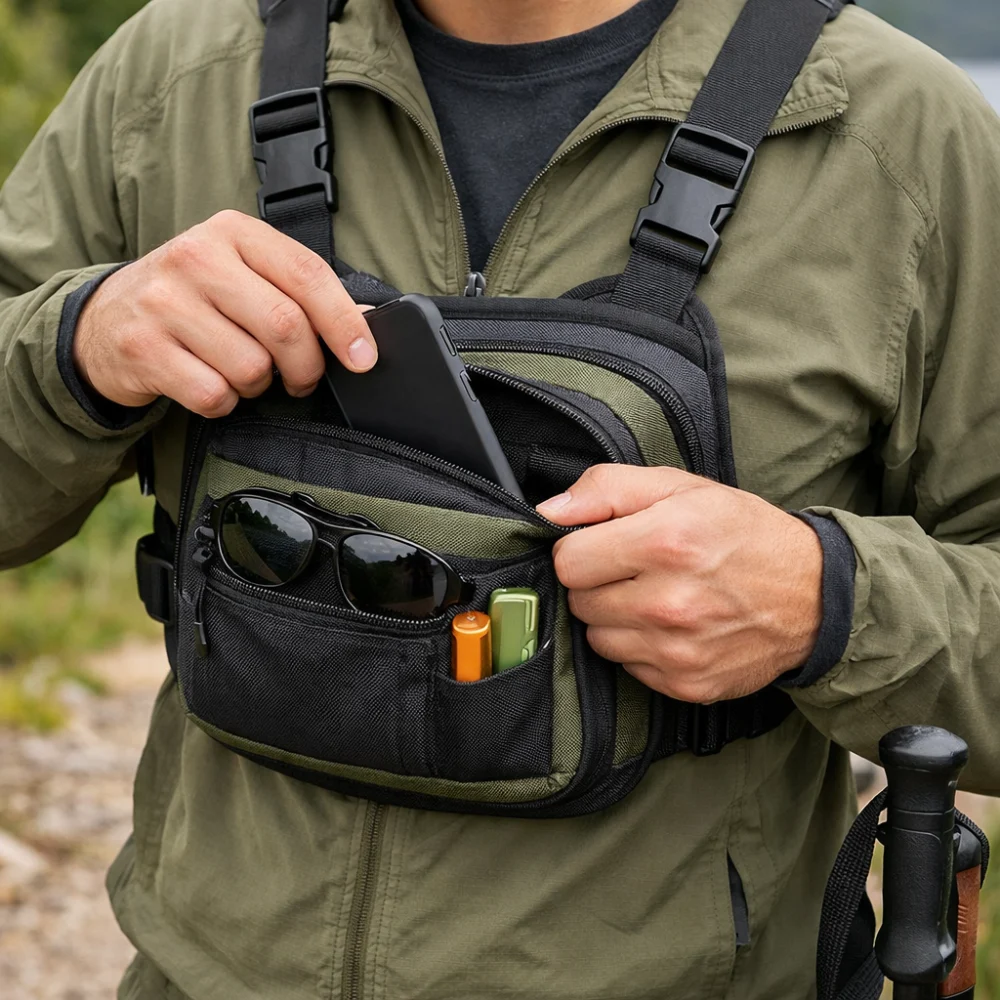
One of the main reasons to choose a chest pack is convenience. If you expect to use it while walking or moving around, pay attention to how easily the main compartment opens and whether the pocket layout makes sense for quick grabs. A simple layout can be easier to live with than a more complex design if you only need a few items.
Comfort and stability
A chest pack should feel secure without bouncing, slipping or making you constantly adjust it. Comfort depends on the strap design, how the pack balances when loaded and how well it matches your body shape and clothing layers. If you plan to wear it for longer periods, comfort becomes more important than a slightly more complicated pocket arrangement.
Organisation and item separation
Some buyers want one main compartment, while others prefer a more structured layout for keys, phone, wallet or small outdoor essentials. Extra organisation can be helpful, but only if you will use it. Too many small compartments can make a pack harder to use than a simpler design.
Materials and everyday durability
For a low-bulk carry item, the material can affect both feel and practicality. A lighter pack may be easier to carry, while a more robust construction may suit regular use better. Look for clear product information about the outer material, fastening type and any care notes so you know what to expect in day-to-day use.
Types of chest pack styles
There is often more variation in how chest packs are designed than in formal product names. The main differences are usually about size, pocket layout and how the pack attaches.
- Minimal chest packs suit people who only want to carry a few essentials and prefer a compact feel.
- Organised chest packs suit buyers who want separate places for small items and quicker sorting.
- More robust outdoor styles may appeal to people who expect regular use and want a steadier feel when moving.
The best choice depends less on the label and more on whether the pack fits your expected carry load and movement pattern.
Which chest pack suits which buyer?
| Buyer need | What to prioritise | Why that helps |
|---|---|---|
| Short walks or light travel | Compact size, easy access, simple layout | Keeps the pack light and straightforward for small essentials |
| Regular outdoor use | Stable fit, durable build, sensible organisation | Helps the pack feel dependable over repeated use |
| People who carry more small items | Extra pocketing, clear separation, secure closures | Makes it easier to keep smaller items tidy and reachable |
| Buyers who dislike bulky bags | Low-profile design, slim shape, comfortable straps | Reduces the feeling of carrying unnecessary bulk |
Common mistakes to avoid
- Choosing size before use case — a chest pack should match what you actually carry, not just look roomy.
- Overlooking fit — a design that does not sit well on your body can be annoying even if the storage looks right.
- Assuming more pockets always mean better organisation — extra compartments only help if you use them consistently.
- Ignoring access — some packs are easy to wear but awkward to open quickly.
- Forgetting about layering — if you wear thicker clothing outdoors, check that the pack is adjustable enough to sit comfortably over it.
Suitability and caveats
Chest packs are best treated as convenience carry items rather than replacements for larger bags when you need substantial storage. If you plan to use one for outdoor activities, make sure the design suits the way you move and the amount you carry. For safety-critical or specialised use, check the individual product details carefully and do not assume all styles behave the same way in every setting.
Care, storage and long-term use
Most chest packs benefit from simple, regular care: empty them after use, remove dirt or moisture promptly and store them somewhere dry. If a pack has zips, straps or fasteners that you will use often, it is worth checking them periodically for wear as part of normal ownership. Avoid overstuffing, because that can make a compact pack less comfortable and may put extra strain on closures and seams.
How to compare options efficiently
- Decide what you want to carry and whether a chest pack is the right size for that load.
- Compare the fit, strap adjustment and stability features first.
- Check the layout and access points to see whether the pack suits your habits.
- Look at material, build and care details to judge suitability for regular use.
- Choose the simplest design that comfortably meets your needs rather than adding features you will not use.
Summary buyer checklist
- Does the size match the items you actually carry?
- Will the pack sit comfortably on your body and clothing layers?
- Is the access quick enough for how you plan to use it?
- Is the pocket layout simple enough for your routine?
- Are the material and construction details suitable for regular use?
- Have you checked the individual product page for the exact model details?
Frequently asked questions
What is a chest pack used for?
A chest pack is used to keep small essentials close at hand while leaving your main bags or pockets less cluttered. People often choose them for outdoor activities, walking and travel situations where quick access matters. They are most useful when you want convenience without carrying a larger bag.
How is a chest pack different from a waist pack?
A chest pack is worn on the front of the upper body rather than around the waist. That can make access easier for some people and may feel more secure depending on the activity and clothing layers. The right choice comes down to comfort, access and how much you want the pack to move while you are active.
Are chest packs good for everyday use?
They can be, especially if you only need to carry a few items and like having them close to hand. The main question is whether the pack feels comfortable enough for repeated wear and whether the layout suits your routine. For heavier or more varied carry needs, a different bag style may be more practical.
What should I check before buying one?
Focus on size, fit, pocket layout, access and construction. It is also sensible to check how the pack is intended to be worn and whether it looks comfortable over the clothing you usually use. Specifications vary by model, so always check the individual product page before buying.
Can a chest pack hold valuables securely?
Many buyers use chest packs for items they want to keep within easy reach, but security depends on the exact design and closure style. Look for a layout that keeps important items organised and less likely to fall out during normal movement. Do not assume all packs offer the same level of protection or concealment.
How do I know if the pack will fit comfortably?
Check the strap adjustment range, the way the pack is shaped and whether it is likely to sit properly over the layers you wear most often. Comfort is often easier to judge from product details when you focus on how and where you plan to use it. If the description is brief, compare it against a similar pack you already find comfortable.
Do more compartments always mean a better pack?
Not necessarily. More compartments can help if you regularly separate items, but they can also make the pack more fiddly if you only carry a few essentials. Simpler designs are often easier to use when your needs are straightforward.