

Choosing paddlesports clothing for children is mostly about comfort, freedom of movement and matching the clothing to how they will be on the water. The right choice depends on the activity, the weather and how long the child is likely to be wearing it.
This guide focuses on the practical differences that matter when comparing options for kayaking, canoeing and paddleboarding. It is not about picking the fanciest-looking kit; it is about finding clothing that suits the child, the conditions and the type of outing.
Because children grow quickly and vary a lot in build, fit and comfort matter at least as much as style. Specifications vary by model, so always check the individual product page before buying.
What should you look for first?
Start with the conditions and the activity. A short, warm-day trip has different clothing needs from a longer session in cooler weather or with more time spent splashed, seated or moving around. The main decision is usually between lighter layers for flexibility and more protective clothing for warmth, coverage and wetter conditions. The best starting point is the item that matches the environment first, then the child’s fit and comfort second.
| Feature | What It Means | Why It Matters | What To Check |
|---|---|---|---|
| Fit | How the garment sits on the child’s body | Good fit helps comfort and movement without feeling restrictive | Look for the size guidance, cut and whether layering space is needed |
| Coverage | How much of the body is covered | More coverage can help with sun, spray and cooler air, while less coverage may feel lighter in mild conditions | Check sleeve length, leg length and whether the item is intended as a base layer or outer layer |
| Material type | The fabric and how it behaves when worn near water | Different fabrics suit different temperatures, comfort preferences and drying needs | Read the product page for the stated material and intended use |
| Fastening and ease of dressing | How easy it is to put on, take off and adjust | Useful for children who need quick changes or may be layering clothing underneath | Check for zips, stretch, closures and whether the item is described as easy to wear |
| Layering compatibility | Whether the garment works under or over other clothing | Important when conditions change or the child needs extra warmth | Look for room to move and whether the cut is slim, regular or more relaxed |
Key decision criteria explained
Fit and comfort
Fit is one of the most important choices in children’s paddlesports clothing because discomfort can quickly become the main problem on the water. A garment that is too tight may limit movement, while one that is too loose may feel awkward or bunch up. Check whether the size guidance suggests a closer or more relaxed fit, and remember that a child may need room for a thin layer underneath.
Weather and water conditions
Think about whether the child is likely to be in mild sun, cool wind, spray or a more changeable day. Clothing for calmer, warmer conditions can often be lighter and simpler, while cooler or wetter outings may call for more coverage and better layering potential. The point is not to overbuy, but to match the clothing to the likely session rather than the most extreme scenario.
Range of movement
Paddlesports involve sitting, reaching and twisting, so clothes need to let children move easily. Stretchy or thoughtfully cut clothing may feel more natural for active use, while stiffer items can feel restrictive. Check the product page for any guidance on intended activity and consider whether the child will need freedom for arm movement, bending and getting in and out of kit.
Ease for children and carers
Practical clothing is often easier to manage before and after a session. Easy dressing, simple fastenings and straightforward care can matter just as much as performance features, especially for younger children or family outings. If the item will be used regularly, convenience can be a worthwhile trade-off against slightly more technical-looking options.
Types and variants you may see
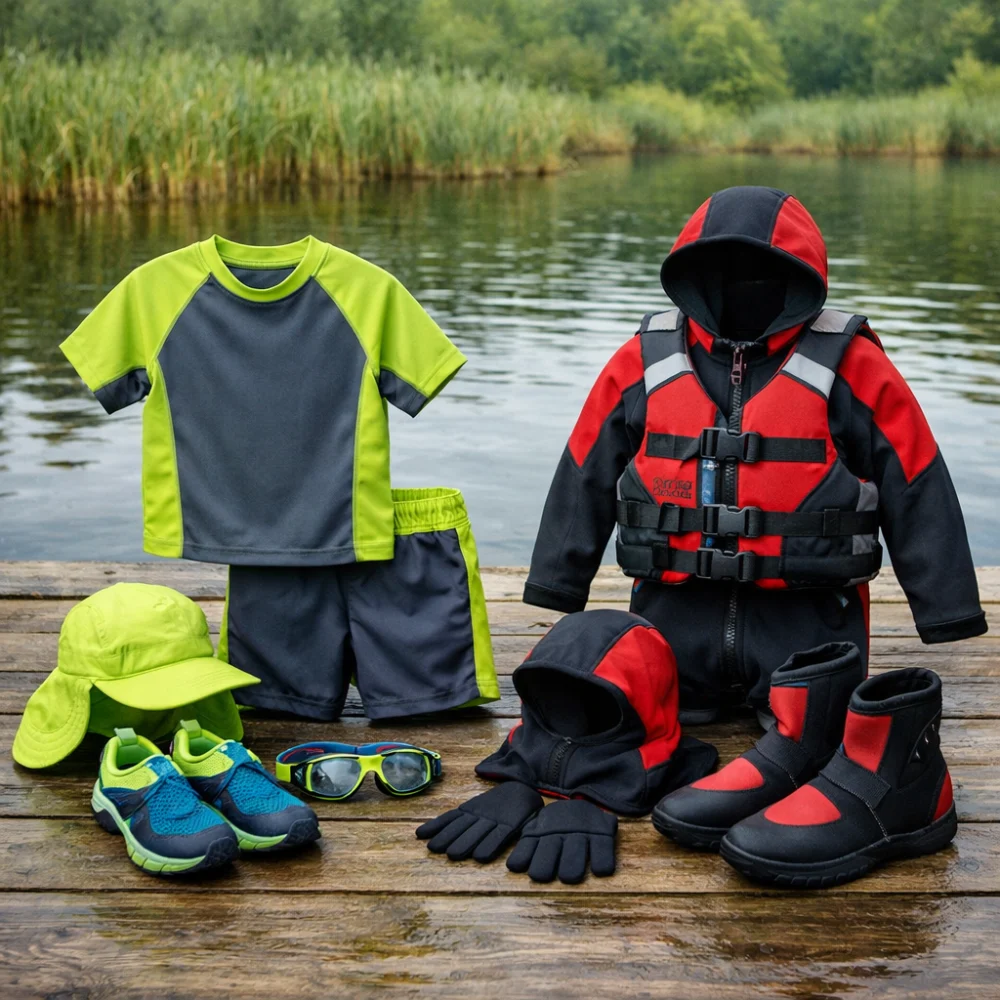
Within children’s paddlesports clothing, the main differences are usually about coverage and layering rather than highly specialised design. Some items may suit warm-weather outings and light splash protection, while others are better suited to cooler conditions or as part of a layered setup. The key is to treat each product as part of a system: base layer, mid layer or outer layer, depending on how it is meant to be worn.
- Lighter clothing: Better for milder conditions and active movement, with less bulk to manage.
- More protective clothing: Better when extra coverage or warmth matters more than minimal feel.
- Layering pieces: Useful when conditions change or when you want flexibility across different seasons.
Which choice suits different buyers?
| Buyer need | Usually worth prioritising | Why |
|---|---|---|
| Young beginner | Comfort, simple fit and easy dressing | Beginners are more likely to benefit from clothing that feels natural and easy to manage |
| Family days out | Versatility and layering | Conditions may change, so adaptable clothing is often more useful than a single-purpose item |
| Cooler-weather outings | Coverage and room for layers | Extra coverage can help with comfort when the air or water feels cooler |
| Frequent use | Practical care and durability | Regular wear makes easy washing, reliable fit and sensible construction more important |
Common mistakes and misunderstandings
- Choosing by age alone. Children’s sizes vary, so actual fit is more useful than a label by itself.
- Buying for one weather type only. If the clothing will be used more than once, think about layering and changing conditions.
- Assuming tighter always means better. Comfort and movement matter, especially for active paddling.
- Overlooking ease of use. Clothing that is awkward to put on may become the one that is least likely to get worn.
Safety and suitability caveats
Children’s paddlesports clothing should be chosen with the activity and conditions in mind, but clothing alone is not a substitute for sensible supervision or appropriate water safety equipment. Check whether the garment is intended for your child’s age, build and use case, and make sure it works with any other kit they need to wear. If you are unsure whether something is meant as a base layer, outer layer or general sportswear, check the individual product page rather than assuming.
Maintenance, storage and lifespan considerations
General care is usually simple, but it still affects value. Clothing that is easy to wash and dry can be more practical for families, especially if it will be used often. Store items clean and fully dry, and think about whether the child may outgrow the garment before it wears out; for children’s kit, growth can be as important as fabric durability when deciding what is worth buying.
How to compare options efficiently
- Decide where and how the clothing will be used most often.
- Choose the level of coverage and warmth that matches those conditions.
- Check fit guidance carefully, including room for layering if needed.
- Compare comfort, ease of dressing and care requirements.
- Read the individual product page for the final details before choosing.
Summary buyer decision checklist
- Does the clothing suit the likely weather and water conditions?
- Will the fit allow comfortable movement and layering if needed?
- Is the level of coverage right for the intended outing?
- Is it easy enough for the child and carer to manage?
- Have you checked the individual product page for the exact details?
Frequently asked questions
What matters most when buying paddlesports clothing for children?
Fit, comfort and suitability for the conditions usually matter more than anything else. If the child can move easily and stay comfortable for the length of the outing, the clothing is far more likely to be useful. After that, check coverage and layering potential for the type of session you expect.
Should I buy for current size or allow extra room?
It is usually sensible to allow a little room for movement and thin layers, but not so much that the garment becomes awkward. Too much excess can affect comfort and make the clothing less practical. Check the size guidance on the product page and think about how the item will actually be worn.
Is heavier clothing always warmer or better?
Not necessarily. Some heavier-feeling items may offer more coverage, but warmth depends on how the garment is designed and used, not weight alone. Look at the intended purpose and whether the clothing is meant for layering or direct wear.
Can children’s paddlesports clothing be used for other sports?
Often it can be, if the fit and comfort are suitable, but the main concern is whether it works for the movement and conditions of the other activity. A general sports item may be fine for some uses, while more specialised paddlesports clothing may be chosen for water-based outings. Check the product description for the intended use rather than assuming it will suit everything.
How do I choose between lighter and more protective clothing?
Think about the conditions you are most likely to face. Lighter clothing tends to suit milder weather and more active movement, while more protective options are usually more useful when extra coverage or layering matters. If the weather is variable, versatility may be the deciding factor.
What if my child is between sizes?
Between sizes, comfort and the intended use should guide the decision. If the item will be worn with layers, a slightly roomier fit may be practical; if it needs to stay close to the body, a more precise fit may work better. Always check the product page for the individual size guidance.
Do I need different clothing for kayaking, canoeing and paddleboarding?
Sometimes the same clothing can work across all three, but the best choice depends on how wet, cool or active the outing is likely to be. The main differences are often in fit, coverage and how much freedom of movement the child needs. Check the intended activity on the product page if it is stated.