

Children’s running socks may seem like a small purchase, but the right pair can make a noticeable difference to comfort on training runs, PE, club sessions and active days out. The main job is to reduce rubbing, manage moisture and stay in place while a child moves.
Because children grow quickly and wear them for different activities, the best choice is rarely just about size. It is also about cut, cushioning, breathability and how the socks feel inside the shoe.
This guide focuses on the features that help you compare options sensibly, without assuming every pair is built for the same kind of running.
What should you look for first?
Start with fit and comfort, then look at fabric and sock length. A sock that fits well and stays smooth inside the shoe is usually more useful than one that looks technical but feels bulky or slips down during wear. If a child is between sizes or still growing, it is worth checking the size guidance carefully and allowing for the intended shoe fit.
For many buyers, the main trade-off is between a lighter, cooler sock and one with more cushioning or a firmer feel. Specifications vary by model, so always check the individual product page before buying.
| Feature | What it means | Why it matters | What to check |
|---|---|---|---|
| Fit and sizing | How closely the sock matches the child’s foot and leg size | A poor fit can bunch, slide or feel restrictive | Size range, age guidance if given, and whether the sock is meant to be snug or roomy |
| Fabric blend | The materials used to make the sock | Fabric affects softness, moisture handling and drying time | Material breakdown and any notes about breathability or moisture-wicking |
| Cushioning | Extra padding in the sole, heel or toe | Can improve comfort, but may add warmth or bulk | Where cushioning is placed and whether the sock stays slim enough for the shoe |
| Length | No-show, ankle, crew or longer styles | Changes coverage, comfort and how much of the lower leg is protected | The cut that suits the child’s shoes, preference and activity |
| Seams and finish | How the sock is constructed around the toe and other key areas | Rough seams can be noticeable during running | Toe seam description and any comfort-focused construction notes |
| Pack format | Single pair or multi-pair pack | Useful for school use, frequent training or replacing worn socks | How many pairs are included and whether all pairs are the same style |
Key decision criteria explained
Fit and stay-put feel
Running socks for children should feel secure without being tight. If a sock slips into the shoe, twists around the foot or leaves marks after wear, it is unlikely to be comfortable for longer runs. A close fit matters more than a loose one because movement creates friction.
Fabric choice
Different fabric blends can feel very different once a child starts moving. Softer everyday-feeling materials may suit casual runners, while more performance-focused blends may be better when the main priority is moisture management. If the product page lists bamboo, cotton, synthetic fibres or a blend, think about how warm the socks may feel and how quickly they may dry after washing.
Cushioning level
Some children’s running socks have extra padding in areas such as the sole or heel. That can improve comfort for longer sessions or firmer shoes, but too much thickness can make the sock feel warm or change the fit inside the shoe. The useful question is not whether cushioning is included, but whether it suits the shoes and distance involved.
Length and coverage
Shorter socks are often chosen for warmer weather or a lighter feel, while ankle or crew styles can offer more coverage and a different fit around the shoe collar. There is no single right answer; the choice usually depends on the shoes, the weather and the child’s preference. A slightly longer sock can also be easier to keep in place for some children.
Seam comfort
Toe seams and general finishing matter more than many shoppers expect. A smooth interior can reduce irritation, especially if the child is sensitive to texture or tends to wear socks for long sessions. If the listing mentions flat seams or smooth toe construction, that is worth noting, but it should still be balanced against fit and fabric.
Common types and how they differ
Within this category, the most relevant variations are usually about cut, cushioning and pack size rather than highly technical performance claims.
- No-show or low-cut styles sit lower on the foot and can feel lighter, but they may be less visible and sometimes less secure for some wearers.
- Ankle socks offer a balance of coverage and lightness, which can suit general running and active everyday use.
- Crew or longer styles give more leg coverage and may feel more reassuring in cooler weather or with higher-cut shoes.
- Multi-pair packs are practical when socks need changing often or when you want fewer repeat purchases.
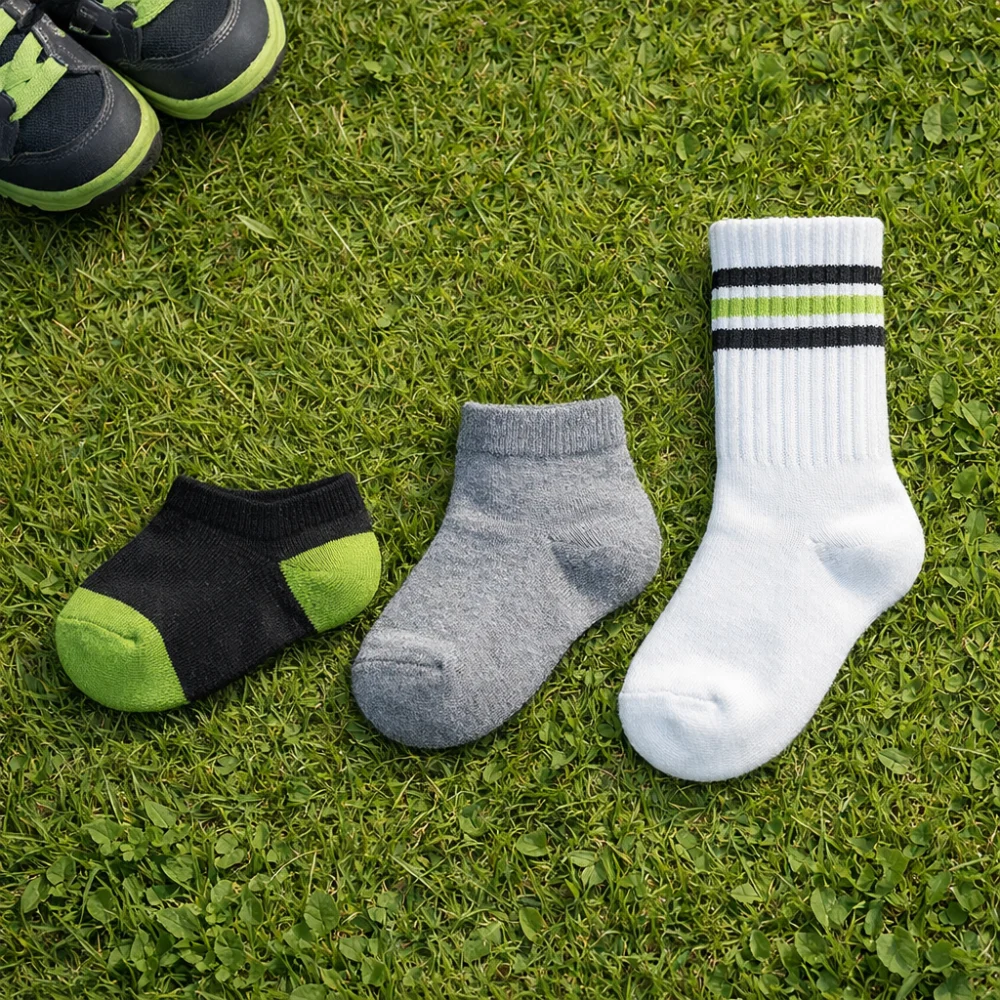
If the category page includes socks with different age or size ranges, treat those as fit cues rather than a guarantee of comfort. The same style can feel different depending on shoe shape and how snugly it sits on the foot.
Which socks suit different needs?
| Need | What tends to matter most | Likely useful choice |
|---|---|---|
| Short runs and active play | Comfort, simple fit and easy wear | Lightweight, soft socks with a secure but not tight fit |
| Regular training | Stay-put feel and moisture handling | Socks with a smoother interior and a fabric blend suited to exercise |
| Cooler weather | Coverage and a slightly warmer feel | Ankle, crew or slightly cushioned styles |
| Sensitive feet | Soft finish and fewer pressure points | Well-fitted socks with smooth seams and modest cushioning |
| Frequent washing | Practicality and pack value | Multi-pair packs in easy-care fabrics |
Common mistakes and misunderstandings
- Choosing by colour alone: colour is less important than fit, fabric and seam comfort.
- Buying too large for growth: extra room can cause bunching and rubbing during movement.
- Assuming thicker always means better: more padding can help some runners, but it can also make shoes feel tighter.
- Ignoring shoe fit: a good sock still needs enough room inside the shoe to work properly.
- Overlooking care needs: some fabrics may need more careful washing or take longer to dry than others.
Safety and suitability caveats
This is a low-risk category, but comfort still depends on choosing the right size and style for the child and the shoe. If a child has sensitive skin, dislikes seams or tends to overheat, the details on the product page matter more than broad category labels. For children who run regularly, it is sensible to check the listing closely for fit guidance and material information before buying.
Maintenance, storage and lifespan considerations
Children’s running socks are usually chosen for regular washing and repeated wear, so easy care is often practical. It helps to think about how quickly they dry, whether they keep their shape after washing and whether a multi-pair pack makes rotation easier. Wear will be affected by how often they are used, the shoes they are worn with and how well they are matched to the child’s foot size.
How to compare options efficiently
- Decide when the socks will be worn most often: training, school PE, casual running or general active wear.
- Choose the cut first, because length changes the feel more than many shoppers expect.
- Compare fit information and fabric blend next, since those affect comfort and sweat management.
- Look at cushioning and seam finish to judge whether the socks are likely to feel smooth in the shoe.
- Check the pack format and care notes, then choose the option that best balances comfort and practicality.
Summary buyer decision checklist
- Does the size range suit the child’s feet and the shoes they will wear?
- Is the sock length right for the weather and activity?
- Does the fabric sound suitable for comfort and drying needs?
- Is the cushioning level appropriate, not overly thick or too thin?
- Are seams and finishing likely to feel comfortable during movement?
- Does the pack size suit how often the socks will be worn and washed?
Frequently asked questions
Are children’s running socks different from ordinary trainer socks?
They can be, even if the difference is subtle. Running-focused socks often aim to stay in place better and feel smoother during movement, while everyday trainer socks may be chosen more for general comfort than exercise performance. That said, the best choice still depends on the individual product details.
Should I choose cotton or a blended fabric?
It depends on how the socks will be used and what the child finds comfortable. Cotton can feel familiar and soft, while blends may offer a lighter feel or better moisture handling. The better choice is usually the one that matches the child’s preferences and the amount of activity.
Is more cushioning always better for running?
Not necessarily. Extra padding can improve comfort, but it can also make the sock warmer or change the fit inside the shoe. For some children, a lighter sock works better, especially in well-fitted trainers.
What sock length is most practical?
There is no single best length. Shorter styles can feel cooler and lighter, while ankle or crew socks may offer more coverage and sometimes a more secure feel. Think about the shoes, the season and what the child likes to wear.
How important is seam construction?
It matters more than many shoppers expect, especially for children who are sensitive to texture. Smooth seams can help reduce irritation, particularly on longer runs or repeated training sessions. If comfort is a priority, this is worth checking carefully on the product page.
Should I buy a larger size so they last longer?
Usually not. Socks that are too big can bunch up and rub, which makes them less comfortable and less useful for running. A closer fit is generally the better starting point, especially if the child wears the socks for exercise.