

Children’s surfing wetsuits are chosen mainly for comfort, warmth and the kind of water and weather your child will be in. The right option is usually the one that fits closely enough to help retain warmth without making movement awkward.
If you are comparing options for a child who surfs occasionally, or for regular sessions in changeable conditions, it helps to focus on fit, thickness, seam construction and how easy the suit is to get on and off. Specifications vary by model, so always check the individual product page before buying.
This guide keeps the decision practical. It explains the features that usually matter most, where common confusion happens and how to narrow the choice without paying for details your child may not need.
What should you look for first?
The best starting point is fit, followed by warmth and flexibility. A wetsuit that is too loose can feel colder and less comfortable, while one that is too restrictive can make paddling, duck-diving and general movement harder. From there, compare the suit type, the thickness stated by the individual product, and any details that affect comfort around the neck, wrists and ankles.
| Feature | What it means | Why it matters | What to check |
|---|---|---|---|
| Fit | How closely the wetsuit sits on the body | A close fit usually helps with warmth and comfort in the water | Size guidance, height and weight guidance where provided, and whether the cut suits the child’s build |
| Warmth level | How much insulation the suit is designed to provide | Helps match the suit to water temperature and session length | Stated thickness or warmth-related details on the product page |
| Flexibility | How easily the suit allows movement | Useful for paddling and active surfing | Any notes about stretch or panel design, where supplied |
| Coverage | How much of the body the suit covers | Affects warmth, sun exposure and seasonal usefulness | Whether it is a full suit or a shorter style, and how that suits the intended conditions |
| Seams and construction | How the wetsuit is put together | Can affect comfort, durability and how water enters the suit | Construction details listed by the product page, if available |
| Entry and fastening | How the child gets into and out of the suit | Important for independence and for quick changes at the beach | Zip style, closure details and whether the opening looks manageable for the child |
Key decision criteria explained
Fit and sizing
Children grow quickly, but buying too much room into a wetsuit usually reduces comfort and warmth. A good fit should feel close without creating obvious restriction at the shoulders, chest or knees. Check the brand’s size guidance carefully and compare it with the child’s current measurements rather than guessing by age alone.
Warmth versus flexibility
More warmth usually means more coverage or insulation, while more flexibility often means a lighter-feeling suit. Those benefits can pull in different directions, so think about where the suit will be used most often. A child surfing in cooler conditions may need a different balance from one using the suit mainly in milder weather.
Coverage and season
Coverage affects how versatile the suit will be across the year. Longer coverage is often chosen for cooler or breezier sessions, while shorter coverage may suit milder days. The main point is to match the suit to the conditions the child will actually encounter, rather than choosing extra coverage that sits unused.
Comfort at the edges
Small details can affect whether a child enjoys wearing the suit. Neck, wrist and ankle areas should feel secure without causing obvious rubbing or gaps. If the child is sensitive to tightness or dislikes being fussed into kit, simplicity can matter as much as technical details.
Product types and variants
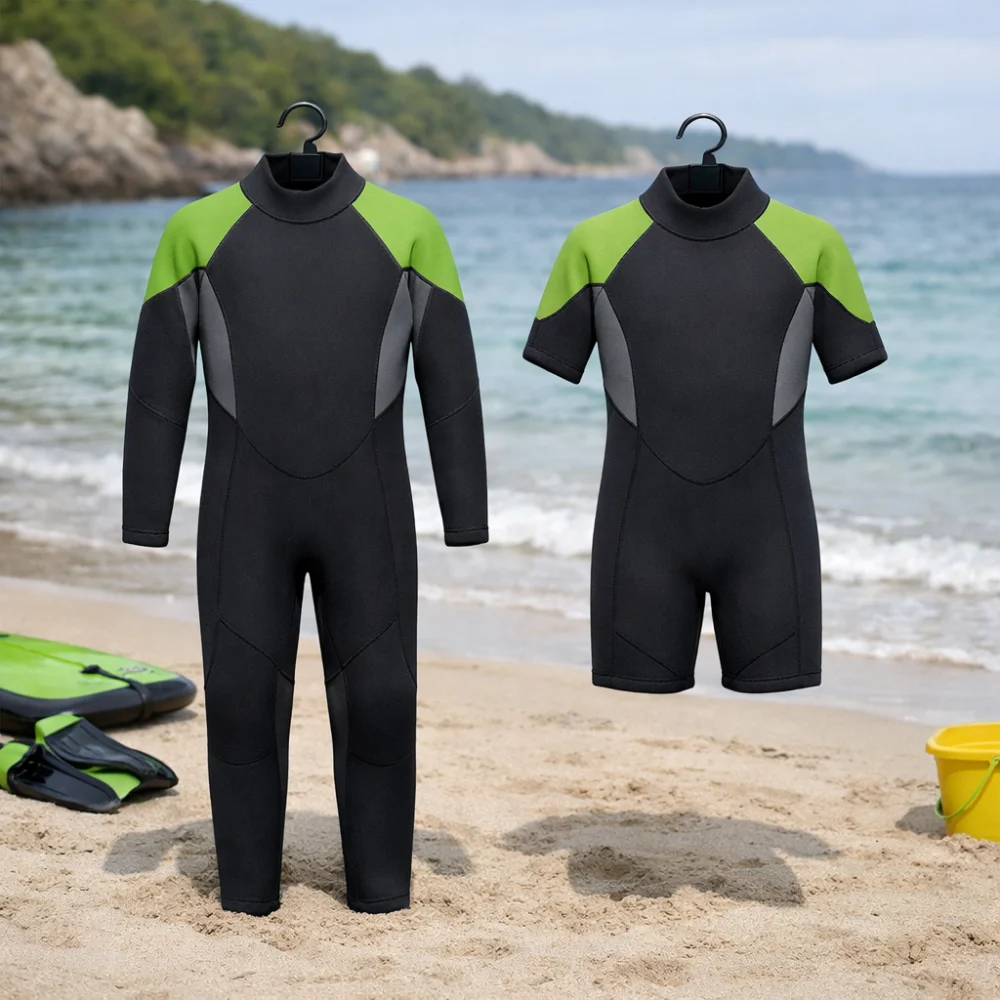
Within this category, the most relevant choices are usually about coverage and overall design rather than a huge range of specialisms. Some suits are aimed at broader, cooler-condition use, while others may feel lighter or less enclosing. The right choice depends on the balance between warmth, movement and how often the suit will be worn.
If you are also considering shorter alternatives, it can help to compare them against the conditions and the child’s tolerance for cold rather than treating them as interchangeable.
Which features suit different buyers?
| Buyer need | What to prioritise | Why it helps |
|---|---|---|
| Newer young surfer | Easy fit, simple entry and comfortable movement | Makes getting ready less stressful and helps the child stay comfortable in the water |
| Regular club or lesson use | Balanced warmth, durability and a reliable fit | Helps the suit cope with repeated use without feeling over-specialised |
| Colder conditions | More coverage and warmth-focused construction details | Better matched to cooler water and longer waiting periods between sessions |
| Mild weather or short sessions | Lighter coverage and enough flexibility for easy movement | Helps avoid overbuying warmth the child may not need |
| Gift buying | Clear size guidance and forgiving fit features | Reduces the chance of choosing something awkward to exchange or wear |
Common mistakes and misunderstandings
- Choosing by age alone: children’s shapes vary widely, so measurements and the product’s own size guidance are usually more useful.
- Assuming tighter always means better: a suit should fit closely, but it should not make movement difficult or feel overly restrictive.
- Overbuying warmth: extra coverage is only helpful if the child actually needs it for the conditions they surf in.
- Ignoring ease of changing: a suit that is awkward to put on can become the one your child avoids wearing.
Safety and suitability caveats
Choose the suit for the intended conditions and the child’s comfort level, and do not rely on a wetsuit as a substitute for supervision, skill or sensible session planning. If a child is between sizes or particularly sensitive to cold, it is usually worth comparing the product information carefully rather than assuming one choice will suit every outing.
Specifications vary by model, so always check the individual product page before buying.
Maintenance, storage and lifespan considerations
Basic care can affect how long a wetsuit remains pleasant to wear. Rinsing and drying needs are common considerations, and the suit should generally be stored so it can dry fully between uses. Avoid assuming that every model has the same care requirements, because product details can vary.
For children, growth is also part of lifespan planning. A suit may become outgrown before it is worn out, so it helps to balance durability with the likelihood of how long the child will realistically use it.
How to compare options efficiently
- Start with the water and weather conditions the child is most likely to face.
- Choose the coverage level that seems appropriate for those sessions.
- Compare fit guidance and make sure the size looks realistic for the child’s measurements.
- Check comfort-related details such as flexibility, seams and entry style.
- Confirm the product page information before deciding, especially where specifications vary.
Summary buyer decision checklist
- Does the size guidance match the child’s measurements?
- Is the suit suited to the likely water temperature and season?
- Will the child be able to move comfortably in it?
- Does the entry style look manageable for regular use?
- Are the product page details clear enough to compare with alternatives?
- Is the balance of warmth, flexibility and coverage appropriate for the intended use?
Frequently asked questions
Should I size up for a growing child?
It is usually better to start with the product’s actual size guidance and the child’s current measurements. Sizing up too much can reduce warmth and make the wetsuit feel awkward in the water. If you are unsure, compare the fit notes on the individual product page carefully.
How warm does a children’s surfing wetsuit need to be?
That depends on the water temperature, season and how long the child is likely to stay in the water. A suit that feels suitable for summer sessions may not be the right choice for cooler months. Matching the suit to the real conditions is usually more useful than choosing for general use alone.
Is flexibility as important as warmth?
Both matter, but the right balance depends on the child and the conditions. A very warm suit that restricts movement can be frustrating, while a flexible suit that is too light may not feel comfortable enough. The best compromise is usually the one that supports the actual session length and temperature.
What if the child is between sizes?
That is a common buying dilemma. Compare the measurements, any fit guidance and the likely amount of use before deciding whether to prioritise a closer fit or a little extra room. If the product page gives useful size notes, those are worth reading closely.
Are children’s surfing wetsuits only for surfing?
They are designed for surfing use, but buyers often also consider them for related waterside activity. The key point is whether the fit, warmth and movement suit the intended use. Always check the product information rather than assuming every wetsuit will feel the same.
What details matter most on the product page?
Fit guidance, coverage, warmth-related information and any construction notes are usually the most useful starting points. Entry style and comfort details can also make a big difference to day-to-day use. If the wording is limited, compare what is stated rather than filling in the gaps with assumptions.