

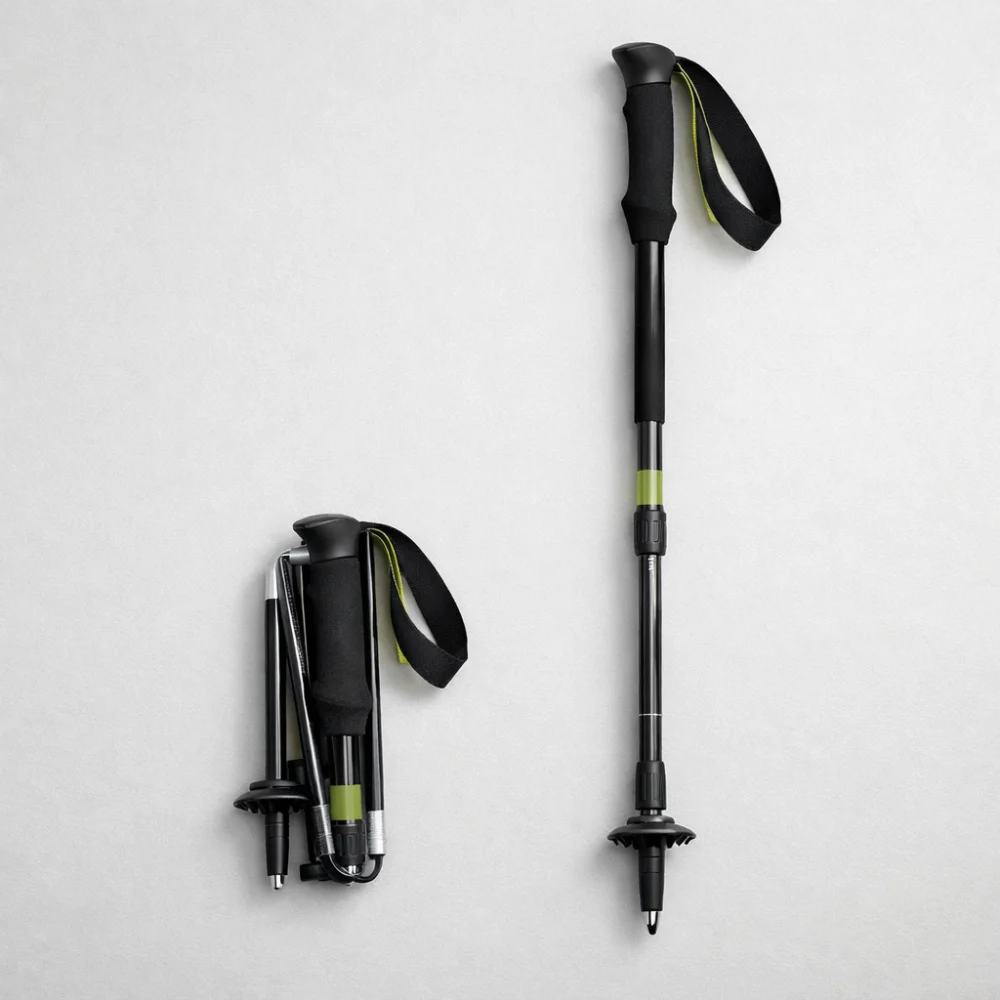
Collapsible trekking poles are designed for walkers and hikers who want a pole that packs away neatly when it is not in use. They are often chosen by people who travel, want easier storage, or prefer gear that stows cleanly in a rucksack or bag.
The main buying decision is not just whether a pole collapses, but how quickly it packs down, how stable it feels in use and whether the folded size suits your routine. Different designs can feel very similar at first glance, so it helps to compare the details that affect everyday handling.
This guide explains the key trade-offs so you can focus on the right balance of convenience, adjustability and comfort. Specifications vary by model, so always check the individual product page before buying.
What should you look for in collapsible trekking poles?
The best starting point is how you plan to carry and use the poles. A collapsible design is useful when compact storage matters, but the ease of folding, the locked-out feel and the amount of adjustment all influence how practical it will be on the hill or path. The trade-off is usually between packability and the exact handling feel you prefer.
| Feature | What It Means | Why It Matters | What To Check |
|---|---|---|---|
| Folded size | How compact the pole becomes when stowed | Affects whether it fits in a rucksack, boot or luggage | Look at the packed length on the product page |
| Adjustment range | How much the pole length can change | Helps you set a comfortable height for different terrain or users | Check the stated length range and how it is adjusted |
| Locking method | How the sections stay secure when in use | Influences confidence, convenience and how quickly the pole can be set up | See whether the pole uses a folding, twist or clip-style system |
| Handle grip | The shape and feel of the hand contact point | Affects comfort on longer walks and in wet or cold conditions | Check grip material, shape and whether it suits your hand preference |
| Weight feel | How heavy the pole feels to carry and swing | Can matter on longer outings or when carrying more than one pole | Compare the stated weight if listed, but also consider overall balance |
| Tip and basket compatibility | The end fittings used for different ground conditions | Useful if you walk on mixed surfaces or want to replace worn parts later | Check what tips or baskets are supplied or supported |
Which features matter most?
Packed convenience
For many buyers, the main reason to choose a collapsible pole is storage. A shorter folded length is easier to pack, but it should still be simple to deploy when you need it. If you travel by car, train or plane, compactness may matter more than a slightly different feel in the hand.
Adjustment and fit
A pole should suit your height and your walking style. If the adjustment is too limited, you may struggle to find a comfortable position. If you share poles with someone else, a wider adjustment range can be especially helpful.
Lock-up confidence
Buyers often focus on folded size and overlook how secure the pole feels once extended. A pole that feels solid and predictable in use is usually more important than one that folds very small but feels awkward to set up. Look for clear product details about the folding system and whether the sections are intended for quick stowage or frequent adjustment.
Grip and comfort
Comfort depends on more than a soft handle. Shape, texture and how the grip feels with gloves or in damp weather can all influence whether the pole feels pleasant over a long walk. If you already know you prefer cork, foam or rubber-style grips, use that as part of your comparison where the information is provided.
What types of collapsible trekking poles are there?
Within this category, the most useful differences are usually practical rather than dramatic. Some collapsible poles prioritise a very compact fold for easy packing, while others may emphasise a more familiar feel in use. The right choice depends on whether your priority is portability, quick stowage or comfort over longer outings.
Some shoppers also compare collapsible poles with telescoping options. A collapsible design may suit you if compact storage is the bigger concern, while another style may appeal if you prefer a different adjustment system. The important point is to compare how the pole fits your routine rather than assuming one mechanism is always better.
Which pole suits which buyer?
| Buyer need | What to prioritise | Why it helps |
|---|---|---|
| Frequent travellers | Compact folded size and easy storage | Helps the pole fit neatly in luggage or a daypack |
| Regular walkers | Comfortable grip and dependable feel | Makes repeated use more pleasant on longer outings |
| Shared use | Useful adjustment range | Lets different users set a suitable height more easily |
| Space-conscious users | Simple fold-down design | Reduces the hassle of carrying bulkier gear |
| Mixed-surface walkers | Relevant tip or basket details | Supports better use across paths, tracks and softer ground |
Common mistakes to avoid
- Choosing only by folded length: compactness is helpful, but comfort and how the pole feels when extended matter just as much.
- Ignoring the adjustment range: a convenient fold is less useful if the pole cannot be set to a comfortable height.
- Overlooking grip preference: handle shape and material can change the feel more than many buyers expect.
- Assuming all folding systems are the same: some are quicker to stow, while others may feel different in use.
- Forgetting about replacement parts: if you plan to use the poles often, check whether tips or baskets are easy to match to the model.
Safety and suitability checks
Choose poles that suit the kind of walking you actually do. A design that is convenient for light day walks may not feel the same on rougher ground, and the buyer should always check the individual product information for any model-specific limitations. If you have concerns about balance, terrain or personal suitability, it is sensible to choose a style that feels easy to control and comfortable to set up.
Care, storage and everyday use
Collapsible trekking poles usually benefit from being kept clean and dry before storage, especially if they have been used in wet or muddy conditions. Folding sections and locking parts are worth checking from time to time so they continue to feel smooth and secure. If the pole uses replaceable tips or baskets, it can help to note what spares are available before buying.
How to compare options efficiently
- Decide how important compact storage is for your walking routine.
- Check the folded length and the adjustment range against your needs.
- Compare the grip style and the overall feel the model is aiming for.
- Look at the locking or folding system and think about how often you will pack it away.
- Read the individual product details carefully for any included tips, baskets or model-specific notes.
Summary buyer decision checklist
- Does the folded size suit your bag, car boot or travel plan?
- Is the adjustment range suitable for your height and use?
- Does the grip style look comfortable for longer walks?
- Is the folding or locking system simple enough for your routine?
- Have you checked tip and basket details if you need them?
- Does the product page give the information you need for your intended terrain?
Frequently asked questions
Are collapsible trekking poles the same as telescoping poles?
Not always. Both are designed to be portable, but they use different ways of packing down and setting length. If compact storage is your main concern, it is worth comparing the two styles on their actual product pages rather than assuming they feel the same.
How do I know if a pole will fit in my backpack?
Check the packed or folded length listed on the product page and compare it with the space you have available. The shape of your bag and what else you carry will also affect how easy it is to stow.
What matters more, weight or packed size?
It depends on how you will use the pole. Packed size matters most when storage is tight, while weight may matter more on longer walks or when carrying kit all day. Many buyers look at both rather than choosing only one.
Do I need special tips or baskets?
That depends on the surfaces you walk on and what the model supports. If you expect to use the pole on mixed terrain, check whether the product page mentions compatible or included accessories.
Can one set of poles suit different people?
Sometimes, if the adjustment range is wide enough. Shared use is easier when the pole can be set quickly and comfortably for more than one user, but the individual fit still needs checking.
What is the biggest trade-off with collapsible poles?
Usually it is compact storage versus how the pole feels in use. A very packable pole can be extremely convenient, but you should still make sure it feels stable, comfortable and easy to set correctly.