

Compound bows are a popular choice for archers who want a modern bow with adjustable features and a more technical setup than traditional styles. If you are comparing your first bow, replacing an older setup or narrowing down options for target practice or general archery use, it helps to know which details really matter.
Because compound bows vary widely from one model to another, the main job is not to chase the most impressive-sounding description. It is to match the bow’s characteristics to your draw needs, intended use and comfort level.
This guide focuses on the buying decisions that are easiest to overlook, such as fit, adjustability, handedness and whether a bow suits a beginner, a returning archer or someone looking for a more specialised setup.
What should you look for in a compound bow?
Start with fit and intended use. A compound bow that feels manageable, matches your draw setup and suits the kind of archery you want to do is usually a better choice than one chosen mainly for appearance or headline features. The main trade-off is that more adjustability can make a bow more versatile, but it can also make the buying decision more technical.
| Feature | What it means | Why it matters | What to check |
|---|---|---|---|
| Draw weight | The force needed to draw the bow | Affects comfort, control and suitability for the archer | Look for a range that you can handle consistently and comfortably |
| Draw length | How far the string is drawn back for a proper fit | Important for accuracy, comfort and consistent shooting | Check whether the bow supports your draw length or can be adjusted |
| Axle-to-axle length | The overall length of the bow | Influences feel, stability and how easy the bow is to manage | Consider whether you want a more compact feel or a steadier setup |
| Let-off | The reduction in holding weight at full draw | Can affect how easy the bow is to hold before release | Compare the stated let-off and decide what feels comfortable to you |
| Handedness | Whether the bow is set up for right- or left-handed use | A basic fit issue that affects usability | Confirm the bow matches your dominant eye, shooting style and product listing |
| Adjustability | How much the bow can be tuned to the user | Useful if your needs may change over time | Check what can be adjusted and whether extra parts are needed |
Key decision criteria explained
Fit and draw setup
Fit is one of the most important parts of choosing a compound bow. If the draw length or draw weight is not suitable, the bow can feel awkward and harder to control, even if it looks appealing. Specifications vary by model, so always check the individual product page before buying.
Intended use
Some buyers want a bow for target practice, others want a more general all-round setup, and some are looking for a more specialised archery experience. A bow that suits one use case may feel unnecessarily complex or less comfortable in another. The best choice is the one that matches your real use, not the broadest list of features.
Adjustability and tuning
Many compound bows offer a degree of adjustment, which can be helpful if you are refining your setup or sharing the bow across different users in a limited way. The trade-off is that more adjustability can mean more time spent understanding the bow and more care taken when setting it up. Check what is adjustable on the specific product page and whether the bow is ready for your intended use.
Bow size and handling
The overall size of the bow affects how it feels to hold, carry and shoot. A more compact bow may suit certain setups, while a longer bow may feel steadier. Neither is automatically better; the right choice depends on how you want the bow to behave in use.
Types and variants within compound bows
At category level, the biggest differences are usually not about entirely separate product families but about how the bow is configured. Buyers commonly compare more adjustable models with simpler setups, or lighter-feeling bows with more stable-feeling ones.
- Beginner-friendly setups: Often chosen by newcomers who want an easier entry point and fewer decisions at the start.
- More adjustable setups: May suit archers who expect their preferences to change or want more scope to fine-tune the bow.
- More specialised setups: Can appeal to experienced archers who already know the feel they want, but they may be less forgiving if the fit is not right.
The main limitation of any compound bow is that the “right” choice depends on how well it matches the individual archer, so a model that looks impressive on paper may still be a poor fit in practice.
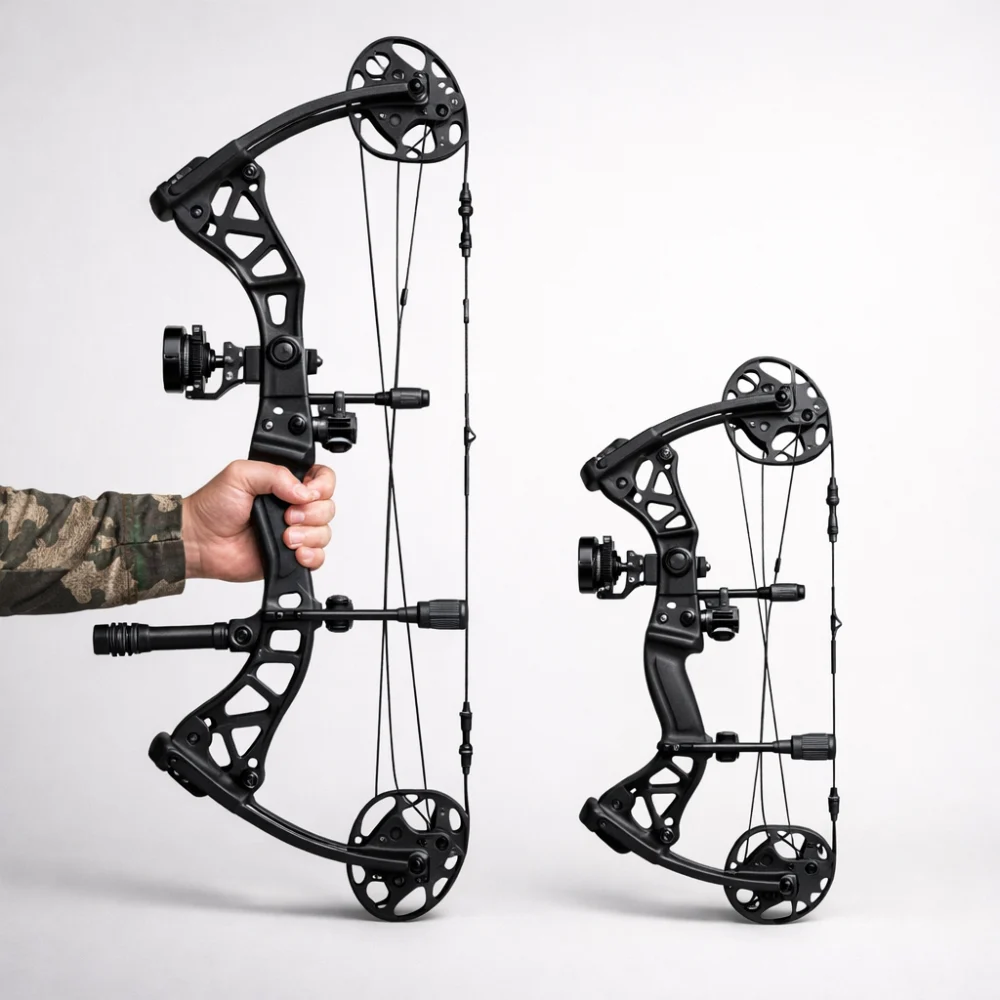
Which compound bow suits different buyers?
| Buyer need | What to prioritise | Why | Potential trade-off |
|---|---|---|---|
| First-time buyer | Simple setup, sensible fit, clear product information | Helps reduce confusion and makes the bow easier to live with | May not include the most advanced adjustment options |
| Returning archer | Comfortable handling, familiar feel, usable adjustment range | Makes it easier to get back into regular shooting | May need a little more checking to ensure the bow suits current needs |
| Target-focused buyer | Stable feel, good fit, details that support consistency | Consistency is often more important than novelty | Can involve a more technical selection process |
| Gift buyer | Clear handedness, sensible adjustability and straightforward compatibility details | Reduces the risk of choosing something that is difficult to use | Gift purchases often need more information before deciding |
Common mistakes and misunderstandings
- Choosing by appearance alone: A bow that looks advanced may still be the wrong fit. Focus on the features that affect use.
- Ignoring draw setup: Draw length and draw weight are central to comfort and control, so do not treat them as minor details.
- Assuming adjustability solves everything: Adjustment helps, but it does not replace a bow that is fundamentally well matched to the archer.
- Overlooking handedness: This is an easy mistake to avoid if you check the listing carefully before buying.
- Comparing only headline features: A useful comparison also includes how the bow is meant to feel in use.
Safety and suitability caveats
Compound bows are sporting equipment that should be chosen with care and used only in appropriate settings. If you are buying for a beginner, a younger archer or someone returning after a break, it is especially important to check that the bow’s fit, draw setup and intended use are appropriate. Do not assume that every compound bow is suitable for every user, and do not rely on the name of the category alone.
Maintenance, storage and ownership considerations
Compound bows may need more attention than simpler bow styles because their setup can be more technical. Buyers should think about storage, regular inspection and whether they are comfortable keeping track of the bow’s configuration over time. If a bow will be stored between sessions, it is sensible to consider how easy it is to keep safe, organised and ready for the next use.
How to compare options efficiently
- Decide who the bow is for and what kind of archery it will be used for.
- Check the bow’s handedness, draw setup and any adjustability that matters to you.
- Compare the handling and size characteristics that affect comfort and consistency.
- Look for trade-offs, such as simplicity versus flexibility.
- Read the individual product page carefully before deciding.
Summary buyer decision checklist
- Does the bow match the intended user and their level of experience?
- Is the handedness correct?
- Does the draw setup suit the archer comfortably?
- Do the size and handling characteristics fit the intended use?
- Is the amount of adjustability appropriate for the buyer’s needs?
- Have you checked the individual product page for the exact details?
Frequently asked questions
Are compound bows suitable for beginners?
They can be, provided the bow is a sensible fit and not overly complicated for the person using it. Beginners usually benefit from clear product information and a setup that is not harder to manage than necessary.
What matters most when choosing a compound bow?
Fit usually matters more than feature count. Draw length, draw weight and handedness are the first checks most buyers should make.
Do all compound bows feel the same?
No, they can feel quite different in size, handling and how much adjustability they offer. That is why comparing the practical details is more useful than comparing only the category name.
Is a more adjustable bow always better?
Not always. More adjustment can be helpful, but only if you want that flexibility and are comfortable using it. Some buyers may prefer a simpler setup.
How do I know if a bow is right- or left-handed?
Check the product listing carefully and match it to the user’s shooting style and eye dominance where relevant. This is one of the easiest details to overlook.
Should I choose a compound bow for target shooting or general use?
That depends on what you value most. Target-focused buyers often want consistency and a stable feel, while general-use buyers may prefer something easier to live with and less specialised.