

Fishing lure boxes are a simple bit of tackle storage, but choosing the right one can make organising and carrying lures much easier. The main decision is not just size: it is how well the box fits the lure styles you use, how much protection you want and how easy it is to access your kit on the bank, boat or at home.
If you are replacing a worn box or looking to tidy up a growing lure collection, it helps to think about compartment layout, closure style and how the box will live in your bag or boat storage. Small differences in shape and internal organisation can matter more than the box itself.
What should you look for in a fishing lure box?
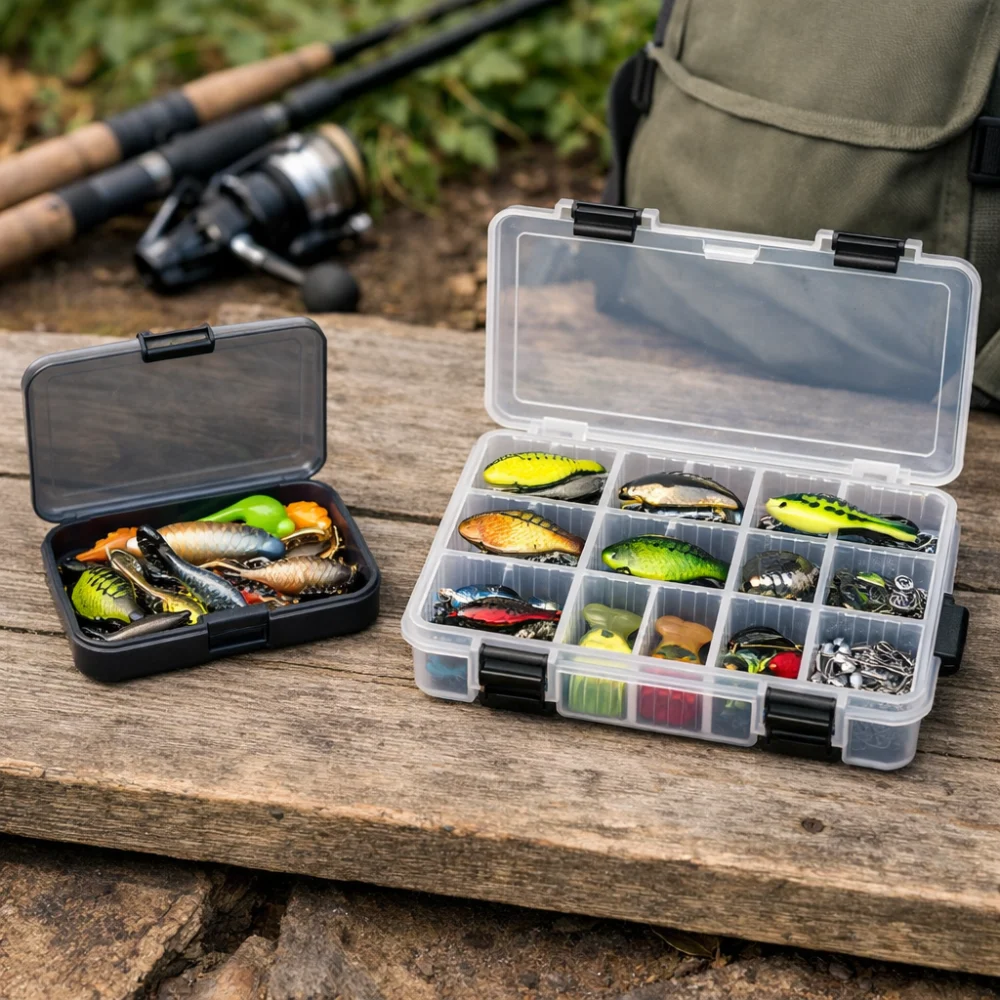
The best starting point is to match the box to the lures you carry most often. A compact box may suit a few frequently used lures, while a larger organiser may be better for mixed hard baits, soft lures and accessories. The trade-off is usually between capacity and portability: more storage can mean a bulkier box to carry or fit into other tackle luggage.
For many buyers, the most useful features are the ones that reduce mess and speed up selection. A box that keeps items separated, closes securely and opens easily is often more practical than one that simply looks large. Specifications vary by model, so always check the individual product page before buying.
| Feature | What It Means | Why It Matters | What To Check |
|---|---|---|---|
| Size and capacity | How much tackle the box can hold | Affects how many lures you can carry and how bulky the box feels | Internal layout, overall size and whether it fits your storage setup |
| Compartment layout | The way space is divided inside the box | Helps keep lures separated and easier to find | Fixed sections, adjustable dividers or specialised inserts |
| Closure style | How the box stays shut | Important for transport and reducing accidental opening | Latch design, ease of opening and how secure it feels |
| Material and build | The body and hinge construction | Affects durability and day-to-day handling | General sturdiness, hinge quality and finish |
| Portability | How easy it is to carry or pack away | Useful if you travel light or keep tackle in a bag | Shape, thickness and whether it suits your carry style |
Key decision criteria explained
Layout and lure fit
Different lures need different space. Long or bulky lures may need a box with deeper or longer compartments, while smaller items can be easier to manage in a more compact organiser. If you mainly carry one type of lure, a simple layout may be enough; if you mix styles, clearer separation can save time.
Portability versus storage volume
A bigger box can reduce the need to carry several smaller containers, but it can also take up more room in your bag, boat or storage cabinet. If you move around a lot while fishing, a slimmer box may be easier to live with. If you keep tackle organised at home and only take selected lures out, a larger organiser may suit you better.
Security and handling
Look for a box that closes confidently and is easy to open without fuss. That matters if you are changing lures quickly or fishing in awkward conditions. A secure closure is helpful, but a design that is difficult to open can become irritating when you need repeated access.
Organisation and access
The point of a lure box is not only storage, but also quicker decision-making. If you can see and reach the lure you want without digging through a jumble, you are more likely to use the system consistently. Transparent lids or clear internal organisation can help, but the best choice depends on how you like to sort your tackle.
Types and variants within this category
Fishing lure boxes are usually chosen by layout rather than by a single universal standard. Some are designed for a compact set of lures and a few accessories, while others are built to separate more pieces of tackle in a more structured way.
Simple box-style organisers suit anglers who want quick storage with minimal setup. More segmented styles can suit anyone who likes to categorise lures by size, type or fishing situation. If you carry only a small amount of tackle, too much internal division can be unnecessary; if your lure collection is growing, a more organised format can be useful.
Which box suits which buyer?
| Buyer need | What usually matters most | Likely trade-off |
|---|---|---|
| Beginners building a first lure kit | Simple layout and easy access | Less specialised organisation |
| Anglers carrying a mixed lure selection | Clear separation and enough capacity | More bulk to store and carry |
| Travelling or bank anglers | Compact shape and portability | Less room for larger collections |
| Home organisers | Easy sorting and visibility | May be less convenient to pack on the move |
Common mistakes and misunderstandings
- Buying for capacity alone: a larger box is not always better if it is awkward to carry or store.
- Ignoring lure shape: some lures need more room than others, so a generic layout may not suit every collection.
- Choosing too much compartmentalisation: fine division can help organisation, but it can also be more than you need for a small kit.
- Overlooking how often you will open it: if you access lures frequently, ease of use matters as much as storage.
Safety and suitability caveats
Fishing lure boxes are a straightforward storage choice, but it still pays to check that the box suits the way you fish and the kit you carry. If you plan to keep sharp hooks inside, choose an arrangement that helps reduce snagging and keeps items where you expect them to be. For boat or outdoor storage, think about whether the box will be exposed to damp conditions or rough handling.
Maintenance, storage and lifespan considerations
Basic care is usually simple: empty out debris, keep the box reasonably dry and avoid crushing it under heavier kit. If you store used lures, cleaning them first can help reduce mess and corrosion on other tackle. How long a box remains useful depends on how often it is opened, carried and loaded, so build quality and hinge feel are worth considering even for a low-cost organiser.
How to compare options efficiently
- Work out what you need to store and how many lures you normally carry.
- Decide whether compact portability or larger organised storage matters more.
- Check the internal layout and make sure it suits the lure shapes you use.
- Look at how the box opens, closes and fits with the rest of your tackle.
- Read the individual product details carefully before choosing.
Summary buyer decision checklist
- Does the box suit the lure sizes and shapes you use most?
- Is the internal layout simple enough for your fishing style?
- Will the box fit comfortably in your bag, boat storage or home setup?
- Is the closure easy to use and secure enough for transport?
- Do you want a compact organiser or a more segmented storage system?
- Have you checked the individual product page for the exact layout and features?
Frequently asked questions
Are fishing lure boxes and tackle boxes the same thing?
Not always. A lure box is usually more focused on separating and storing lures, while a tackle box can be broader in purpose. If you mainly want organised lure storage, the more specific category may be easier to narrow down.
Do I need a large box if I only carry a few lures?
Usually not. A compact box is often easier to pack, carry and keep tidy if your lure selection is small. Buying more capacity than you need can make the box less convenient without improving day-to-day use.
What matters more: compartments or overall size?
Both matter, but in different ways. Size determines how much you can carry, while compartments determine how well you can organise it. If your lures tangle or get mixed up easily, layout may matter more than raw capacity.
Should I choose a transparent box?
A clear lid or visible layout can help you find the right lure quickly, especially if you sort by type or colour. Some anglers prefer a less visible box for a neater pack-away system. The right choice depends on how you like to work from your tackle.
Can one box suit both home storage and fishing trips?
Sometimes, but not always. A box that is great for home organisation may be bulkier than you want to carry every session. If you fish in different ways, you may prefer one box for sorting and a smaller one for daily use.
What should I check before ordering?
Check the size, the internal layout, the closure style and whether it suits the types of lure you already use. It also helps to think about where the box will be stored and how often you will access it. Specifications vary by model, so always check the individual product page before buying.