


Fishing sinkers are a small but important part of many fishing setups. They help get bait or lures to the right depth, improve casting in some situations and keep a rig presenting naturally in moving water or on the bottom.
Choosing one is usually less about finding a single “best” sinker and more about matching the type and weight to your venue, rig and target species. A sensible starting point is to think about how quickly you want the bait to drop, how far you need to cast and how much bottom contact you want to keep.
This guide focuses on the buying decisions that matter most for anglers comparing sinkers within the fishing terminal tackle range. It does not try to turn every fishing situation into a rulebook; the aim is to help you narrow the options with confidence.
Compare Fishing Sinkers


As an Amazon Associate we earn from qualifying purchases.
What should you look for first?
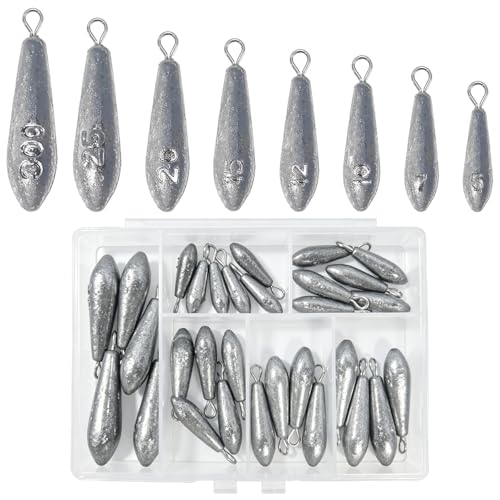
The most useful starting point is the weight range you are likely to need, followed by the sinker shape. Weight affects how quickly the rig reaches depth and how well it stays put, while shape affects how it moves through water and how easily it can roll, drag or hold position. Material and finish matter too, but usually after you have matched the basic style to your fishing.
Specifications vary by model, so always check the individual product page before buying.
| Feature | What it means | Why it matters | What to check |
|---|---|---|---|
| Weight | How heavy the sinker is | Affects casting, depth and how well the rig stays down | Choose a weight suitable for your rod, line and fishing conditions |
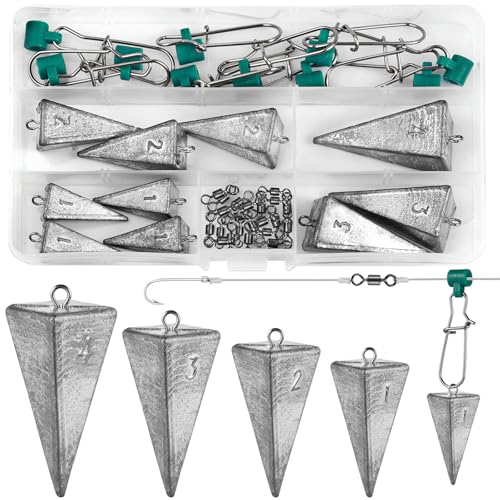
| Shape | The sinker’s profile and form | Changes how it sinks, holds bottom and behaves in current | Match the shape to still water, flow or bottom type |
| Attachment style | How the sinker connects to the rig | Needs to suit the terminal tackle you are using | Check whether it is designed for your rig setup |
| Material and finish | The body material and surface treatment | Can affect feel, durability and presentation | Look for a finish that suits the intended use |
| Environmental impact | What the sinker is made from | Some anglers prefer certain materials for personal or venue reasons | Check venue rules and your own preference before buying |
Key decision criteria
Weight and depth control
Weight is the first decision for most buyers because it changes how the sinker behaves on the cast and in the water. A lighter option may feel more subtle and can be easier to move naturally, while a heavier one may help reach depth sooner or keep contact in stronger flow. The trade-off is that too much weight can make a presentation feel less natural, while too little may not hold position well enough.
Shape and bottom behaviour
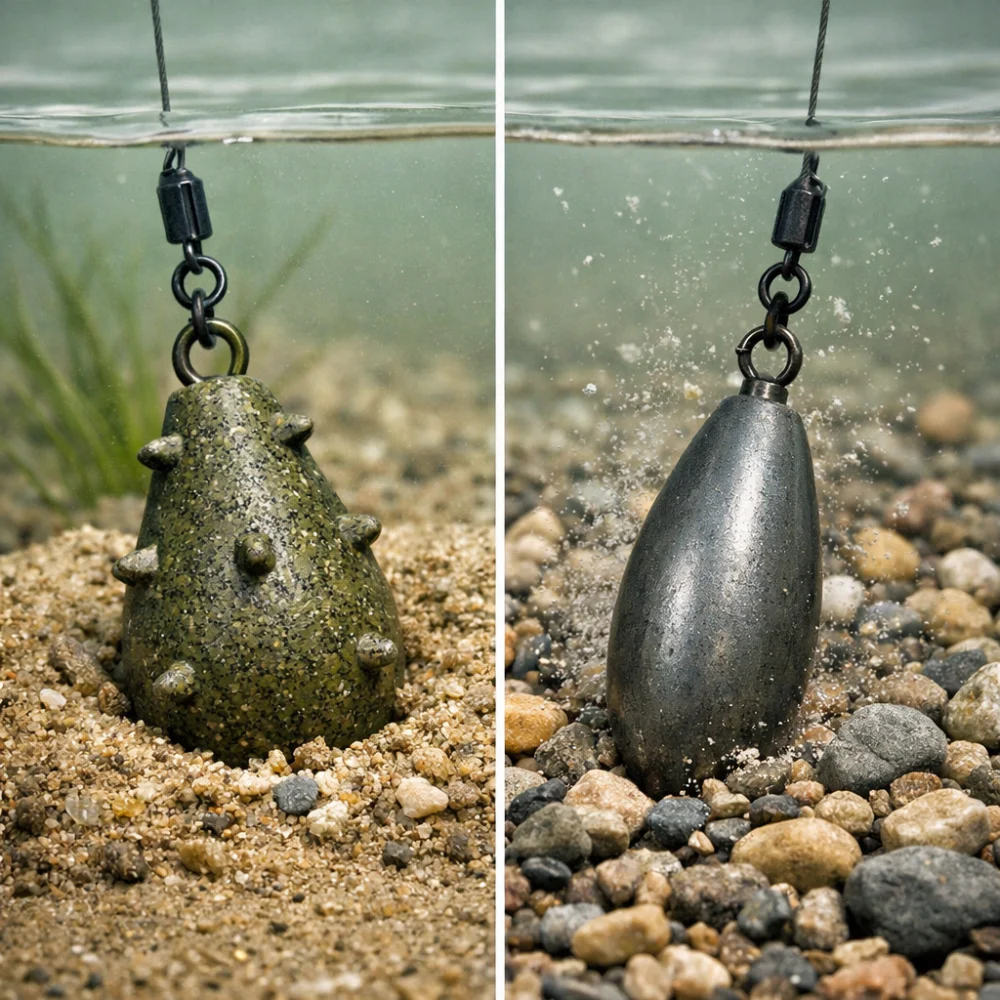
Different shapes are chosen for different jobs. Some are designed to settle and stay put, others to reduce snagging or move more freely along the bottom. If you fish over weed, soft ground or uneven river beds, the shape can be as important as the weight because it affects how often the rig shifts, settles or snags.
Venue and fishing style
Still-water fishing, river fishing and shore fishing often favour different sinker characteristics. The main question is whether you want the rig to sit, hold, roll intentionally or cast well over distance. Think about the venue first, then choose a style that supports that approach rather than trying to make one sinker do everything.
Rig compatibility
Sinkers should suit the rig and tackle you already plan to use. That means checking how they attach and whether the overall setup will still cast, sink and present as intended. If you use a specific rig style, confirm that the sinker shape and attachment method are appropriate for it before buying.
Common sinker types and how they differ
Fishing sinkers are often grouped more by function than by strict names. Some are made to hold bottom in moving water, some to cast a long way and some to support a more discreet presentation. The useful question is not only what the sinker is called, but what job it is meant to do.
If you are comparing several options, think in terms of where they sit on three scales: holding power versus movement, distance casting versus subtle presentation, and simplicity versus special-purpose design. That makes it easier to see why one style may be better suited to your own fishing.
Which type suits which buyer?
| Your need | What to prioritise | Why |
|---|---|---|
| Beginner or occasional angler | Straightforward shapes and clearly stated weight | Easier to match to a basic rig and less confusing to compare |
| Long-distance casting | Weight and a profile suited to the cast | The shape and mass both affect how the rig travels |
| Fishing in moving water | Holding ability and bottom contact | Stability matters more than a purely subtle presentation |
| Fishing over snaggy or uneven ground | A shape that reduces unwanted snagging | Can help the rig settle more predictably |
| Needing a discreet presentation | Enough weight for the job without overloading the rig | Less bulk can keep the setup more natural |
Common mistakes and misunderstandings
- Choosing only by weight: weight matters, but shape and attachment style can change the result just as much.
- Assuming heavier is always better: extra weight can help in some conditions, but it can also reduce sensitivity and make a rig feel less natural.
- Ignoring the venue: a sinker that works well in still water may behave very differently in current or over rough ground.
- Overlooking rig compatibility: the sinker still has to suit the rest of the terminal tackle, not just the fishing spot.
Safety and suitability caveats
Fishing sinkers are simple items, but they still need sensible handling and appropriate use. Check the individual product information for the intended application, and make sure the chosen sinker suits the rig, venue and local rules you are following. If you fish in areas with specific restrictions, confirm that the tackle you choose is suitable there.
Maintenance, storage and lifespan
Sinkers usually need little care, but they benefit from being rinsed and dried after use if they have been exposed to water or mud. Store them so they do not damage other tackle, and keep heavier items separated if possible to avoid wear in a tackle box. Over time, any sinker may show wear, dents or surface changes, so it is worth checking that the attachment point and general condition still look sound before use.
How to compare options efficiently
- Start with the fishing situation: still water, flow, shore casting or a snag-prone bottom.
- Choose the sinker shape that suits that situation.
- Compare the weight range and how it fits the rest of your rig.
- Check the attachment style and any product notes that affect use.
- Read the individual product page before buying so the details match your setup.
Summary buyer decision checklist
- Have I chosen a sinker style that suits my venue?
- Is the weight appropriate for the cast, depth and holding needs?
- Does the shape support the presentation I want?
- Will it work with my rig and terminal tackle?
- Have I checked any venue-specific or local restrictions that affect tackle choice?
Frequently asked questions
How do I know which sinker weight to choose?
Start with the conditions you expect to fish in, then choose a weight that helps the rig reach and stay at the desired depth. Heavier options are often chosen when you need more holding power or longer casts, while lighter ones may suit a more delicate presentation.
Does sinker shape really matter?
Yes, because shape changes how the sinker behaves in water and on the bottom. Two sinkers with the same weight can perform differently if one is designed to hold position and the other to move more freely or cast more cleanly.
Can I use the same sinker for every type of fishing?
Sometimes a general-purpose sinker will do for simple situations, but many anglers prefer different styles for different venues. If you fish in varied conditions, having a small range of sinker types is usually more practical than relying on one option for everything.
What should I check on the product page before buying?
Check the weight, the shape, how it attaches to your rig and whether the product notes match your intended use. If the listing includes only limited information, compare it with your existing tackle so you can judge suitability more accurately.
Are sinkers suitable for beginners?
Yes, but beginners often benefit from keeping the choice simple. A clear weight, a familiar shape and a setup that matches a basic rig are usually easier to use than a highly specialised option.
How important is venue choice when buying sinkers?
It is one of the most important factors because water movement, bottom type and casting distance all affect the way a sinker performs. A well-chosen sinker for one venue may be a poor fit for another.
More Fishing Sinkers
See all 92 Fishing Sinkers →


As an Amazon Associate we earn from qualifying purchases.