

Fly tying tools are the small, practical items that help you build flies neatly and consistently. If you are setting up a new bench, replacing worn tools or refining your kit, the main decision is usually not whether you need tools at all, but which ones are worth prioritising for the patterns you tie most often.
Because the category covers several different tools rather than one single product type, it helps to think in terms of function, comfort and precision. A beginner may want a simple, reliable starter set, while a more experienced tyer may prefer to choose individual tools for specific tasks. Specifications vary by model, so always check the individual product page before buying.
What should you look for in fly tying tools?
The best starting point is to match the tools to the flies you actually tie and the amount of time you spend at the bench. Some tools mainly improve speed, others improve control, and some simply make repetitive tasks easier on your hands. A sensible choice is usually the one that feels precise, durable and comfortable enough to use regularly.
| Feature | What It Means | Why It Matters | What To Check |
|---|---|---|---|
| Tool type | The specific job the tool does, such as holding, cutting, finishing or measuring | Different tying tasks need different tools, and not every fly requires every type | Whether the tool matches the patterns and techniques you use most |
| Precision | How accurately the tool performs its task | Better control can make neat wraps, clean cuts and tidy finishes easier | Whether the design looks suited to fine work rather than general use only |
| Comfort | How the tool feels in the hand during repeated use | Comfort matters if you tie for long sessions or have limited hand strength | Handle shape, grip and overall ease of use |
| Durability | How well the tool is likely to withstand regular use | Repeated cutting, tension and handling can wear lower-quality tools sooner | Materials, finish and how solid the tool appears to be built |
| Set or individual item | Whether you buy several tools together or pick them one by one | Sets can be convenient, but individual tools can be better if you already know what you need | Whether the bundle includes the specific tools you will actually use |
Key decision criteria
1. Match the tool to the task
Fly tying covers a range of small jobs, so the first question is whether a tool is meant for the task you need it to do. A tool that is excellent for one stage of tying may be less useful for another. If you are unsure, focus on the core jobs in your current tying routine rather than buying for techniques you do not use yet.
2. Choose comfort for your tying style
Comfort matters more than many buyers expect, especially if you tie a lot of similar patterns or spend long sessions at the bench. A tool that is awkward to hold can slow you down and make fine work less consistent. If you value ease of use, look closely at handles, grip shape and how naturally the tool should sit in your hand.
3. Think about precision versus convenience
Some tools are designed for maximum control, while others are built to be quick and straightforward. There is often a trade-off between the two. A more specialised tool may be better for detailed work, but a simpler option may suit occasional tying or a beginner who wants less to manage.
4. Consider whether a set makes sense
A tool set can be a practical way to start because it brings several basics together in one place. The drawback is that sets sometimes include items you will not use straight away. If you already know your preferences, individual tools may be a better fit because they let you spend more on the items that matter most to you.
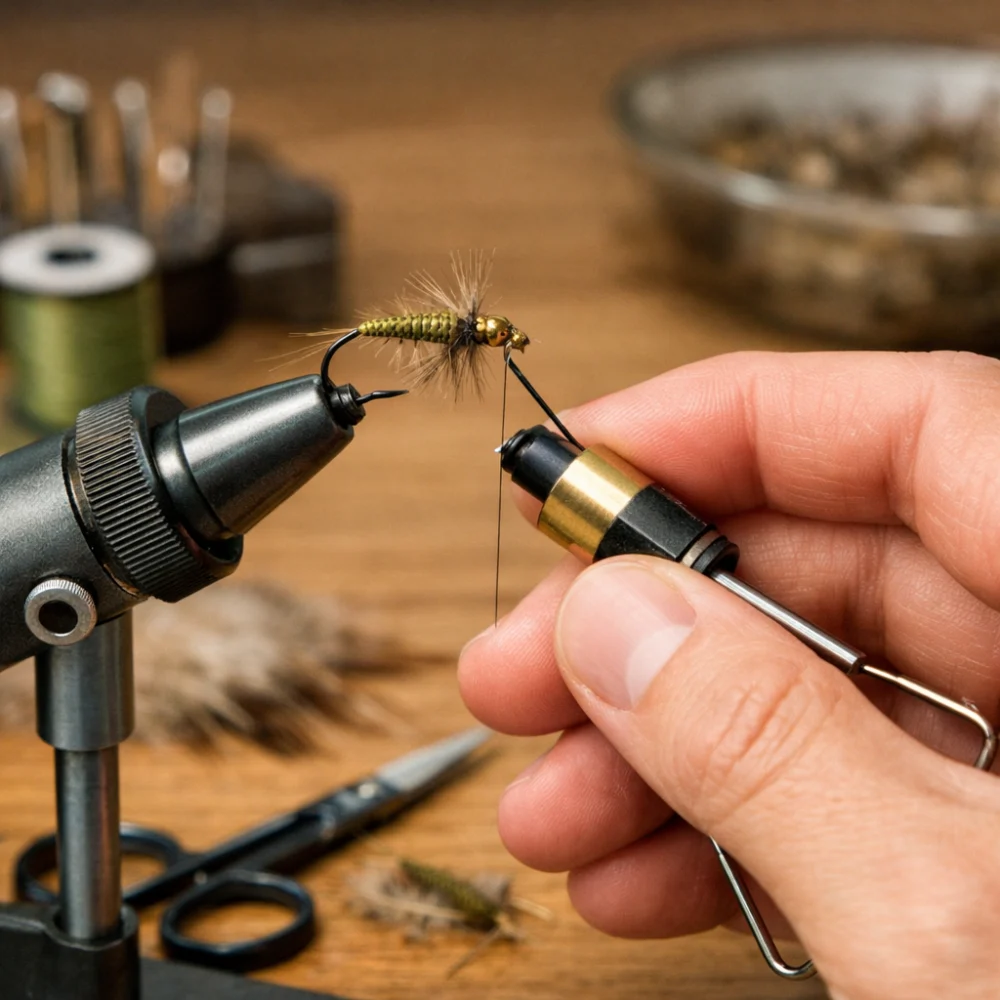
Common types and how they differ
Within fly tying tools, the main difference is usually function rather than style. Some tools are everyday essentials, while others are more specialised and may only matter if you tie certain patterns regularly.
- Cutting tools help trim materials cleanly and are useful for tidy, efficient tying.
- Holding and tension tools support control during wrapping and finishing.
- Measuring or positioning tools help with consistency when you want flies to look and behave more uniformly.
- Finishing tools support the final stages of a fly and can reduce frustration on small details.
The right mix depends on how you tie. A casual tyer may only need a few essentials, while someone building a dedicated bench may prefer to separate tasks across several purpose-built tools.
Which tools suit different buyers?
| Buyer need | What to prioritise | Why it helps | Possible drawback |
|---|---|---|---|
| Beginner | Simple, easy-to-use essentials | Helps keep the first setup manageable and less confusing | May offer less specialisation later |
| Occasional tyer | Reliable basics rather than a large bundle | Focuses spend on the tools that are most likely to be used | May need to add more tools later |
| Regular tyer | Comfort, precision and durability | Supports longer sessions and more consistent results | Higher-focus tools may cost more or be more specialised |
| Gift buyer | A practical mix of common essentials | Reduces the chance of giving something too niche | Without knowing the recipient’s setup, some items may duplicate existing tools |
Common mistakes to avoid
- Buying a bundle without checking the contents. A set can look convenient, but it is still worth confirming that the included tools are useful for the flies you tie.
- Choosing on appearance alone. A neat finish is welcome, but fit, function and comfort matter more than looks.
- Ignoring hand comfort. If you tie often, a tool that is awkward to hold can become tiring over time.
- Assuming one tool does everything. Fly tying is a detailed craft, and different jobs often need different shapes or functions.
Suitability and practical caveats
Fly tying tools are generally straightforward buying decisions, but it still helps to check what each item is intended to do. If you are comparing similar-looking tools, look for the actual job they are designed for rather than assuming they are interchangeable. For younger or less experienced users, simpler tools may be easier to manage than highly specialised items.
Care, storage and long-term use
Good storage and basic care can make a big difference to how long tying tools stay pleasant to use. Keep cutting edges protected, avoid unnecessary knocks and store small items where they will not be bent, dulled or lost. If a tool will be used frequently, it is sensible to think about how easy it is to clean and whether replacement parts or consumables are relevant to that design.
How to compare options efficiently
- Decide which fly tying tasks you do most often.
- Choose the tool type that matches those tasks first.
- Compare comfort, precision and build quality rather than chasing the biggest bundle.
- Check whether the item is better for occasional use or regular bench work.
- Read the individual product page carefully before buying.
Summary buyer decision checklist
- Does the tool suit the flies you actually tie?
- Is the handle, shape or size likely to feel comfortable in use?
- Does it offer the precision you need for your level of tying?
- Is a set or an individual tool the better fit for your bench?
- Have you checked what is included before comparing value?
- Does the product page give enough detail for your needs?
Frequently asked questions
Do I need a full set of fly tying tools to get started?
Not always. Many beginners do better by starting with a few essentials and adding more tools once they know what they actually use. That approach can be simpler and less wasteful than buying a large bundle straight away.
Are more specialised tools always better?
Only if you will use the specialised function often enough to justify it. For occasional tying, simpler tools can be easier to live with and easier to choose. More specialised items usually make sense when you have a clearer idea of your preferred patterns and workflow.
What matters more: comfort or precision?
Both matter, but the balance depends on how you tie. If you spend a lot of time at the bench, comfort becomes more important because it affects how long you can work without strain. If you focus on very detailed tying, precision may take priority.
Should I buy tools individually or as a bundle?
If you already know what you need, individual tools can be more efficient. If you are setting up from scratch, a bundle may cover the basics more quickly. The key is to check whether the contents suit your tying rather than assuming the whole set will be useful.
How do I know if a tool will suit my tying style?
Look at what the tool is designed to do and compare that with the flies and techniques you use most. If a product page is clear about its intended function, that is usually the best clue. Specifications vary by model, so always check the individual product page before buying.
What is the main mistake people make when choosing fly tying tools?
One common mistake is buying too broadly before knowing which tasks matter most. Another is overlooking comfort and handle design, even though those details affect everyday use. A simple, well-matched tool is often more useful than a more complicated one that does not suit your bench.