


Frame bags are a useful way to carry essentials on a bikepacking or long-distance cycling setup without adding much bulk to the bars or rear of the bike. They sit inside the main triangle of the frame, so they can help keep weight central and easy to manage.
The right choice depends less on fashion and more on fit, access and how much of the frame you want to use. A bag that works well on one bike may be awkward on another, especially where bottle cages, suspension design or frame shape reduce space.
This guide helps you compare the features that matter most before you choose a frame bag. It is aimed at riders who want practical storage for tools, food, spares or soft items, rather than a general luggage solution.
Compare Frame Bags


As an Amazon Associate we earn from qualifying purchases.
What should you look for in a frame bag?
The best starting point is fit: the bag needs to suit your frame shape and leave enough clearance for the parts you still want to use. After that, think about access, stability, weather protection and how the bag will affect bottle storage or cable routing. A simpler bag may be easier to live with, while a more segmented design can help organise kit more neatly.
Specifications vary by model, so always check the individual product page before buying.
| Feature | What it means | Why it matters | What to check |
|---|---|---|---|
| Frame fit | How closely the bag matches the shape and size of your frame triangle | Fit affects stability, clearance and how much usable space you keep | Frame dimensions, bag shape and any notes about compatibility |
| Access style | How you get to the contents, such as a main zip, split compartments or side access | Easy access can matter when you want tools or snacks without unpacking everything | Zip position, opening size and whether the bag suits your riding setup |
| Stability | How securely the bag sits when the bike moves over rough ground | A stable bag is less distracting and usually easier to live with on longer rides | Attachment method, mounting points and how firmly the bag is designed to hold |
| Storage layout | How the space is divided inside the bag | Organisation can make small items easier to find and protect softer kit | Number of compartments, pockets and internal separation, if provided |
| Weather protection | How well the bag helps keep contents dry or shielded from spray | Important for electronics, clothing or items you do not want exposed to the weather | Material description, closures and any manufacturer notes about water resistance |
| Compatibility with bike accessories | Whether the bag leaves room for bottles, cables or frame hardware | Some frames have less spare space than others, so conflicts are common | Bottle cage clearance, hose or cable routing and any restrictions listed |
Key decisions that make the biggest difference
Fit and frame shape
Frame bags are only useful if they suit the space available in your frame. A full-length bag can maximise storage, but it may also reduce room for bottles or interfere with the front triangle more than a smaller design. Riders with compact frames, sloping top tubes or full-suspension bikes may need to be especially careful about shape and clearance.
How you want to access your kit
Think about what you will keep in the bag. If it is mainly for spares or seldom-used items, a more enclosed layout may be fine. If you want regular access to snacks, chargers or a multitool, a layout that opens easily can matter more than maximum capacity.
Mounting and stability
Attachment method affects both confidence and convenience. Some riders prefer a secure mount that keeps the bag steady over rough ground, while others value quick fitting and removal. The right balance depends on whether the bag will stay on the bike most of the time or be swapped between rides.
Organisation and internal layout
Simple internal space is often enough for soft items and bulk storage. However, pockets or divisions can help stop small items from disappearing into one large compartment. The trade-off is that extra structure can reduce flexibility if you carry different kit from ride to ride.
Common frame bag types and variants
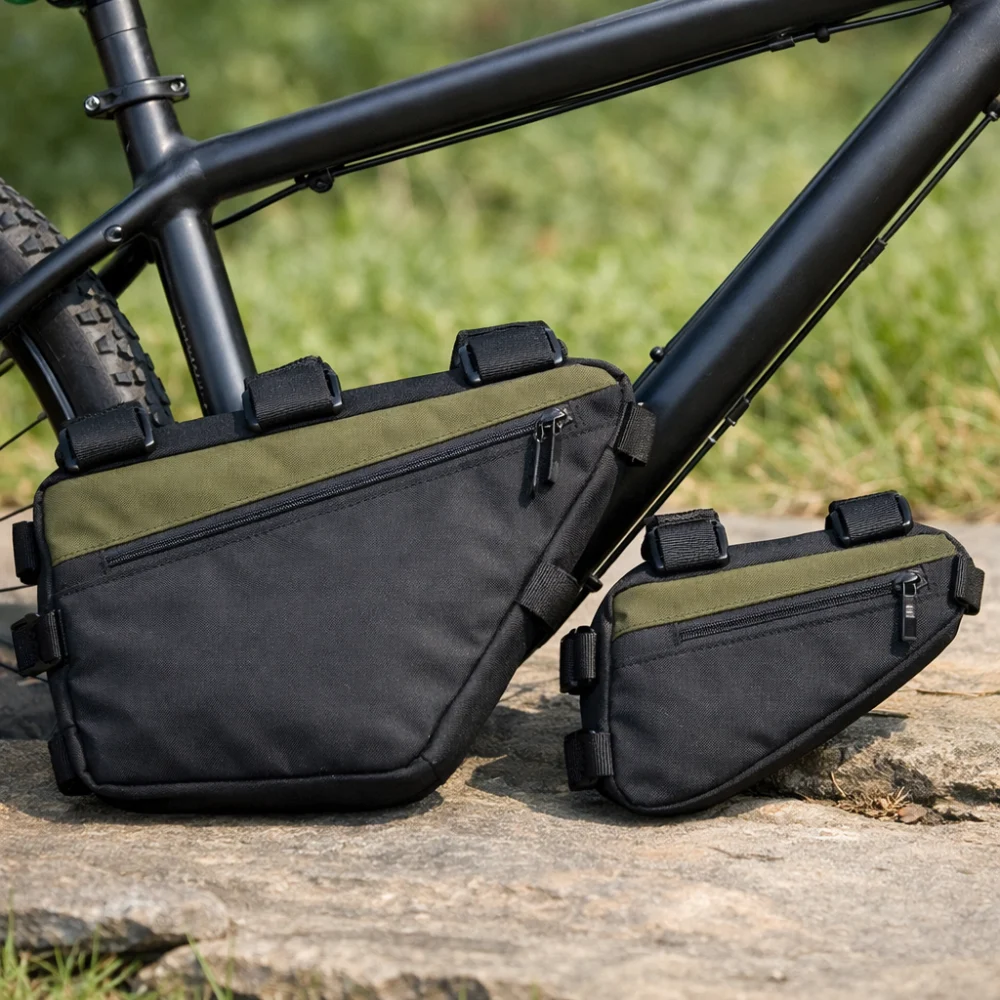
Not every frame bag serves the same role. Some are designed to use as much of the main triangle as possible, while others leave more room for bottles or easier access to the rest of the bike. A few focus on compact storage for essentials only, which can suit shorter rides or riders who want to keep handling changes to a minimum.
In simple terms, larger bags favour capacity, while smaller bags favour flexibility. The right type depends on how much you carry and how much of the frame you are willing to dedicate to luggage.
Which frame bag suits which rider?
| Buyer need | Likely priority | What to lean towards |
|---|---|---|
| Overnight or multi-day bikepacking | Practical storage without loading the rear of the bike too heavily | A bag with a shape that uses frame space efficiently and stays stable when loaded |
| Day rides with tools and food only | Quick access and minimal fuss | A smaller bag with straightforward access and a simple layout |
| Riders who use bottle cages heavily | Preserving space for hydration | A design that leaves room around bottle positions or only uses part of the triangle |
| Riders with compact frames | Clearance and bike fit | A more carefully shaped bag and close attention to dimensions |
| Anyone carrying delicate items | Organisation and protection from movement | A bag with sensible internal structure and secure fastening |
Common mistakes to avoid
- Choosing capacity before checking fit. A bag can look ideal on paper and still clash with your frame shape or bottle placement.
- Ignoring access needs. A storage-heavy bag is less helpful if you cannot reach the things you use most often.
- Overlooking attachment style. A secure fit matters on rough terrain, but it should still be practical to fit and remove.
- Assuming all frames offer the same space. Bike geometry, cable routing and accessory mounts can make a big difference.
Safety and suitability considerations
Frame bags are a packing choice, not a universal fit. Make sure the bag will not interfere with steering, pedalling, bottle access or moving parts, and avoid forcing a bag into a space it was not designed to occupy. If your bike has unusual tubing, suspension or routing, check the product information carefully before relying on a purchase.
Care, cleaning and storage
General care is usually straightforward: remove dirt after muddy rides, let the bag dry before storing it and keep zips or fastenings free from grit. If the bag uses straps or hook-and-loop attachment points, occasional checking helps maintain a secure fit. How much attention it needs will depend on the materials and construction of the individual model.
How to compare frame bags efficiently
- Start with your bike’s available frame space and any bottle cage or cable constraints.
- Decide whether you need maximum capacity or easier access to smaller items.
- Compare attachment style, stability and how the bag opens.
- Check whether the layout suits the kit you usually carry.
- Read the individual product page for any fit notes or limitations before deciding.
Frame bag buyer checklist
- Does the bag suit your frame shape and available space?
- Will it leave enough room for bottles, cables and other accessories?
- Is the access style suitable for what you want to carry?
- Does the mounting method seem secure for your riding conditions?
- Is the internal layout practical for your kit?
- Have you checked the individual product page for any model-specific limitations?
Frequently asked questions
What is a frame bag used for?
A frame bag is used to carry items inside the main triangle of a bicycle frame. It is often chosen for tools, snacks, layers or other items that benefit from being kept central and easy to manage. It is especially useful when riders want to free up handlebar, saddle or rear storage.
Will a frame bag fit any bike?
No single frame bag suits every bike. Frame shape, size, suspension design and accessory placement all affect fit. Check the individual product page carefully and compare the bag’s dimensions with your bike’s available space.
Are larger frame bags always better?
Not necessarily. Larger bags can carry more, but they may also reduce room for water bottles or make access less convenient. The better choice is the one that matches the amount of kit you really need to carry.
Do frame bags affect how a bike handles?
They can change weight distribution, especially when heavily loaded, but the effect depends on how much you carry and where the weight sits. Keeping heavier items central often helps compared with putting all the load at one end of the bike. For most buyers, fit and practicality matter more than small handling changes.
Should I choose a simple open bag or one with pockets?
A simple layout suits bulk storage and flexible packing. Pockets or divisions can help with small items, but they may reduce how easily you can fit awkward shapes inside. Choose based on whether you value organisation or maximum flexibility more.
How important is weather protection?
It matters more if you carry items that should stay dry or clean, such as electronics, clothing or spares. Some riders are happy to use dry bags or internal pouches inside the frame bag, while others prefer a bag with better built-in protection. Check the product information rather than assuming all bags offer the same level of resistance.
What should I check before buying for a bikepacking trip?
Check frame fit, bottle clearance, access to the contents and whether the bag suits the items you plan to carry. It is also worth thinking about how easy it will be to fit and remove the bag if you use the bike for different kinds of rides. Specifications vary by model, so always check the individual product page before buying.
Strap-mounted or bolt-on: which fitting suits your frame?
Frame bags may attach with straps or be designed to fasten to threaded bosses on the frame. Strap-mounted designs can suit a wider range of frames, but the straps need suitable routes around the tubes and must not conflict with cables, bottle cages or other fittings. Bolt-on designs depend on the bag’s fixing points aligning with compatible frame bosses, so check both before choosing.
Also consider where the bag will contact the frame and whether the maker recommends protection at those points. On an e-bike, check that the bag will not obstruct access to the battery, charging connection or any other component you need to reach.
More Frame Bags
See all 87 Frame Bags →


As an Amazon Associate we earn from qualifying purchases.