


Golf bag rain covers are a simple accessory, but the details still matter. The right choice should protect clubs and bag contents from wet weather without making it awkward to reach what you need during a round.
Because golf bags vary in shape and layout, the main buying decision is usually about fit, access and ease of use rather than any single headline feature. A cover that is easy to secure and simple to remove is often more practical than one that sounds more protective on paper.
This guide explains the main options, what to check before buying and how to compare products in a sensible way.
Compare Golf Bag Rain Covers


As an Amazon Associate we earn from qualifying purchases.
What should you look for first?
Start with fit, then think about access and convenience. A cover should suit the style of bag you use, stay in place when you are moving, and still let you get to clubs and pockets without unnecessary fuss. If you expect regular rain, small usability details matter almost as much as coverage. Specifications vary by model, so always check the individual product page before buying.
| Feature | What It Means | Why It Matters | What To Check |
|---|---|---|---|
| Bag compatibility | Whether the cover is shaped for the bag style you use | A poor fit can leave parts exposed or make the cover awkward to use | Check whether it is intended for your bag type and how it attaches |
| Access to clubs | How easily you can reach clubs once the cover is on | If access is awkward, the cover may be left off when you need it most | Look for opening style and whether it suits how you play |
| Weather protection | The amount of coverage offered against rain and spray | More coverage can improve protection, but may add bulk or reduce convenience | Review the coverage area and any design details that help keep water out |
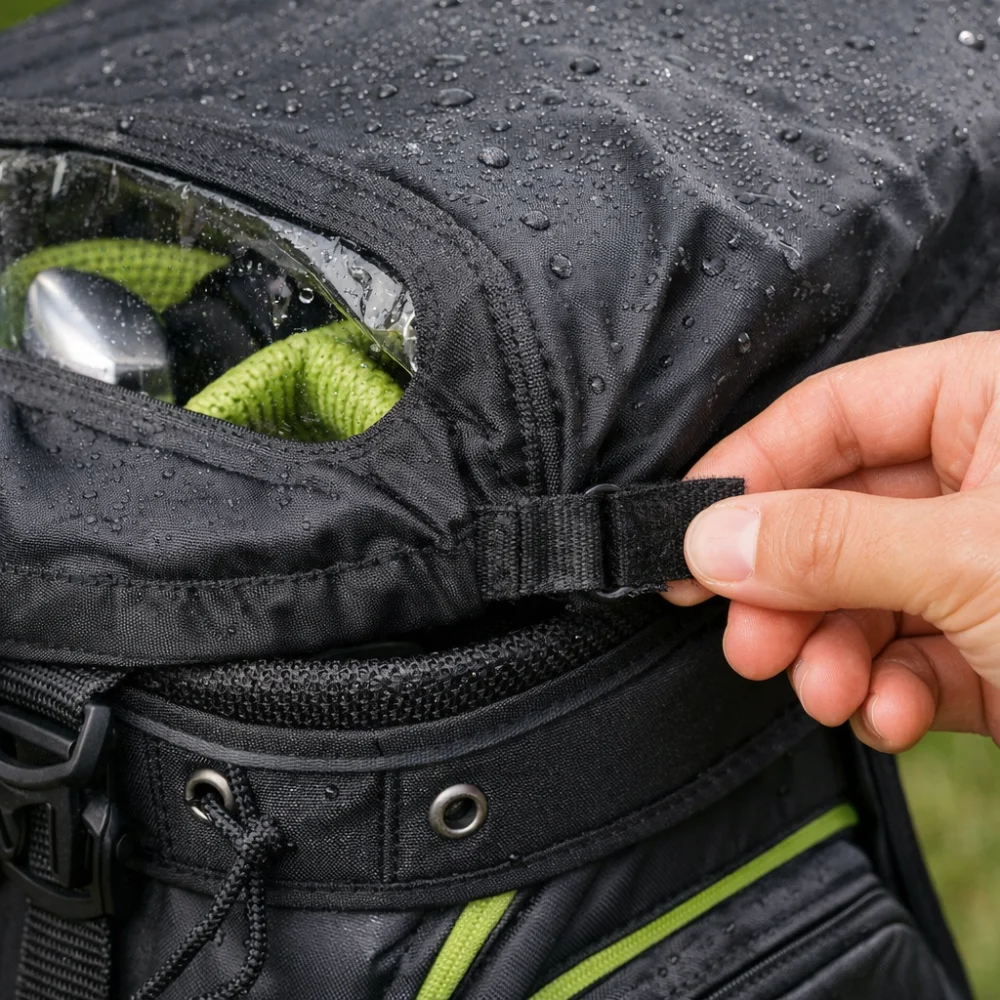
| Attachment method | How the cover stays secured to the bag | Secure attachment helps in windy or wet conditions | Check straps, fastenings or elastic edges where described |
| Packability | How easy it is to store when not in use | A compact cover is easier to carry and keep ready in the bag | Look for foldability and whether it can be stowed quickly |
| Ease of use | How straightforward it is to fit and remove | A cover that is too fiddly is less likely to be used consistently | Consider how many steps are needed to put it on and take it off |
Key decision criteria
Fit and bag shape
Fit is the first thing to get right because golf bags are not all arranged the same way. Some covers are designed with a more general shape, while others may suit a more specific bag format. The trade-off is simple: a closer fit may be neater and more secure, while a looser fit may be more forgiving but less tidy.
How you access the clubs
Think about how often you need quick access on the course. If the cover makes it hard to reach the top of the bag or remove clubs, it may become a nuisance in wet weather. Look for a design that matches how you actually play, especially if you move clubs around often.
Stability in poor weather
Rain protection is only useful if the cover stays in place. Fastening style, elasticated edges and the overall shape all affect how well it remains secure. A cover that is easy to fit but prone to shifting may be less useful than one that takes a little longer to attach.
Storage and everyday convenience
A rain cover that folds away neatly is easier to keep with you, which matters if the weather changes during a round. Bulky designs can still be useful, but only if you are happy carrying the extra size. For many buyers, the convenience of storing the cover matters just as much as the level of coverage.
Types and variants
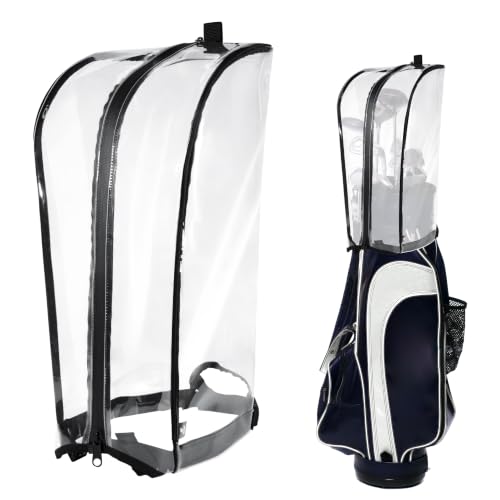
Within this category, shoppers are usually choosing between covers that are more general in shape and those that are intended for a more specific bag format. The useful distinction is not about fashion; it is about how the cover sits on the bag and how convenient it feels in use.
Some covers may prioritise fuller enclosure, while others may be easier to put on and remove quickly. That difference is often the real trade-off: more wrap-around coverage can improve protection, but simpler designs are usually quicker to live with during a round.
Which cover suits which buyer?
| Buyer need | What tends to matter most | Why |
|---|---|---|
| Regular wet-weather golfer | Reliable fit and secure attachment | Frequent rain makes stability and coverage more important |
| Occasional fair-weather golfer | Easy storage and simple use | The cover may be used only when needed, so convenience matters |
| Buyer replacing a lost cover | Bag compatibility | The new cover needs to match the bag style and size |
| Golfer who changes bags often | Flexible fit and easy removal | A more adaptable cover can be simpler to move between setups |
Common mistakes to avoid
- Choosing on coverage alone and ignoring how easy it is to use.
- Assuming one cover suits every bag style without checking the product details.
- Overlooking how you will access clubs once the cover is fitted.
- Buying a bulky option when compact storage matters to you.
The main correction is to think about the whole round, not just wet weather. A cover that performs well in theory but is awkward in practice may not be the one you reach for when conditions change.
Suitability and care
Check that the cover is suitable for your bag and the way you play. If you often travel with the bag, carry it in and out of the car, or store it damp after use, those habits can influence which design feels most practical. After wet rounds, allow it to dry fully before storing it away for long periods.
General care is usually straightforward, but materials and finishing details vary. Avoid assuming that all covers will clean or pack down in exactly the same way.
How to compare options efficiently
- Confirm the bag style you need to cover.
- Decide whether you value fuller coverage or easier access more highly.
- Compare attachment, fit and how securely the cover is likely to stay in place.
- Check how easily it folds away or stores in your setup.
- Read the individual product information carefully before deciding.
Buyer checklist
- Does it suit your bag style?
- Will you still be able to reach your clubs comfortably?
- Does the attachment method look secure enough for your use?
- Is it easy to put on, remove and store?
- Does the level of coverage suit the weather you expect?
- Have you checked the individual product page for the exact details?
Frequently asked questions
Do all golf bag rain covers fit every bag?
No, not necessarily. Fit can vary with bag shape, opening layout and how the cover attaches. It is worth checking the product details carefully rather than assuming a universal fit.
Is more coverage always better?
Not always. Greater coverage can be useful in wetter conditions, but it may also make the cover bulkier or slightly less convenient to use. The better choice is usually the one that balances protection with access.
Should I prioritise quick access or a tighter fit?
That depends on how you play. If you need to reach clubs often, easier access may matter more. If you usually play in persistent rain, a more secure fit may be the better compromise.
Are compact covers less protective?
Not necessarily, but compact designs can be more limited in how much of the bag they enclose. The key is to judge whether the convenience trade-off still works for your conditions and habits.
What is the most important thing to check before buying?
Start with compatibility and fit, then look at access and attachment. Those two factors usually decide whether a cover is practical enough to use regularly.
More Golf Bag Rain Covers
See all 84 Golf Bag Rain Covers →



As an Amazon Associate we earn from qualifying purchases.