

Golf rangefinders can help you judge distance more confidently, but the right choice depends on how you play and what information you actually want on the course. Some buyers mainly want a simple distance readout, while others care more about ease of use, speed, display clarity or extra features.
This guide keeps the focus on the buying decision rather than on technical jargon. It is designed to help you compare the main options and avoid paying for features you are unlikely to use.
What should you look for in a golf rangefinder?
The best starting point is to decide whether you want straightforward distance measurement or a model with extra features that may suit your style of play. After that, compare how easy each option is to use, how clear the display looks in different conditions and whether the size and handling feel practical for your rounds. Specifications vary by model, so always check the individual product page before buying.
| Feature | What It Means | Why It Matters | What To Check |
|---|---|---|---|
| Distance display | How the rangefinder presents the distance to the target | Clear distance information helps you choose a club more confidently | Look for an interface that is easy to read quickly |
| Target acquisition | How readily the device locks onto the intended point | A rangefinder that is awkward to aim can slow play and add uncertainty | Check whether the product description suggests simple, intuitive use |
| Display clarity | How easy the numbers and aiming view are to see | Good visibility can matter in bright light or changing conditions | Consider screen layout, contrast and whether the display looks easy to interpret |
| Size and handling | The feel of the device in the hand and how easy it is to carry | A comfortable shape is more likely to be used regularly | Look for a design that suits your pocket, bag space and grip preference |
| Extra features | Additional functions beyond basic distance measurement | Useful extras can help some golfers, but they may add complexity | Only pay attention to features you genuinely expect to use |
Key decision criteria explained
Ease of use
For many buyers, the most important question is whether the rangefinder gives a quick, understandable reading without fuss. A simple model may suit golfers who want to make a fast decision, while a more feature-rich option may suit those who like more information at a glance. The trade-off is usually between simplicity and extra functions.
Display and readability
Golf is played outdoors in changing light, so readability matters more than it might in a typical handheld device. If the display is hard to interpret quickly, the rangefinder may be less useful in real play. Look for wording that suggests a clear view and a layout you can read at a glance.
Handling and portability
You may carry a rangefinder in a pocket, pouch or golf bag between shots, so weight and shape affect everyday convenience. Smaller devices can feel easier to carry, while larger ones may feel steadier in the hand. Think about which compromise fits your routine best.
Feature set
Some buyers only need the basics, while others may want extra functions. More features can be helpful if you will use them, but they can also make the device more complex to learn. If you are unsure, start with the functions you know you need and treat everything else as optional.
Types and variants to consider
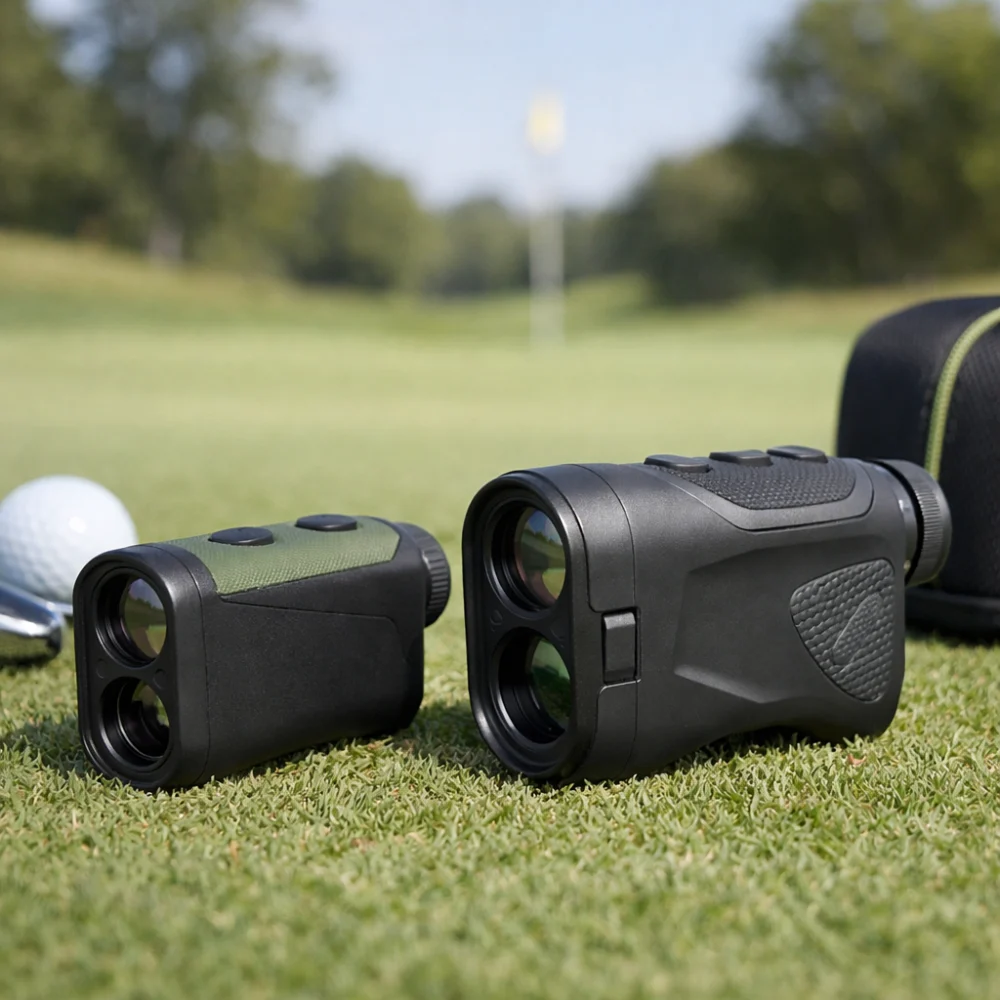
Within golf rangefinders, the main difference for buyers is often not the category name itself but the balance between simplicity and extra functions. A straightforward model may appeal to someone who wants distance information with minimal distraction. A more feature-led option may suit a golfer who likes more detail, but it is worth checking whether those additions are genuinely relevant to your game.
In practice, the useful distinction is often between compact, easy-to-carry options and more feature-heavy devices. Neither is automatically better; the right choice depends on how much information you want and how much convenience matters to you.
Which rangefinder suits different buyers?
| Buyer need | Useful characteristics | Why it helps |
|---|---|---|
| Simple distance checking | Clear display, straightforward controls | Reduces distraction and keeps the decision quick |
| Frequent use during rounds | Comfortable handling, easy aiming | Makes the device more practical to use repeatedly |
| Preference for extra information | Additional features and a readable interface | May suit golfers who want more detail than basic distance alone |
| Compact carry priority | Smaller, easy-to-store design | Helps if you want the device to fit neatly in a pocket or bag |
Common mistakes and misunderstandings
- Assuming more features are always better. Extra functions are only useful if you will actually use them regularly.
- Overlooking readability. A rangefinder that is technically capable but awkward to read may be frustrating on the course.
- Ignoring handling. If a device feels awkward to carry or aim, you may use it less often.
- Choosing without checking the product page carefully. Details can vary, so confirm the exact features before deciding.
Suitability and buying caveats
A golf rangefinder should be chosen with your normal playing conditions in mind. Think about how often you play, whether you want a very simple device or something more feature-led, and whether the design seems easy to use in real conditions. Specifications vary by model, so always check the individual product page before buying.
Care, storage and lifespan considerations
General care is usually about keeping the device clean, dry and safely stored when not in use. It is also sensible to think about how it will be carried in your golf bag and whether it needs any attention between rounds. If the product uses batteries or another power source, check what that means for ongoing upkeep before you buy.
How to compare options efficiently
- Decide whether you want basic distance information or a more feature-led device.
- Compare readability, handling and ease of use first.
- Look at any extra functions and ignore those you are unlikely to use.
- Check the individual product page for the exact model details.
- Choose the option that fits your playing habits, not just the one with the longest feature list.
Summary buyer decision checklist
- Is the display easy for you to read quickly?
- Does the handling suit how you carry golf accessories?
- Are the extra features genuinely useful to you?
- Does the design seem simple enough for regular use?
- Have you checked the exact product page for the model details?
Frequently asked questions
Do I need a golf rangefinder if I already use course markers?
Not necessarily, but a rangefinder can give you a more direct distance reading if that suits your approach to the game. Some golfers are happy with course information alone, while others prefer the extra confidence a device can provide. The choice depends on how much precision and convenience you want.
What matters more: features or simplicity?
For many buyers, simplicity is more valuable than a long list of extras. A clear, easy-to-use rangefinder is often the better choice if you want quick decisions on the course. Extra features only matter if they fit the way you actually play.
How do I know if a rangefinder will feel easy to use?
Look for product information that points to a clear display, straightforward controls and practical handling. If the device seems complicated on paper, it may take longer to get used to. Ease of use is often as important as the feature list.
Should I choose the smallest option available?
Not always. A compact design can be convenient, but it still needs to feel comfortable to hold and easy to read. The best choice is the smallest model that still feels practical for your use.
What is the main trade-off when buying one?
The main trade-off is usually between basic simplicity and added features. Simpler devices tend to be easier to learn, while more feature-rich ones may offer more information but can be less straightforward. Think about which side of that balance suits you better.
What should I double-check before buying?
Check the exact feature list, how easy the display seems to read and whether the handling looks practical. It is also worth confirming any power or upkeep needs if those matter to you. That final check helps avoid choosing a model that sounds right in general but not in detail.