

Horse tack storage helps keep bridles, saddles, boots and other riding equipment organised, protected and easier to find when you need them. The right choice depends on what you want to store, where it will live and how often you use it.
For some buyers, the priority is tidy storage in a tack room or stable area. For others, it is portability, weather resistance or simply a layout that makes daily kit handling less awkward. This guide focuses on the practical differences that matter before you compare individual products.
If you are choosing tack storage for a busy yard, it is worth thinking beyond “where can I hang this?”. The more useful question is how the storage fits your gear, your routine and the space you actually have.
What should you look for in horse tack storage?
The best starting point is to match the storage to the items you need to keep together and how often you reach for them. A simple rack may suit a few items in a compact tack room, while a larger organiser may be better if you want everything in one place. The main trade-off is usually between capacity, accessibility and how much floor or wall space the storage takes up.
Specifications vary by model, so always check the individual product page before buying.
| Feature | What it means | Why it matters | What to check |
|---|---|---|---|
| Storage style | How the unit holds tack, such as hanging, shelving or a mixed layout | Determines whether it suits bridles, saddles, grooming kit or mixed equipment | Whether the layout matches the items you use most often |
| Mounting or placement | Where and how the storage sits in the stable or tack room | Affects convenience, stability and use of available space | Wall space, floor space and whether fixing is needed |
| Capacity | How much equipment the storage is intended to hold | Helps avoid overcrowding and keeps kit easier to access | Whether the unit fits your current set-up with a little room to grow |
| Material and finish | The general construction and surface treatment | Influences cleaning, durability and suitability for everyday yard conditions | How easy it is to wipe down and whether the finish suits the environment |
| Portability | Whether the storage is easy to move or reposition | Useful if you change tack areas, travel between locations or rearrange often | Weight, handles, wheels or any other moving features listed on the product page |
| Protection | How well the storage helps keep tack off the floor and away from clutter | Can reduce mess and help equipment stay organised between uses | Design details that keep items separated, raised or covered where relevant |
Key decision criteria
What are you storing?
Horse tack storage should begin with the shape and quantity of the items you own. Saddles, bridles, headcollars, boots and grooming kit all create different storage needs, so a one-size approach is not always the most practical. If you mainly need somewhere for a few frequently used items, a simple solution may be enough; if you have a fuller set of kit, look for a layout that prevents tangling and overcrowding.
Where will it be used?
Think about whether the storage will stay in one place or needs to move with your routine. A fixed unit can be a good fit for a dedicated tack room, while a more portable option may suit shared spaces or changing yard layouts. The trade-off is usually between permanence and flexibility.
How much space do you have?
Measure the area before you decide. Wall-mounted storage can save floor space, but it needs a suitable surface and sensible placement. Floor-standing storage is often simpler to position, but it may take up more room than expected once you add space to access it comfortably.
How easy will it be to keep tidy?
Storage that is awkward to use often ends up being ignored. Choose a design that makes it easy to put tack back in the right place after each ride, because that is what helps keep a yard organised over time. A cleaner layout can also make it easier to spot damaged or missing equipment.
Common types and variants
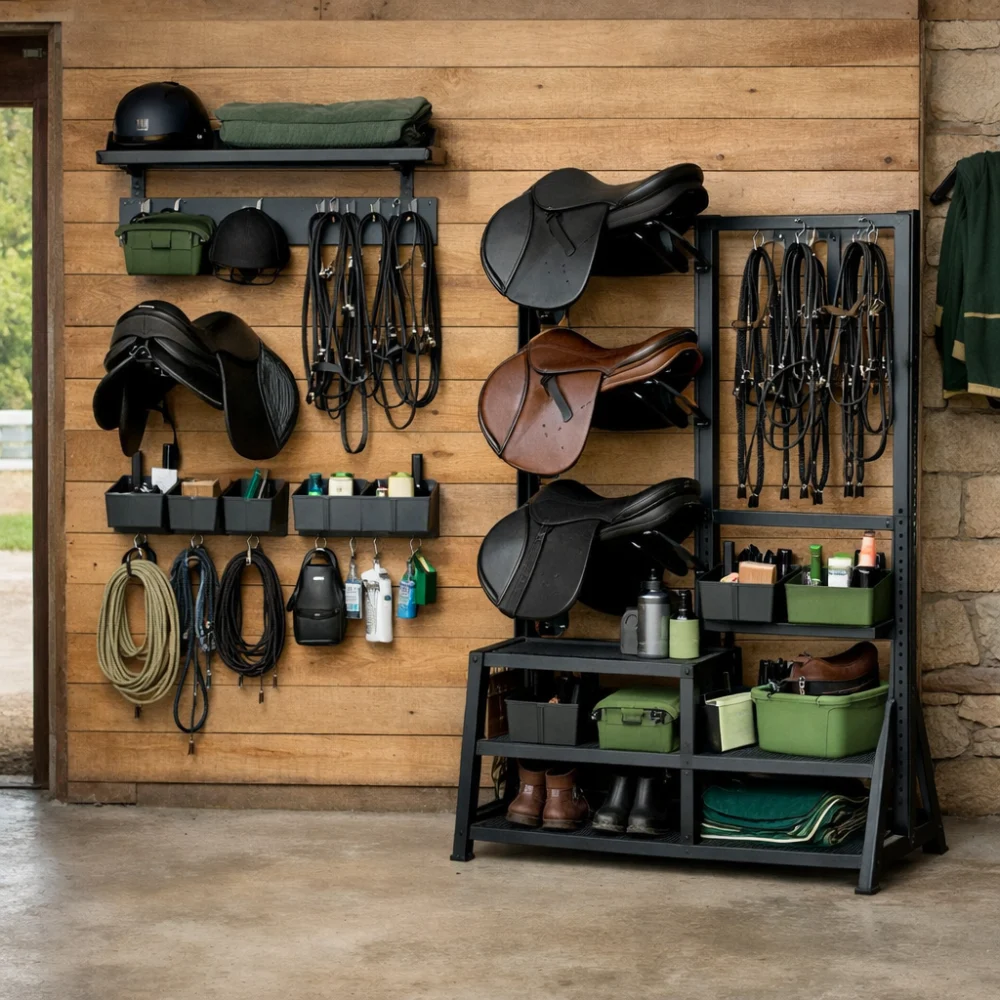
Horse tack storage is usually chosen by form rather than by a long list of technical variants. The main differences are whether the product is designed to hang, sit on the floor, hold mixed equipment or organise specific items such as bridles or saddles. A simpler design may suit a small set-up, while a more structured organiser may be better for riders with more kit or shared storage areas.
Compact solutions can be useful where space is tight, but they may not suit larger amounts of equipment. Larger organisers can make a yard feel more orderly, though they need more room and may be less convenient in a very small tack area.
Which option suits your needs?
| Buyer need | What to prioritise | Why it matters |
|---|---|---|
| Small tack room or limited space | Compact footprint and efficient use of wall or corner space | Helps keep the area usable without overcrowding it |
| Frequent daily use | Easy access and a layout that suits the items used most often | Saves time and makes it more likely the kit is put away properly |
| Mixed equipment | Storage that separates different items clearly | Reduces clutter and makes individual pieces easier to find |
| Shared yard or changing routine | Flexibility and ease of repositioning | Makes it simpler to adapt as the space or users change |
| Neat long-term organisation | A design that encourages regular, tidy storage | Helps maintain order and protect equipment from being left on the floor |
Common mistakes and misunderstandings
- Choosing only on appearance: a neat-looking unit is less useful if it does not suit the size or shape of your tack.
- Overestimating space: items often need more room than expected once you allow for easy access and safe handling.
- Ignoring where it will live: a design that works in one stable area may be awkward in another.
- Buying for present needs only: if your kit is likely to grow, a little spare capacity can be helpful.
Safety and suitability caveats
For horse tack storage, the main buying concern is practical suitability rather than complex technical performance. Check that the item fits the space you plan to use and that it suits the weight and shape of the equipment you want to store. If a product needs fixing to a wall or another surface, make sure the installation method is appropriate for that setting.
Do not assume that one storage design suits every tack room or every type of equipment. A unit that is too small, awkwardly placed or hard to access can become inconvenient quickly, even if it looks tidy at first.
Maintenance, storage and lifespan considerations
Good tack storage is usually easier to keep in service when it is simple to clean and when the surrounding area stays dry and orderly. Dirt, damp and clutter can make any storage setup less pleasant to use, so think about where the unit will sit and how much routine wiping or tidying it may need. If the design has moving parts or fixings, it is worth checking whether they are easy to inspect and keep secure over time.
The way you store equipment also affects how well the whole arrangement works. Overloading a storage unit or hanging items in a cramped way can make daily use less convenient, even if the unit itself is sturdy enough for normal use.
How to compare options efficiently
- List the equipment you need to store most often.
- Decide whether a fixed or more portable solution suits your space and routine.
- Compare the storage layout, capacity and footprint first.
- Check how easy it will be to clean, use and keep organised.
- Review the individual product page for any model-specific details before deciding.
Summary buyer decision checklist
- Does the storage suit the tack you actually own?
- Will it fit the space available in your tack room or stable area?
- Is the layout easy to use during your normal routine?
- Does it offer enough capacity without creating clutter?
- Will the material and finish suit the environment where it will be used?
- Have you checked the individual product page for model-specific details?
Frequently asked questions
What is horse tack storage used for?
It is used to keep riding equipment organised, off the floor and easier to access. Depending on the design, it may hold saddles, bridles, boots or other stable kit. The aim is usually tidiness and convenience rather than specialist performance.
Should I choose wall-mounted or floor-standing storage?
Wall-mounted storage can help save space, while floor-standing storage is often easier to place and move. The better choice depends on your available space, the surface you can use and how often you want to change the layout. Think about access as well as footprint.
How do I know what size I need?
Start with the equipment you want to store regularly, then consider whether you need extra room for future items. A snug fit can work for a small set of kit, but overcrowding makes storage harder to use. If you are unsure, check the product page for the stated layout or capacity details.
Is one tack storage type better for mixed equipment?
A more structured organiser can be helpful if you want to separate different items, but the best choice still depends on the space and the amount of kit involved. Mixed equipment can quickly become untidy if the storage is too limited or awkward to access. A simple layout may work better than a complicated one in a small area.
What should I check before buying?
Look at the storage style, footprint, mounting or placement requirements and the way it handles the items you own. It also helps to consider cleaning and whether the unit will fit comfortably into your existing routine. Specifications vary by model, so always check the individual product page before buying.
Does tack storage need much maintenance?
Usually, the main needs are basic cleaning and sensible organisation. Keeping the area dry and avoiding overcrowding will help the storage stay easier to use. If a product has fixings or moving parts, check them periodically as part of normal yard upkeep.