

Ice fishing rods are a specialised part of a fishing setup, and the right choice depends on how you fish, where you fish and what kind of control you want over your lure or bait. Because these rods are usually used in close-range, cold-weather conditions, small differences in feel and length can make a noticeable difference.
This guide focuses on the buying questions that matter most: which rod characteristics affect presentation, how different styles suit different situations and what to check on the individual product page before you decide.
It is designed to help you compare options without assuming that one style suits every angler. Specifications vary by model, so always check the individual product page before buying.
What should you look for in an ice fishing rod?
The most useful starting point is to match the rod to your fishing style, the species you expect to target and the amount of feel you want from the rod. Shorter rods are often chosen for close-quarters use, while different actions and powers influence how much sensitivity or backbone you get. The main trade-off is usually between delicate bite detection and enough control to land and manage the fish you are likely to catch.
| Feature | What It Means | Why It Matters | What To Check |
|---|---|---|---|
| Rod length | The overall length of the rod | Affects handling, control in tight spaces and how comfortably you can fish over a hole or in a shelter | Choose a length that fits your fishing space and the way you manage line and lure movement |
| Power | How much force the rod is designed to handle | Helps determine whether the rod suits lighter presentations or needs more pulling control | Check whether the power matches the species and lure weight range you intend to use |
| Action | Where the rod bends most under load | Affects bite detection, lure control and how directly pressure is transmitted | Look for the balance between sensitivity and a more forgiving bend |
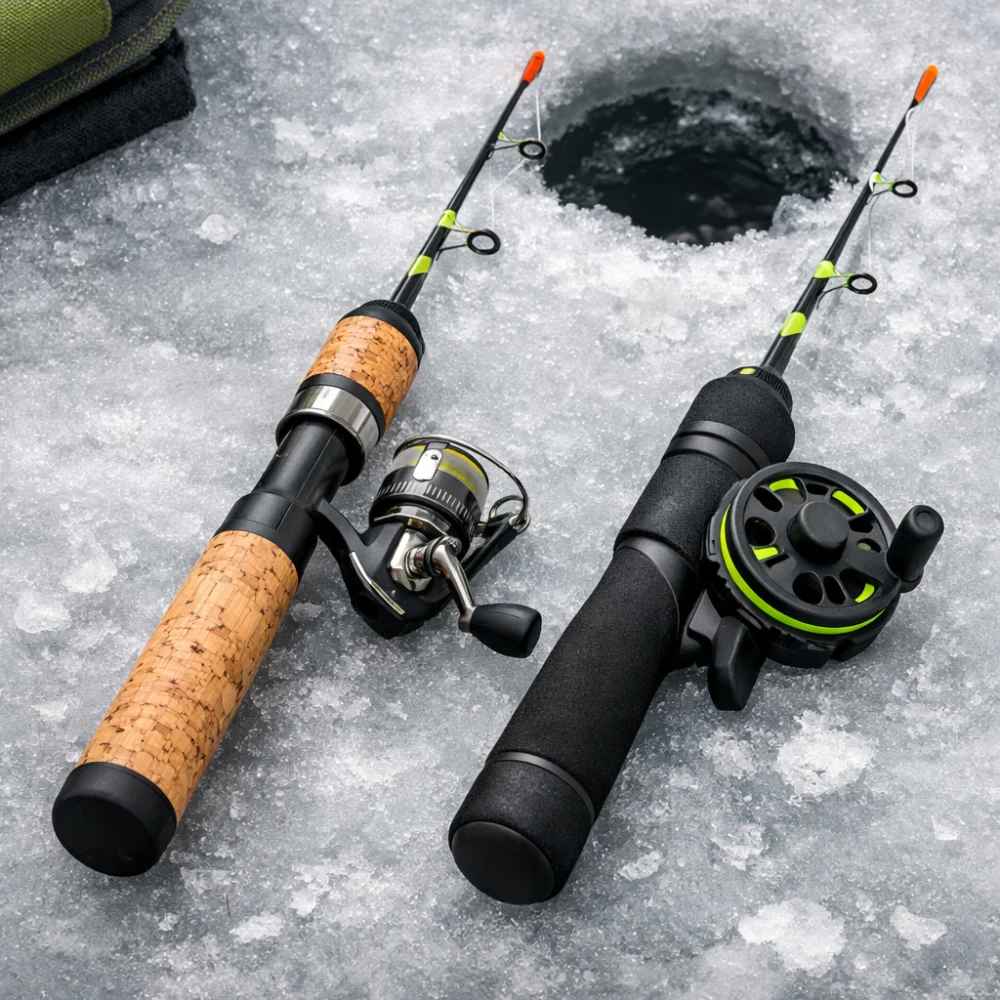
| Handle and grip | The part you hold while fishing | Influences comfort, control and how secure the rod feels in cold conditions | Check grip shape, length and whether it feels practical with gloves or cold hands |
| Guides and finish | The rings and surface details that help manage the line | Can affect smooth line movement and overall durability in regular use | Inspect how the rod is built and whether the finish looks suited to cold-weather fishing |
Key decision criteria
Length and handling
Length is one of the clearest distinctions between rods in this category. A more compact rod can feel easier to manage in a shelter or when fishing very close to the hole, while a slightly longer rod may give more leverage and control. The important point is not that one is automatically better, but that your fishing space and technique should guide the choice.
Power and presentation
Power helps you judge whether a rod is suited to lighter, more delicate presentations or to situations where more control is useful. If you are trying to feel subtle movement, a lighter setup may be more suitable; if you want more authority over the fish, a stronger rod can be the better fit. The trade-off is usually between finesse and control.
Action and bite detection
Action affects how the rod responds when pressure is applied. Faster actions often feel more direct, which can help with bite detection and immediate response, while more moderate actions may feel more forgiving. For many buyers, this is where personal preference matters most, because the same action can feel excellent for one technique and awkward for another.
Grip, comfort and cold-weather use
Ice fishing often means cold hands, gloves and less time to fumble with awkward equipment. A handle that feels secure and comfortable can make a practical difference, especially during longer sessions. Look for a grip shape and length that feels easy to hold steadily rather than one that simply looks technical.
Build quality and finish
In a category like this, everyday durability matters more than marketing language. Check the general quality of the rod build, the neatness of the guides and the finish around the handle and blank. You are looking for a rod that seems suitable for repeated use in cold conditions rather than one that relies on appearance alone.
Types and variants you may see
Ice fishing rods are usually compared by their handling characteristics rather than by many dramatic sub-types. That means the main differences are often length, power and action rather than completely separate product families.
- Shorter, compact rods: Often easier to use in tight spaces and well suited to close-range fishing.
- More sensitive rods: Useful when you want better feedback from subtle bites or light presentations.
- More powerful rods: Better suited when extra control is important, though they may feel less delicate.
Choosing between them is mainly about how you fish, not about chasing the most feature-rich option.
Which rod suits which buyer?
| Buyer need | What to prioritise | Why it helps |
|---|---|---|
| Beginner buying a first rod | Balanced length, easy handling and a straightforward action | Makes the rod easier to understand and less demanding to use |
| Angler fishing in tight shelter spaces | Compact handling and comfortable grip | Improves ease of movement in limited room |
| Buyer focused on subtle bites | Sensitivity and clear rod response | Helps with lighter presentation and bite recognition |
| Buyer wanting more control | Enough power for the intended use | Gives more authority when managing fish |
| Gift buyer | General versatility and simple specifications | Makes it easier to choose without over-specialising |
Common mistakes to avoid
- Choosing by appearance alone: A neat finish does not tell you how the rod will actually feel in use.
- Ignoring the intended technique: A rod that suits one style of ice fishing may feel wrong for another.
- Overlooking comfort: Grip shape and handling matter more than many buyers expect, especially in cold conditions.
- Assuming all short rods behave the same: Length is only one part of the decision; action and power also change the feel.
Safety and suitability checks
Ice fishing brings cold, changing conditions and the need to stay aware of the environment around you. From a buying perspective, the main point is to choose equipment that suits your intended use and feels manageable in the conditions you expect. Do not assume a rod is suitable for every setup or every target fish just because it is labelled for ice fishing.
Care, storage and lifespan considerations
General care is part of getting value from any rod. After use, check the rod for moisture, dirt and any roughness around the guides or handle, then store it so it is not bent or knocked about. If you will be carrying it with other gear, a simple protective approach can help preserve the finish and reduce unnecessary wear.
As with most fishing equipment, how long a rod stays in good condition depends on use and care rather than a fixed timeline.
How to compare options efficiently
- Start with where and how you will fish, including how much space you have.
- Decide whether you need more sensitivity, more control or a balanced middle ground.
- Compare length, power, action and grip comfort first.
- Check the individual product page for the details that matter to your setup.
- Choose the rod that best matches your actual use, not the one with the most technical-sounding description.
Summary buyer decision checklist
- Does the rod length suit your fishing space and handling preference?
- Does the power match the kind of presentation and control you want?
- Does the action give the feel and bite response you are looking for?
- Is the grip comfortable for cold-weather use?
- Does the overall build look practical for repeated fishing sessions?
- Have you checked the individual product page for the specific details that matter?
Frequently asked questions
What makes an ice fishing rod different from other fishing rods?
Ice fishing rods are generally chosen for close-range use, control and sensitivity in cold conditions. The main differences are usually in length, handling and the way the rod responds to subtle movement. That makes them a more specialised choice than a general-purpose rod.
How important is rod length for ice fishing?
Length matters because it affects how comfortably you can fish around a hole or in a shelter. A compact rod often feels easier to manage in tight spaces, while a slightly longer rod may give more leverage. The right choice depends on your setup and preference.
Should a beginner choose a sensitive rod or a more forgiving one?
For many beginners, a balanced rod is easier to get used to than an extremely specialised one. Very sensitive rods can be useful, but they may also feel less forgiving if you are still learning how the rod reacts. A middle-ground choice is often the simplest starting point.
Does a stronger rod always mean better control?
Not necessarily. More power can help with control, but it may reduce the delicate feel some anglers want for lighter presentations. The trade-off is between authority and finesse, so the better option depends on your fishing style.
What should I check on the product page before buying?
Check the rod length, power, action and any details that affect comfort or handling. If the listing gives more information about intended use, compare that with how you fish. Specifications vary by model, so always check the individual product page before buying.
Is an ice fishing rod a good gift?
It can be, especially if the buyer already ice fishes or is looking for a straightforward upgrade. If you are buying as a gift, a versatile, easy-to-understand option is usually safer than something highly specialised. That keeps the choice practical without overcomplicating it.