

Kayak dry bags are a simple way to keep clothing, food, electronics and spare layers more organised and protected when you are on the water. The main challenge is choosing a bag that fits your kayak setup and the way you pack, rather than just picking the first waterproof-looking option.
This guide helps you compare the practical differences that matter before you buy. It focuses on size, closure style, material choice, carrying comfort and how easily the bag will fit into your boat, deck space or day kit.
What should you look for first?
Start with the kind of trip you do and the amount of gear you need to keep dry. A small bag can be easier to stow and access, while a larger one may suit bulkier clothing or shared kit, but extra capacity can also be harder to manage in a kayak. The best starting point is usually the combination of size, closure and shape, because those three choices affect both storage and convenience.
Specifications vary by model, so always check the individual product page before buying.
| Feature | What It Means | Why It Matters | What To Check |
|---|---|---|---|
| Size | How much gear the bag is intended to hold | Affects what you can pack and how easily the bag fits in the kayak | Choose a size that matches your usual load and available storage space |
| Closure style | How the bag seals shut | Influences ease of use, access and how compactly the bag closes | Look for a closure you can open and seal confidently with cold or wet hands |
| Shape | The bag’s overall profile when filled | Helps determine whether it sits neatly in hatches, footwells or deck areas | Check whether the shape suits the place where you plan to stow it |
| Material feel | The outer construction and flexibility of the bag | Changes how well the bag packs, folds and resists daily wear | Consider whether you want something more supple or something that holds its shape |
| Carry options | Handles, straps or other ways to move the bag off the water | Makes loading, unloading and portaging easier | Check how you will carry it between car, shore and boat |
| Visibility and organisation | How easy it is to identify contents and separate items | Helps when you need quick access to food, layers or small essentials | Look for features that make sense for your packing habits |
Key decision criteria explained
Size and capacity
Dry bags are often chosen by the volume of kit they can hold, but bigger is not always more useful in a kayak. A compact bag can be easier to wedge into a hatch or keep close to hand, while a larger one may suit day trips where you are carrying spare clothing or shared equipment. Think about the size of the items you usually pack rather than the total amount of empty space you would like to have.
Closure style
The closure is one of the most important practical decisions. Roll-top designs are common because they can be simple and compact, but they usually need enough room to be closed properly. Other closure styles may suit quicker access or different packing preferences. The right choice is the one you can use reliably in the conditions you expect, not the one that sounds most technical.
Shape and packability
Some kayak dry bags are better for rigid, defined packing, while others are more flexible and easier to squeeze into awkward spaces. If you use hatches, day compartments or narrow deck areas, shape matters as much as total capacity. A bag that is theoretically large enough may still be awkward if its form does not suit your kayak.
Carrying and handling
Even though the bag spends most of its time in the kayak, you still have to move it from home to shore and back again. Handles, straps or simple grab points can make a noticeable difference when the bag is full. For frequent trips, ease of carrying may matter almost as much as waterproof storage.
Organisation and access
If you want to separate food, spare clothing and smaller items, it is worth thinking about how quickly you need to reach them. A bag that is easy to identify and repack can save time at the shoreline or during breaks. For mixed kit, a system of more than one bag can sometimes be easier to live with than one large catch-all option.
Types and variants within the category
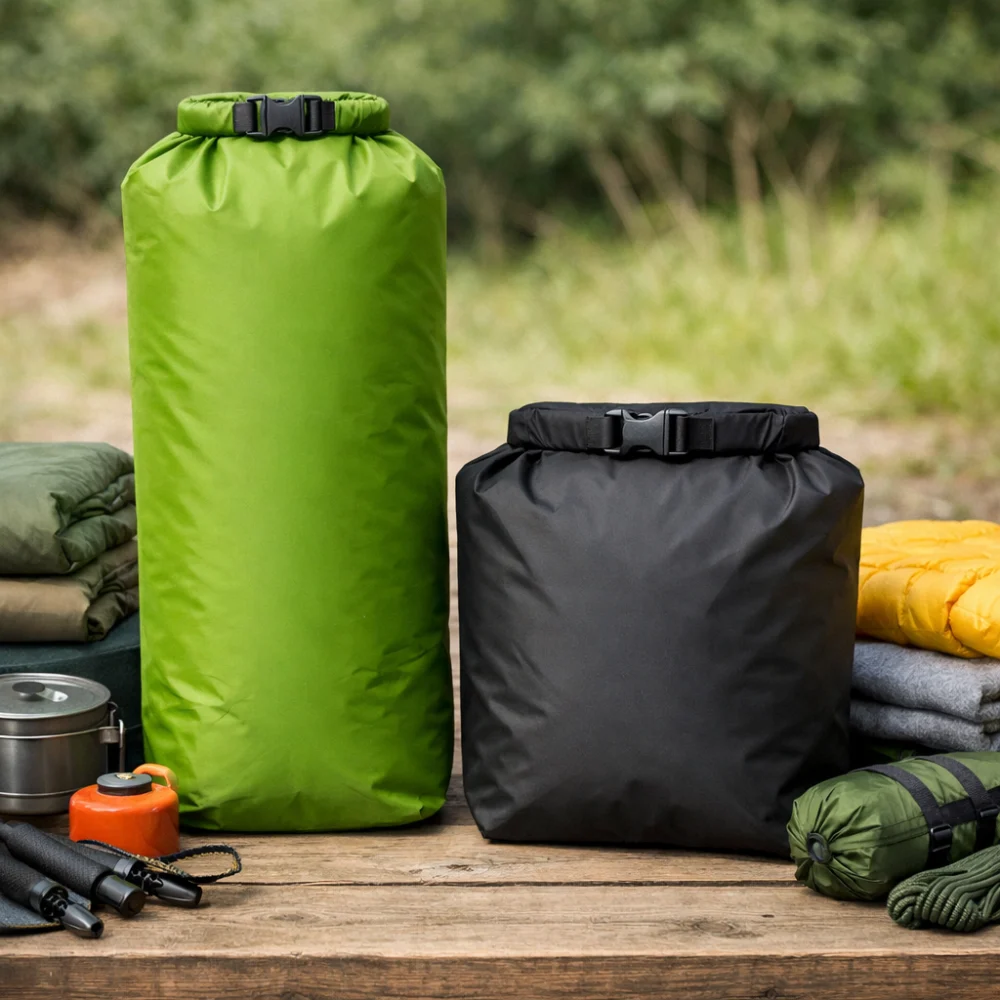
Within kayak dry bags, the main differences are usually about size, closure style and shape rather than dramatic product categories. Smaller bags often suit essentials and valuables, while larger ones are better for clothing or bulkier items. Flexible bags are easier to fit around other kit, whereas more structured shapes can be easier to pack consistently.
For many buyers, the most useful distinction is not between brands or claims, but between bags that are easy to stow in a kayak and bags that are easier to carry once packed. Choose based on where the bag will live during the trip and how often you need to open it.
Which type suits which buyer?
| Buyer need | What usually helps | Why it suits them | Trade-off to expect |
|---|---|---|---|
| Short day trips | Compact, easy-to-pack bag | Simple to stow and quick to handle | Less room for extra layers or shared kit |
| Longer outings | More capacity and straightforward closure | Helps carry spare clothing and food | Can take up more space in the kayak |
| Mixed gear storage | Multiple smaller bags | Makes sorting items simpler | More pieces to manage and keep track of |
| Frequent carry to and from the water | Comfortable handles or straps | Easier when the bag is full | Extra carry features may add bulk |
| Space-limited kayak storage | Narrow or flexible shape | Fits awkward spaces more easily | May be less convenient for bulky items |
Common mistakes and misunderstandings
- Choosing by capacity alone. A bag may be large enough on paper but awkward in a kayak if the shape does not suit your storage space.
- Overlooking closure usability. A closure that seems simple in theory may be frustrating with wet hands or when you need to repack quickly.
- Buying one big bag for everything. Several smaller bags can sometimes be easier to organise and fit into different parts of the kayak.
- Ignoring how the bag will be carried. A bag that is easy to pack can still be inconvenient if it is uncomfortable to move over land.
Safety and suitability caveats
Kayak dry bags are for organising and protecting belongings, but they are not a substitute for sound judgement on the water. Think about how the bag will behave if it is dropped, squeezed or packed near sharp equipment, and make sure it suits the conditions you expect to paddle in. If you need to protect particularly sensitive items, check the individual product details carefully rather than assuming all waterproof bags offer the same level of protection.
Maintenance, storage and lifespan considerations
Dry bags are usually easier to look after when they are rinsed or wiped down after use and stored clean and dry. Sand, grit and trapped moisture can affect how pleasant the bag is to use over time, especially around closures. It is also worth thinking about whether the bag will be folded, rolled or stored flat between trips, because that can affect convenience and wear.
How to compare options efficiently
- Decide what you need the bag to hold on a typical trip.
- Choose the size and shape that fits your kayak storage space.
- Compare closure styles for ease of use and packing convenience.
- Check whether carry features, visibility or organisation matter to you.
- Read the individual product page to confirm the details that matter most.
Summary buyer decision checklist
- Will the bag fit the amount and type of gear you usually carry?
- Does the shape suit your kayak’s storage space?
- Is the closure style easy for you to use reliably?
- Do you need one larger bag or several smaller ones?
- Will it be comfortable to carry between the car, shore and water?
- Have you checked the individual product page for the exact details?
Frequently asked questions
Are kayak dry bags only for kayaking?
No. Many people use them for other outdoor activities as well, but this guide is focused on choosing one for kayak use. The key difference is that kayak storage often favours bags that are easy to fit into limited spaces and simple to handle on the water.
Is a larger dry bag always better?
Not necessarily. A larger bag gives you more room, but it may also be harder to pack neatly or store in a kayak. It is usually better to choose a size that matches your regular kit rather than buying extra capacity you may not use.
What matters more: size or closure type?
Both matter, but for most buyers the best place to start is with size and how the bag fits in the kayak. After that, the closure type becomes important for convenience and confidence when using the bag in real conditions.
Should I use one big bag or several small ones?
That depends on how you pack. One bag can reduce clutter, but several smaller bags can make it easier to separate clothing, food and accessories. Many buyers prefer a mix so the most important items are easier to find quickly.
How do I know if a dry bag will fit my kayak storage?
Check the bag’s shape and the space you plan to use, such as a hatch, footwell or deck area. Because kayaks vary a lot, it is wise to compare the bag’s form with your available space rather than relying on capacity alone.
What should I check on the product page before buying?
Look at the size, closure style, shape and any carry features, then decide whether those details suit your trips. If you are buying for a specific piece of gear, make sure the bag is suitable for that item rather than assuming it will work for everything.