

Men’s base layer bottoms are a practical starting point when you want extra comfort under outdoor clothing, workwear or sports kit. The right pair should suit how active you are, how much warmth you need and whether you prefer a close, supportive fit or something more relaxed.
This guide focuses on the buying decisions that matter most: fabric, fit, thickness, breathability and how the bottoms will feel during movement. It is about choosing the right type for your use, not about picking a specific brand or assuming every pair performs the same way.
If you are buying for cold-weather walking, commuting, winter sport or general layering, the main question is usually how much insulation you want without feeling bulky. If you are choosing for training or high-output activity, moisture management and comfort in motion often matter more than maximum warmth.
What should you look for first in men’s base layer bottoms?
Start with your main use. A warmer, snugger base layer suits lower-intensity cold-weather wear, while a lighter, more breathable option is usually easier for active days and indoor-to-outdoor use. Fit matters just as much as fabric, because a base layer that bunches, slides or feels restrictive will be less comfortable than one that matches your movement and layering needs.
Specifications vary by model, so always check the individual product page before buying.
| Feature | What it means | Why it matters | What to check |
|---|---|---|---|
| Fabric type | The material blend and knit used for the bottoms | Influences warmth, softness, drying speed and stretch | Look for the material description and whether the feel is described as lightweight, thermal or compression-focused |
| Fit | How close the garment sits to the body | Affects layering, movement and comfort | Check whether the fit is close, regular or compression-style |
| Thickness | How substantial the fabric feels | Helps indicate warmth and bulk under trousers | Consider whether you need a lighter layer for activity or a warmer layer for cold conditions |
| Breathability | How well moisture and heat can move away from the body | Important for comfort during walking, sport or long wear | Look for wording that suggests moisture management or quick-drying performance |
| Waistband and rise | How the waistband sits and feels in use | Can affect comfort under outer layers | Check for any notes on waistband width, stretch or support |
| Length and leg finish | How far the bottoms extend and how they finish at the ankle | Helps with coverage and layering under boots or trousers | Confirm the inseam, leg length or ankle finish where given |
Key decision criteria explained
Warmth versus breathability
The biggest trade-off is usually between extra insulation and easier temperature control. A warmer base layer can feel more comfortable in very cold weather, but it may be too warm if you are moving a lot or travelling between different temperatures. A more breathable pair is often the better everyday choice for active use.
Fit and freedom of movement
Base layer bottoms are generally designed to sit close to the body, but not every close fit feels the same. Some are made to hug the legs for layering, while others are cut more like loungewear or general sports leggings. Think about whether you need them mainly under outer trousers, for training or for all-day comfort.
Fabric feel and moisture management
Some buyers prefer a soft, smooth fabric next to the skin, while others care more about how quickly the fabric dries after exertion. If you expect to sweat, the way the fabric handles moisture can matter as much as how warm it feels at rest. Check the product wording for clues about performance, but avoid assuming one fabric type always behaves the same way in every model.
Layering compatibility
These bottoms need to work under the trousers or outer layers you already own. A pair that is too bulky can change how other clothing fits, while a very light pair may not add enough warmth for your situation. Consider the type of footwear, leg wear and movement range you normally use with them.
Types and variants you may see
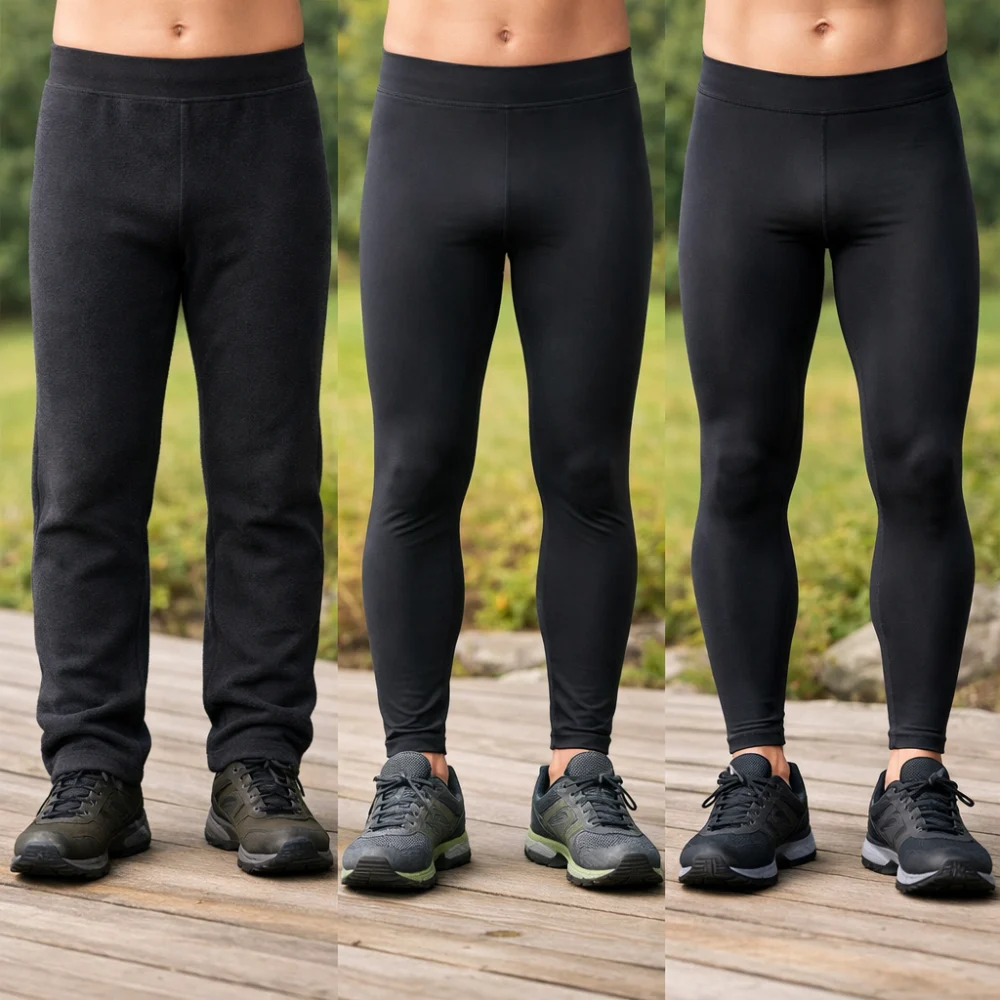
Within this category, the main differences are usually about warmth, stretch and intended use rather than dramatic design changes.
- Thermal-style bottoms are aimed more at warmth and colder conditions.
- Compression-style bottoms sit snugly and are often chosen for a more supportive, close-fitting feel.
- General base layer leggings can suit mixed use where comfort and layering are the main priorities.
The best choice depends on whether you want extra insulation, reduced bulk, or a close fit that stays out of the way during movement.
Which type suits different buyers?
| Buyer need | What usually matters most | What may be less important |
|---|---|---|
| Cold-weather walking | Warmth, comfort and reliable layering under trousers | Very tight compression feel |
| Running or training | Breathability, stretch and a secure fit | Heavy thermal bulk |
| Everyday winter wear | Comfort, versatility and ease of layering | Specialist performance features |
| Travel or commuting | Packability, comfort and temperature flexibility | Highly technical construction unless you need it |
| Indoor-to-outdoor use | Balanced warmth and moisture control | Maximum insulation |
Common mistakes and misunderstandings
- Choosing warmth alone: a very warm pair can be uncomfortable if you stay active or move between different temperatures.
- Ignoring fit: if the waistband or leg length is wrong, the bottoms may not layer well, no matter how good the material sounds.
- Assuming all “thermal” products are the same: the label suggests intent, but the actual feel and performance can still vary by model.
- Overlooking breathability: a layer that traps too much heat can feel clammy during higher-output activity.
- Forgetting what you will wear over them: your outer trousers or sports kit can affect whether a thicker or thinner pair is more comfortable.
Safety and suitability caveats
Base layer bottoms are a comfort and layering choice, not a substitute for suitable outerwear in harsh weather. Think about the conditions you will actually face, the amount of movement involved and whether you need room for other clothing underneath or over the top. If you are choosing for a specific sport or demanding outdoor use, check the individual product details carefully rather than relying only on the category name.
Maintenance, storage and lifespan considerations
Care needs depend on the fabric blend and construction. Some base layers are easier to wash and dry quickly, while others may need a bit more attention to keep their shape and feel. It is sensible to think about how often you will wear them, how quickly you need them to dry and whether you want one pair for regular use or several for rotation.
How to compare options efficiently
- Decide where you will wear them most often: cold-weather rest, active use or everyday layering.
- Choose the level of warmth and thickness that matches that use.
- Check the fit details so the bottoms will sit comfortably under your outer layers.
- Look at fabric wording for clues about breathability, softness and drying time.
- Compare the product page information for any notes on length, waistband style or intended activity.
- Pick the option whose trade-offs fit your routine rather than chasing the warmest or tightest description.
Summary buyer decision checklist
- Have I chosen the right warmth level for my main use?
- Will the fit work comfortably under my other clothing?
- Do I need more breathability for activity, or more insulation for cold conditions?
- Does the waistband and leg length sound suitable for my body shape and layering needs?
- Does the product page give enough detail to judge fabric feel and intended use?
- Am I comparing the real trade-off: warmth, breathability, stretch and bulk?
Frequently asked questions
Are men’s base layer bottoms the same as thermal underwear?
They overlap a lot, but the wording can be used differently by different sellers. Some products are focused mainly on warmth, while others are more like performance leggings for layering. Check the description to see whether the emphasis is thermal comfort, active wear or general base layering.
Should base layer bottoms be tight?
They are usually designed to sit close to the body, because that helps them layer cleanly and feel more secure in use. That does not always mean compression-style tightness, though. The best fit is one that stays comfortable when you bend, walk or sit for longer periods.
What is more important: fabric type or fit?
Both matter, but fit often has the biggest effect on day-to-day comfort. A good fabric in the wrong size can still feel awkward under outer layers. Start with the fit you need, then choose the fabric and warmth level that match it.
Can I use the same pair for walking and training?
Sometimes, yes, if you choose a balanced pair that is neither too warm nor too bulky. If your training is high intensity, breathability and stretch become more important than maximum insulation. For slower outdoor walking, warmth and comfort may matter more.
How do I know if I need thermal or lightweight bottoms?
Think about how much you move and how cold it tends to be where you will wear them. Thermal options usually suit colder, less active situations, while lighter options are often more versatile for mixed use. If you are unsure, look for a middle ground rather than the heaviest description.
Do I need special care for base layer bottoms?
Not always, but fabric care does matter. Some will dry quickly and be easy to wash, while others may need gentler handling to keep their stretch and shape. Checking the care information on the individual product page is worthwhile if you plan to wear them often.
What should I check before buying online?
Check the fit, the warmth level, the fabric description and the intended use. It also helps to confirm whether the product is closer to thermal underwear, sports leggings or compression wear. That makes it easier to avoid a pair that sounds suitable but feels wrong in practice.