

Men’s insulated trousers are designed for colder conditions where ordinary trousers may not feel warm enough on their own. They can suit walking, outdoor work, winter travel and other low- to moderate-intensity activities, depending on the cut and level of insulation.
The main buying decision is usually how much warmth you need versus how much freedom of movement and breathability you want. A warmer pair can feel bulkier, while a lighter pair may be easier to wear for longer periods or during more active use.
This guide helps you compare the main features, understand the trade-offs and check whether a pair is suited to your planned use.
What should you look for in men’s insulated trousers?
The best starting point is to match the insulation level to the conditions and your activity. If you expect long periods in the cold, warmth may matter more than packability or low bulk. If you will move a lot, a lighter insulated option may be easier to wear for longer without feeling restrictive.
Fit, fabric feel and weather resistance also matter, because insulated trousers are often chosen for comfort as well as warmth. Specifications vary by model, so always check the individual product page before buying.
| Feature | What it means | Why it matters | What to check |
|---|---|---|---|
| Insulation level | How much added warmth the trousers provide | Affects comfort in cold weather | How the product is described and whether it suits your expected temperature range |
| Fit and cut | How closely the trousers follow the body | Influences movement, layering and comfort | Waist, leg shape and whether they allow base layers if needed |
| Weather resistance | How well the fabric handles wind, light rain or snow | Useful in changeable outdoor conditions | Any stated water resistance, wind resistance or outer fabric type |
| Breathability | How easily heat and moisture can escape | Helps reduce overheating during active use | Whether the trousers are aimed at walking, work or low-activity cold-weather wear |
| Weight and bulk | How heavy or substantial the trousers feel | Affects comfort, mobility and packing | Whether you want a lighter layer or a warmer, more substantial feel |
| Features | Pockets, waist adjustment and similar details | Can improve convenience and fit | Which features are actually useful for your use case |
Key decision criteria explained
Warmth
Warmth is the main reason to buy this category, but more insulation is not always better. Extra warmth can be helpful for standing around, camping or colder commutes, yet it may feel too hot when you are moving. Think about whether you need all-day warmth, short bursts of protection or something to layer over other trousers.
Movement and comfort
Insulated trousers should still let you sit, walk and bend comfortably. A cut that is too snug can limit movement, while a looser cut may feel more comfortable but bulkier. If you will wear them for active use, comfort around the knees, thighs and waistband is especially important.
Weather resistance
Some insulated trousers are aimed mainly at warmth, while others also help with wind or light moisture. That does not make them interchangeable with fully waterproof trousers. If you expect wet weather, check carefully what kind of protection is actually stated rather than assuming insulation alone will keep you dry.
Layering
Some buyers want insulated trousers to be worn on their own, while others want them over base layers or under a shell. That choice affects how much room you need and how warm the trousers need to be. If you plan to layer, check the fit and avoid a size that leaves no margin for movement.
Practical details
Pocket placement, waistband adjustment and ankle shape can make a bigger difference than many shoppers expect. These details affect how easy the trousers are to wear with boots, how convenient they are for everyday use and how well they suit your routine. Small design choices often matter more than a broad “winter” label.
Common types and variants
Within this category, you may see trousers that lean towards different uses rather than entirely separate product families.
- Thermally lined styles aim to add warmth with a softer feel inside, which can suit everyday cold-weather wear.
- Padded or heavily insulated styles are usually chosen when warmth is the priority, especially in colder or less active situations.
- Water-resistant cold-weather trousers can be useful where damp conditions are part of the picture, but they are not a substitute for full waterproof protection unless that is clearly stated.
- Activity-focused insulated trousers may balance warmth with easier movement for walking or outdoor work.
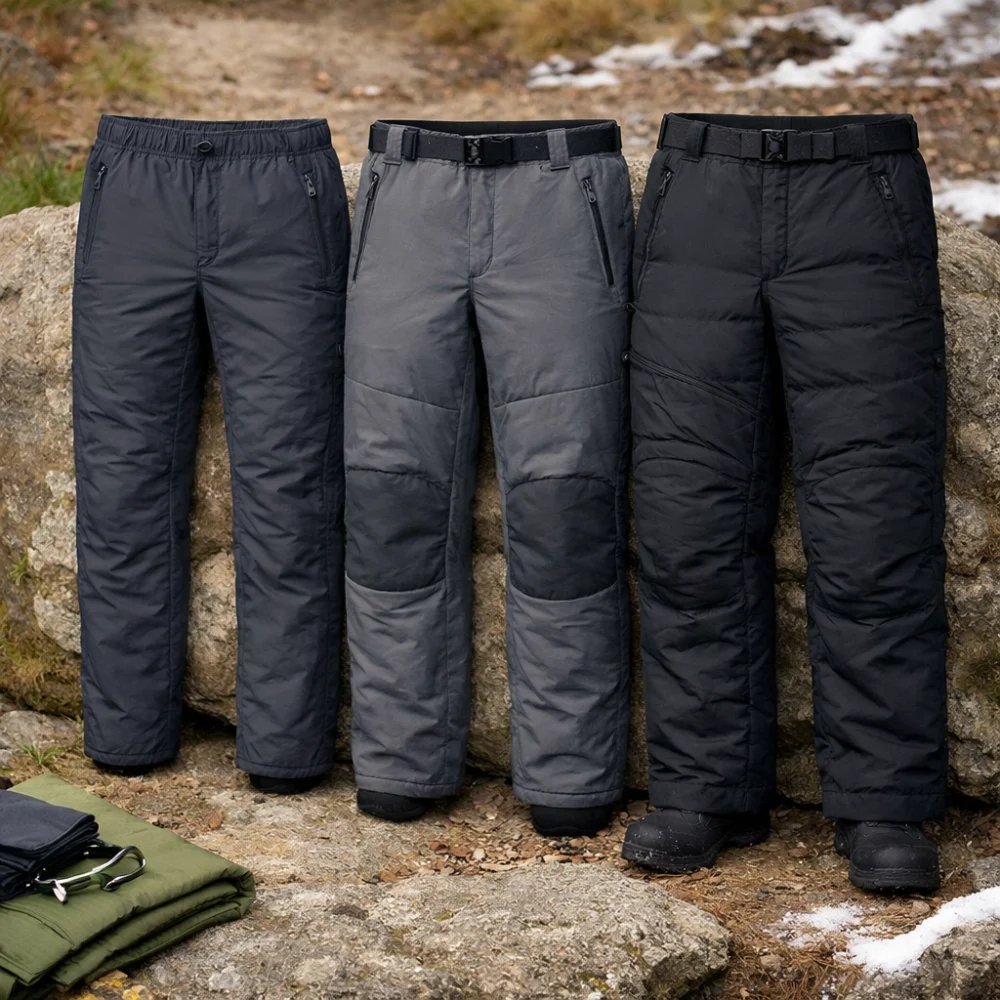
The right type depends on whether you need warmth first, movement first or a balance of both.
Which buyer needs suit which features?
| Buyer need | Useful features | Trade-off to accept |
|---|---|---|
| Cold-weather everyday wear | Comfortable fit, reliable warmth, simple styling | May be warmer and less breathable than lighter trousers |
| Active outdoor use | Better movement, lighter insulation, breathable feel | May not feel as warm during stops |
| Damp or changeable weather | Some weather resistance and easy layering | Often a compromise between dryness, warmth and breathability |
| Standing or low-movement use | Higher warmth and more coverage | Can feel bulkier when walking or climbing |
| Simple winter layering | Room for base layers and comfortable waist fit | May add bulk under outer clothing |
Common mistakes to avoid
- Choosing on warmth alone: a very warm pair can be uncomfortable if you move a lot.
- Assuming insulated means waterproof: these are different features and should be checked separately.
- Ignoring fit over layers: trousers that fit without movement may feel too tight once you add base layers or bend frequently.
- Overlooking breathability: if you are active, trapped heat and moisture can matter as much as cold protection.
- Focusing only on the label: the way insulation, cut and outer fabric are combined is what determines real-world comfort.
Safety and suitability considerations
These trousers are a comfort and weather-choice purchase rather than a universal solution for cold conditions. Make sure the intended use matches the product description, especially if you need them for wet weather, long periods outdoors or active movement. If you are comparing styles for work or specialist outdoor use, check whether the design suits the setting before relying on it.
Care, storage and lifespan
General care can affect how long insulated trousers stay comfortable and presentable. Follow the care information on the individual product page and label, and store them clean and fully dry when not in use. If the trousers rely on a specific lining, coating or fill, avoid assuming all cleaning methods are the same across the category.
How to compare options efficiently
- Start with the main use: everyday wear, walking, outdoor work or sitting still in the cold.
- Choose the warmth level that matches that use without making the trousers unnecessarily bulky.
- Check fit, leg shape and whether you need room for layering.
- Look at weather resistance and breathability together, not as separate promises.
- Review the individual product page for the details that matter most to your situation.
Summary buyer decision checklist
- Have I matched the warmth level to how active I will be?
- Does the fit allow comfortable movement and, if needed, layering?
- Do I need wind or light moisture resistance as well as insulation?
- Is the style suitable for walking, work or everyday wear?
- Have I checked the product page for the exact features and care details?
Frequently asked questions
Are insulated trousers the same as thermal trousers?
They overlap, but the wording is not always used the same way by every product. Some styles are lightly lined for everyday warmth, while others are built for much colder conditions. Check the product description rather than relying on the name alone.
Can I wear insulated trousers for walking?
Yes, if the fit and breathability suit active use. A lighter insulated pair is often easier for walking than a heavily padded style, especially on steeper routes or warmer days. If you expect to move a lot, comfort and flexibility matter as much as warmth.
Do insulated trousers replace waterproof trousers?
Not necessarily. Insulation helps with warmth, while waterproofing is about resisting rain and wet ground. Some insulated trousers may offer some weather resistance, but you should check the product details if staying dry is important.
Should I size up for winter layering?
Only if you expect to wear base layers and the product fit allows for it. Sizing up too far can make the trousers feel loose or awkward to move in. A better approach is to check the fit guidance on the individual product page where available.
Are padded trousers too hot for everyday use?
They can be, depending on your activity level and the weather. Heavier insulation is often most useful when you are outside for longer periods or standing still. For milder conditions, a lighter option may be more comfortable.
What details make the biggest difference in comfort?
Fit, waist comfort, leg shape and how the trousers move when you sit or bend are often the most noticeable factors. Pocket layout and ankle shape can also affect day-to-day ease of use. Small design choices often matter more than shoppers expect.