

A cycling jacket can make a big difference to comfort when the weather turns, but the right choice depends on when and how you ride. Some riders want light packable protection for showers, while others need more insulation, wind resistance or a tougher outer layer for off-road use.
This guide helps you compare men’s mountain biking and cycling jackets by weather protection, breathability, fit and practical features. It is aimed at riders who want a jacket that suits their route, pace and season rather than a one-size-fits-all option.
What should you look for in a cycling jacket?
The best starting point is the weather you expect to ride in most often. If you mainly want backup against rain or wind, a lighter shell may be the most practical choice, while colder rides usually call for more warmth and layering space. The main trade-off is that more protection can also mean more bulk or less ventilation, so it helps to decide which matters more for your use.
Specifications vary by model, so always check the individual product page before buying.
| Feature | What It Means | Why It Matters | What To Check |
|---|---|---|---|
| Weather protection | How well the jacket handles rain, wind and spray | Helps you stay comfortable when conditions change | Look for the intended use of the jacket rather than assuming every cycling jacket is fully waterproof |
| Breathability | How easily heat and moisture can move away from the body | Important when riding hard or climbing hills | Check whether the jacket is aimed at wet-weather protection, warmth or all-round riding |
| Warmth | How much insulation or thermal comfort the jacket provides | Determines whether it suits cool, cold or mild conditions | Consider whether you will wear it over a jersey or layered with other clothing |
| Fit | How closely the jacket follows the body | Affects comfort, movement and how much it flaps in the wind | Check whether the cut is relaxed, close-fitting or designed for layering |
| Visibility features | Reflective or high-visibility details | Can improve how noticeable you are in low light | Look at placement and extent of visibility features, not just the presence of one small detail |
| Storage and adjustments | Pockets, cuffs, hems, hoods or vents | Improves convenience and helps tune comfort on the ride | Check that the layout suits gloves, carried items and the kind of riding you do |
Key decision criteria
Weather protection
Cycling jackets cover a wide range, from simple wind layers to more protective rain shells and insulated options. A rider who spends time in showers may prefer something light and easy to carry, while someone riding through colder months may want more coverage and warmth. The key is to match the jacket to your most common conditions, not to buy for the most extreme day you might ever face.
Breathability and comfort on the move
On the bike, comfort is not only about blocking the weather. If a jacket holds in too much heat or moisture, you can end up feeling clammy even when you are protected from rain or wind. Look for the balance of protection and airflow that suits your pace, fitness level and terrain.
Fit and layering space
Fit matters because cycling positions are different from everyday walking. A jacket that is too loose may flap and feel distracting, while one that is too tight may restrict movement or leave no room for base layers. Consider whether you usually ride in a jersey, thermal layer or other clothing underneath.
Visibility and practical details
Low-light riding can make visibility features more important, especially for commuting-style use or winter rides. Pockets, cuffs, hems and adjustable openings can also affect how easy a jacket is to live with. These details do not matter equally for every rider, but they often make the difference between a jacket that is merely acceptable and one that is genuinely convenient.
Product types and variants
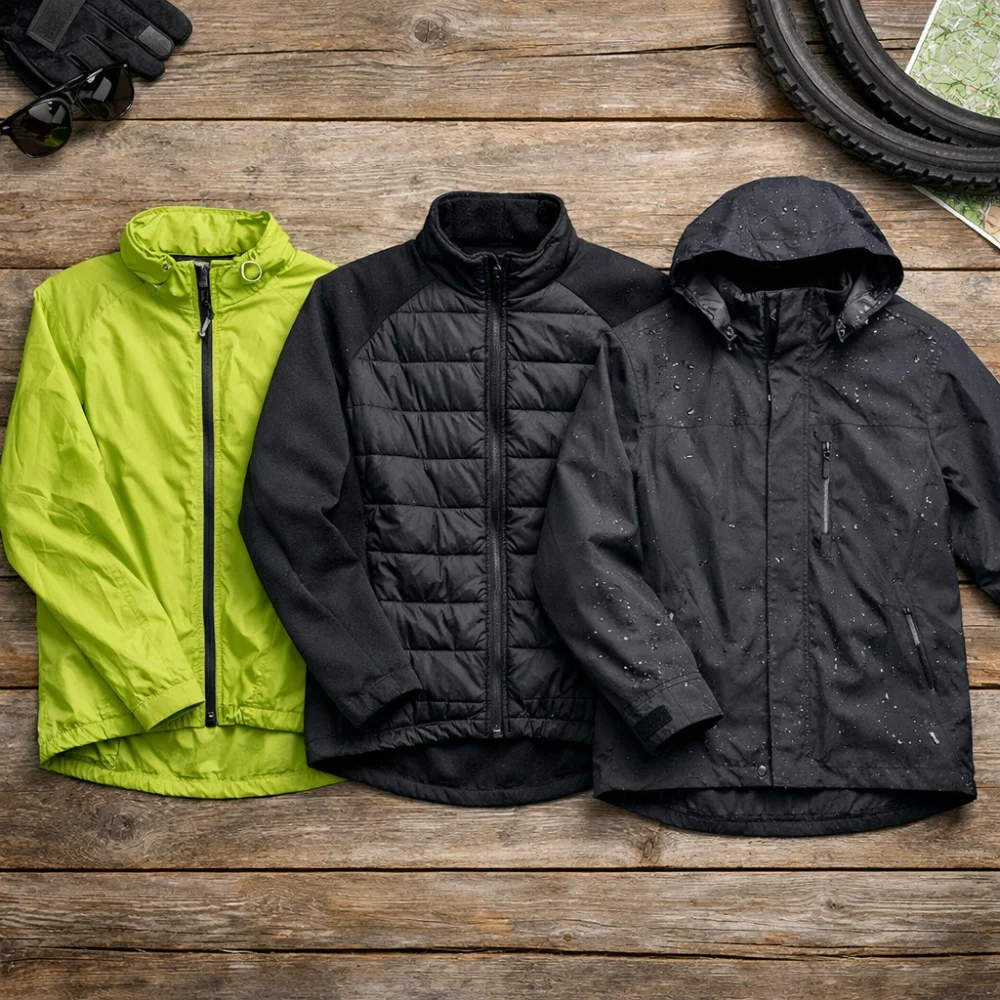
Within this category, the main differences are usually about intended weather use rather than a completely different style of garment. A lightweight shell tends to suit changeable conditions and riders who want easy packing. A waterproof jacket is aimed more at rain protection, while a thermal or softshell-style option is often better for cooler rides where warmth matters as much as wind resistance.
Some jackets are designed with mountain biking in mind and may offer a slightly more relaxed cut for movement and layering. Others are closer to road or general cycling outerwear, with a firmer emphasis on streamlining and weather protection. Neither is automatically better; the right version depends on the kind of riding you do and how much freedom of movement you want.
Which jacket suits which rider?
| Buyer need | Helpful jacket characteristics | Why this tends to suit the rider |
|---|---|---|
| Wet-weather riding | Stronger rain protection, secure closures, sensible coverage | Helps keep shower exposure manageable during commutes or longer rides |
| Cold-weather rides | Thermal comfort, room for layering, wind resistance | Supports comfort when temperature, wind chill or pace drop |
| Hard effort on climbs | Breathability, ventilation, lighter construction | Reduces the chance of overheating during more intense riding |
| Off-road and trail use | Comfortable fit, movement through the shoulders, durable-feeling construction | Helps the jacket work with varied body positions and rougher routes |
| Low-light visibility | Reflective details or brighter colour options | Can help the rider feel more noticeable in darker conditions |
Common mistakes to avoid
- Choosing a jacket for rain alone and then finding it traps too much heat on climbs. Balance weather protection with breathability.
- Buying a fit that is too close without thinking about layers underneath. If you ride in colder weather, leave room for base layers.
- Assuming every cycling jacket is the same type of garment. Some are shells, some are warmer outer layers and some are aimed at mixed conditions.
- Overlooking the cut for riding position. A jacket that feels fine standing may ride up or feel awkward once you are bent over the bars.
- Focusing on one feature and ignoring the rest. A useful jacket is usually a compromise between protection, comfort and practicality.
Safety and suitability notes
A cycling jacket should be suitable for the conditions you expect, but it is not a substitute for sensible route planning or checking the forecast. If you ride in the dark or poor visibility, visibility features can help, but they do not guarantee that you will always be seen. For riders in wet or cold weather, it is wise to think about how the jacket works with gloves, base layers and the rest of your kit.
Maintenance, storage and lifespan considerations
How you care for a jacket can affect how well it performs over time. Dirt, mud and repeated soaking can influence comfort and the way a water-resistant finish behaves, so check the care instructions for the individual garment. It is also worth thinking about where you will store it, especially if you want a jacket that can be kept in a bag, car or commuter kit without taking up much space.
Some jackets are easier to keep as an everyday option because they pack down neatly, while others are intended more for warmth or heavier weather protection. Choose with your routine in mind, not just the weather on the day of purchase.
How to compare options efficiently
- Decide whether you mainly need rain protection, wind protection, warmth or a mix of all four.
- Check whether you prefer a close cycling fit or a roomier cut for layering and movement.
- Compare breathability, storage and visibility features, especially if you ride often or in changing light.
- Look at the jacket description for the kind of riding it is intended to support.
- Read the individual product page carefully for the details that matter to your conditions and layering choices.
Summary buyer decision checklist
- Will I use it mainly for rain, wind, warmth or general changeable weather?
- Does the fit allow for the layers I usually wear?
- Is the jacket likely to breathe well enough for my riding pace?
- Do the visibility details suit where and when I ride?
- Are the pockets, cuffs, hem and closure features practical for my use?
- Does the style suit mountain biking, commuting or mixed cycling use?
Frequently asked questions
Do I need a waterproof cycling jacket or a windproof one?
That depends on the weather you face most often. A waterproof jacket is more useful for persistent rain, while a windproof or lighter shell can be enough for cool, breezy conditions. If you ride in mixed weather, it helps to weigh rain protection against breathability.
Should a mountain biking jacket fit differently from a road cycling jacket?
Often, yes, because mountain biking jackets may allow a little more room for movement and layering. Road-focused jackets are sometimes cut more closely, though this varies by model. The important point is to match the cut to your riding position and how much freedom you want.
Can I use one jacket all year round?
Some riders do, but it depends on the jacket type and local weather. A lighter shell may work across more seasons with layering, while a thermal jacket is usually better in colder months. One versatile jacket can be practical, but it may not be ideal in every condition.
How important are reflective details?
They are useful, especially for low-light riding, but they are only one part of being visible. Bright colours, good route choices and suitable lighting can also matter. Reflective details are best seen as a helpful extra rather than the only factor to consider.
What is the main mistake people make when buying a cycling jacket?
The most common mistake is choosing a jacket for one feature and forgetting the rest. A very protective jacket can feel too warm, while a light jacket may not be enough for colder or wetter rides. The best choice usually balances the conditions you face most often with the type of riding you do.
How do I know if I have picked the right layer underneath?
The jacket should feel comfortable when worn with the clothing you expect to use most often, without pulling at the shoulders or feeling overly restrictive. If you usually ride in colder weather, leave enough room for a base layer. If you mainly ride in milder weather, a slimmer fit may feel better.