

Men’s neoprene tops and leggings are for buyers who want more coverage and warmth than a rash vest or boardshorts can offer, without moving straight to a full wetsuit. They can be useful when you want to mix and match pieces around the conditions, your comfort level and how much flexibility you want in the water.
This guide focuses on the practical differences that affect comfort, warmth and ease of movement. It is aimed at surfers and watersports buyers who want to understand what to look for before comparing individual product pages.
Because this category can cover a range of styles and thicknesses, it helps to think first about what you need to protect, how much movement you want and whether you are choosing a top, leggings or both. Specifications vary by model, so always check the individual product page before buying.
What should you look for in men’s neoprene tops and leggings?
The best starting point is the conditions you expect to use them in and the amount of coverage you want. A neoprene top mainly adds upper-body warmth and wind resistance, while leggings focus on leg coverage and a closer fit. The main trade-off is simple: more coverage and insulation usually means less minimal feel and less freedom than lighter surf clothing.
| Feature | What it means | Why it matters | What to check |
|---|---|---|---|
| Coverage | Whether the item covers the torso, legs or both | Coverage affects warmth, sun protection and comfort in cooler or breezier conditions | Look at the cut, length and whether you need a top, leggings or both |
| Neoprene thickness | How much insulating material the garment uses | Usually influences warmth, bulk and flexibility | Check the stated thickness on the product page where provided |
| Fit | How closely the garment sits against the body | A close fit helps reduce flushing and improves comfort in the water | Review the size guide and fit notes for the individual product |
| Freedom of movement | How easily you can paddle, twist and bend | Important for surfing and other active watersports | Look for construction details and buyer notes that mention flexibility |
| Seams and finishing | How the panels are joined and edged | Can affect comfort, irritation and durability | Check the product description for seam style, linings or reinforcement details |
| Use case | The activity and conditions the item is intended for | Helps you avoid choosing something too warm, too light or too restrictive | Match the product to your likely water temperature and session length |
Key decision criteria
Coverage and layering
Some buyers want a neoprene top to wear on its own, while others want leggings to pair with another surf layer. If you already have one piece of surf kit, think about where you feel the cold most and whether you need to cover only the upper body, only the legs or both. Choosing separate pieces can make it easier to adapt to changing conditions.
Warmth versus flexibility
More neoprene generally means more insulation, but it can also feel less mobile. That matters if you paddle a lot, spend long periods in the water or prefer a lighter-feeling garment. If freedom of movement is your main priority, focus on the lightest option that still gives enough protection for your conditions.
Fit and comfort
A close fit matters because loose neoprene can feel bulky and may not perform as intended. At the same time, a fit that is too tight can be uncomfortable and distracting. Check size guidance carefully and look for wording about whether the cut is intended to be snug, athletic or more relaxed.
Construction and finish
Small construction details can make a noticeable difference to comfort. Seams, panels, cuffs and waist finishing all affect how the garment sits and how easy it is to move in. If you are sensitive to rubbing or plan longer sessions, those details deserve close attention.
Product types and variants
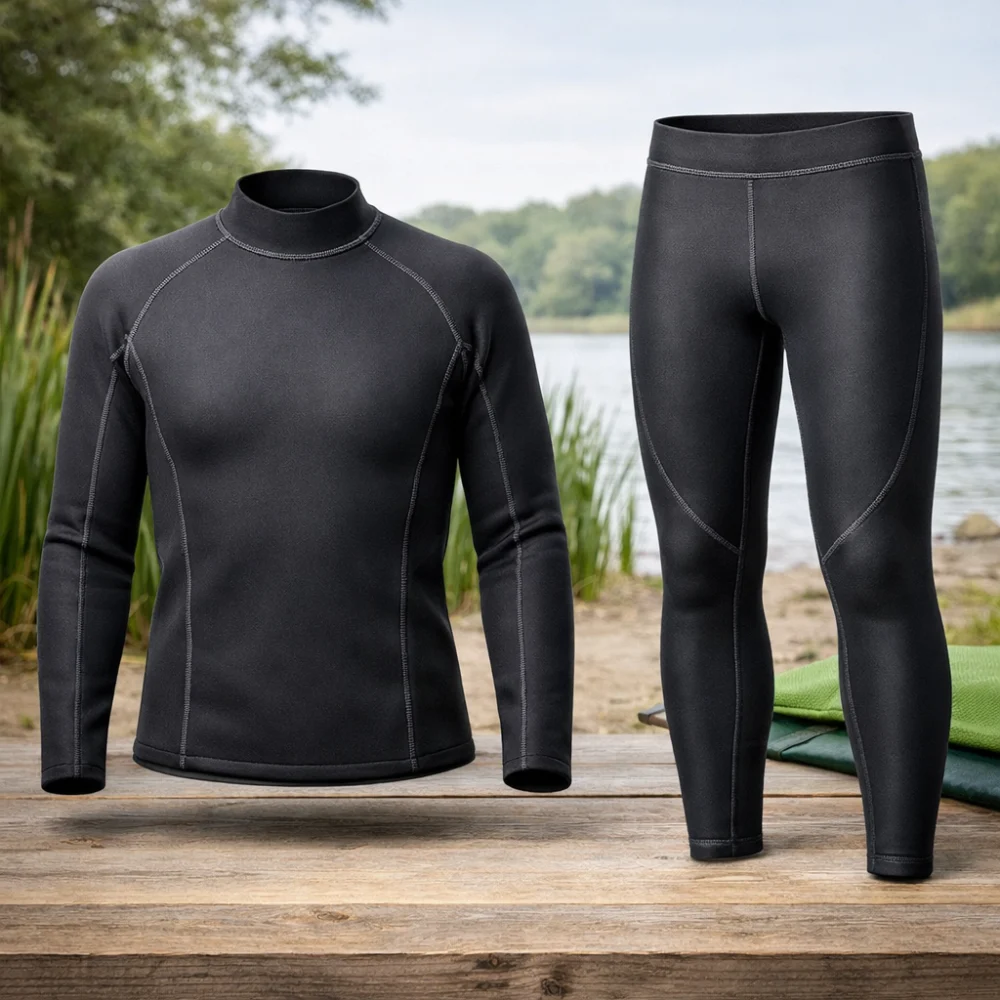
Within this category, the most important distinction is between neoprene tops and neoprene leggings.
- Neoprene tops suit buyers who want upper-body warmth and protection while keeping the lower half more free.
- Neoprene leggings suit buyers who want leg coverage and a close base layer feel under or alongside other surf clothing.
- Matching top-and-legging combinations can suit buyers who want more complete coverage without committing to a full wetsuit.
The right choice depends less on fashion and more on where you feel the cold, how active you are and whether you want to layer with other surfwear.
Which option suits different buyers?
| Buyer need | More suitable approach | Why |
|---|---|---|
| Beginner surfer | Start with the simplest piece that covers the area you need | It is easier to judge comfort and fit before adding more layers |
| Colder or breezier sessions | Look for more coverage and a closer fit | Extra coverage can improve comfort when conditions feel cooler |
| High-mobility preference | Choose the lightest practical option | Less bulk can feel easier when paddling and turning |
| Layering with other surf clothing | Check how the top or leggings will sit under or alongside your other kit | Layering works best when the pieces do not bunch or restrict movement |
| Buyer replacing older kit | Compare fit, finish and current sizing rather than assuming a like-for-like replacement | Different designs can feel noticeably different even within the same category |
Common mistakes to avoid
- Choosing by thickness alone. Thickness matters, but fit and intended use matter too.
- Assuming all neoprene pieces feel the same. Tops and leggings serve different purposes and may be used differently.
- Overlooking movement. A warmer item is not always the most comfortable choice for active surfing.
- Ignoring size guidance. A close fit is important, so checking the product page carefully can save disappointment.
Suitability and care notes
These products are intended for water use and should be chosen with your activity and conditions in mind. If you are between sizes or unsure about layering, the individual product information is the best place to confirm the intended fit. Keep in mind that comfort, warmth and ease of movement can vary a lot between designs, even within the same category.
For ownership and care, the main considerations are simple: rinse after use if advised by the product information, dry it thoroughly and store it without crushing it for long periods. That helps preserve the feel and finish of the material over time.
How to compare options efficiently
- Decide whether you need a top, leggings or both.
- Think about the conditions and how much warmth you want.
- Compare fit, coverage and flexibility first.
- Check the individual product page for construction and size guidance.
- Choose the option that balances comfort and protection for your use.
Summary buyer checklist
- Do I need upper-body coverage, leg coverage or both?
- Will I use it in conditions that call for more warmth or just a little extra protection?
- Does the fit look close enough without seeming restrictive?
- Will I be able to move comfortably for paddling and turning?
- Have I checked the product page for the specific construction and sizing details?
Frequently asked questions
Do I need a neoprene top or neoprene leggings?
It depends on where you want the extra coverage. A top helps most with upper-body warmth and wind protection, while leggings help with leg coverage and layering. Many buyers choose based on the area they feel the cold most.
Are neoprene tops and leggings meant to replace a full wetsuit?
Not always. They can be a useful alternative when you want more flexibility or only partial coverage, but they do not suit every condition. The right choice depends on how much insulation and coverage you need.
Should these items fit tightly?
They usually need to sit close to the body to feel comfortable and work well, but they should not feel painfully tight. A good fit should allow movement without bunching or excessive looseness.
Can I layer them with other surf clothing?
Often yes, but the key is whether the layers sit comfortably together. Check that the cut and sizing make sense for how you plan to wear them, especially if you want to add another layer over or under them.
What matters most when comparing products?
Start with coverage, fit and intended use. Those three factors usually have more impact on day-to-day comfort than minor styling differences.
How should I think about care and storage?
Look after them as you would other neoprene-based watersports clothing: follow the product guidance, dry them properly and store them sensibly. Good care helps preserve comfort and appearance over time.